Oil, Electricity and Gas Price Controls ... The National Burden Grows
- Input
- 2026-11-15 09:39:36
- Updated
- 2026-11-15 09:39:36
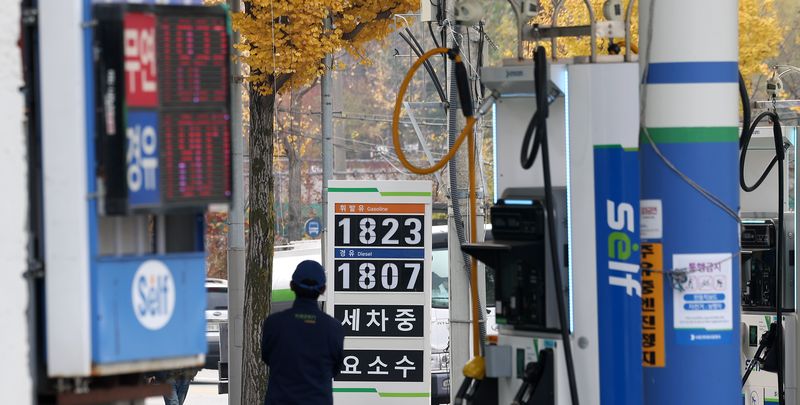
[Financial News] The burden on the government is growing as a result of the oil price cap system and frozen electricity and gas rates. The measures were intended to minimize the fallout from the war in the Middle East, but as the policies drag on, they are expected to require massive public spending.
According to the Ministry of Trade, Industry and Energy on the 15th, the government will notify each oil refiner of the first settlement amount for losses incurred during the oil price cap system's period of operation, from March 13 to June 30, by the end of this month. The system sets a ceiling on the prices at which refiners supply gas stations and other buyers, and the government compensates the refining industry for its losses using public funds. The government introduced it as international oil prices became unstable following the outbreak of war in the Middle East.
The government expected the oil price cap system to remain in effect for six months and set aside 4.2 trillion won in reserve funds to compensate for losses. However, the system has now been in place for more than eight months, and losses continue to mount day by day. Accordingly, the government earmarked an additional 1.4497 trillion won in its 2027 budget proposal to cover losses through the fourth quarter. The refining industry says a settlement larger than the reserve funds secured by the government will be necessary.
The oil price cap system now appears likely to continue into next year. The government says it has helped curb inflation, but concerns have also been raised that it is weighing on fiscal soundness. Lawmakers also called for an exit strategy on the 9th. Kim Jung-kwan, the Minister of Trade, Industry and Energy, said, "I am giving it serious thought because we cannot keep the price cap system in place indefinitely," adding, "With the war ongoing and the situation in Hormuz uncertain, making an immediate policy shift would be a major burden."
While the oil price cap system compensates for losses using public funds, controls on electricity and gas rates are causing losses and debt to pile up at the public corporations concerned. Korea Electric Power Corporation (KEPCO) posted operating profit of 1.6441 trillion won in the third quarter of this year on a consolidated basis, down 70.9% from the same period a year earlier.
This, too, is a fallout from the war in the Middle East. The cost of generating electricity has risen as prices for power-generation fuels, including liquefied natural gas (LNG) and bituminous coal, have increased, while electricity rates have remained unchanged. Residential electricity rates have been frozen for 14 quarters, and industrial rates for eight consecutive quarters.
KEPCO's debt continues to mount, and forecasts now point to a consolidated deficit in the fourth quarter. As of the third quarter this year, KEPCO's total debt stood at 209.6 trillion won, up 4 trillion won from the end of last year. Its borrowings totaled 132.8 trillion won. Even so, KEPCO faces the challenge of investing at least 55 trillion won in building transmission and distribution networks by 2030. There are also concerns that expansion of the power grid for semiconductor industrial complexes and artificial intelligence (AI) data centers could be disrupted.
As of the third quarter, Korea Gas Corporation (KOGAS) had accumulated 13.8277 trillion won in unpaid receivables for household city-gas use, an increase of 288.6 billion won from 13.539 trillion won at the end of the first half of this year. Unpaid receivables for power generation totaled 533.7 billion won. If heating demand surges in winter, KOGAS's unpaid receivables are expected to grow further.
Because the burden is bound to grow over time due to interest costs and other factors, calls are growing for a gradual rate-normalization plan that takes into account price stability and the financial soundness of public corporations. KEPCO President Kim Dong-cheol held a press briefing in Naju, South Jeolla Province, on the 4th and said, "We need to discuss with the government and find a way to implement at least a minimal adjustment to electricity rates."
[email protected] Lee Hae-ram Reporter