“Bought for 50 Million Won, Now Worth 820,000 Won”... Actress Im Ye-jin’s Jeju Land Bought 15 Years Ago: What Happened?
- Input
- 2026-11-16 04:30:00
- Updated
- 2026-11-16 04:30:02
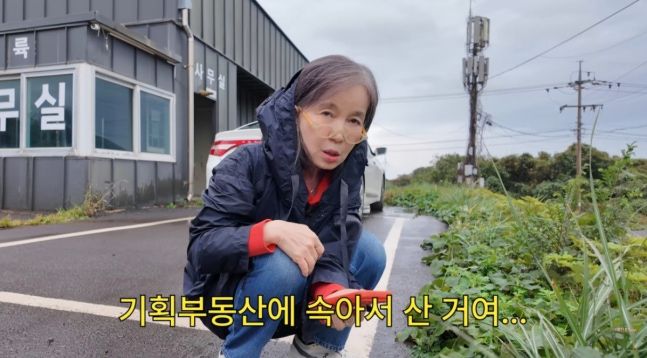
[Financial News] Actress Im Ye-jin was left feeling deflated after belatedly discovering that the land in Jeju Province she bought 15 years ago to prepare for retirement was a fraudulent property sold through a so-called land speculation scheme. The land she bought for 50 million won after relying solely on an acquaintance’s word, without checking the site, was now worth only in the 800,000-won range as a fractional share.
On the 12th, Im Ye-jin posted a video on her YouTube channel “Im Ye-jin Aissi” titled “Ms. Im Ye-jin Sets Out to Find the Jeju Land She Bought Without Seeing It 15 Years Ago.”
In the video, as she headed to Jeju Province, Im Ye-jin admitted, “A younger friend I trusted and liked said they were buying land in Jeju Province, so I asked them to buy me 50 million won’s worth of a plot right next to theirs. I thought, ‘The land wouldn’t lie, would it?’ so I bought it without ever visiting the site.” She said she had initially planned to use it as retirement savings or as a nest egg for her children’s marriages.
But the site she visited with high hopes was an area around a quarry beyond a desolate mountain road. The landlocked parcel did not even have an access road, and an employee at a nearby office said of the property, “It’s a quarry that’s been in operation for nearly 20 years, so nothing can be done there,” and estimated, “Land is very cheap here, so it’s probably worth about 100,000 won per pyeong.”
A look at the property register revealed an even more devastating reality. The 1,400-pyeong (about 4,628-square-meter) plot was a textbook case of fractional land sales, listed as having “more than 178 registered titleholders.” Based on the nearby employee’s estimate of 100,000 won per pyeong, Im Ye-jin’s share was worth only about 820,000 won—just one-sixtieth of her original investment.
Shocked, Im Ye-jin called an acquaintance who is a real estate expert and explained the situation. After hearing her story, the acquaintance offered blunt advice: “You bought it after being duped by a textbook land speculation scheme. Think of it as a place where birds come to live; it won’t sell, either. If you can’t forget about it, you’ll have to take blood pressure medication, so just forget it.”
Im Ye-jin’s case illustrates a typical tactic used in land speculation schemes: touting development prospects while dividing forestland or landlocked parcels into fractional co-ownership shares and selling them to many people. Experts stress that when investing in land, buyers should not rely solely on an acquaintance’s recommendation. They should visit the site themselves to check for road access and the zoning classification, and carefully examine the ownership structure in the property register.
[email protected] Moon Young-jin Reporter