Did U.S. Impatience Cause Aviation Chaos? ... “Like Changing a Tire While Driving at High Speed”
- Input
- 2026-11-15 04:12:52
- Updated
- 2026-11-15 04:12:52
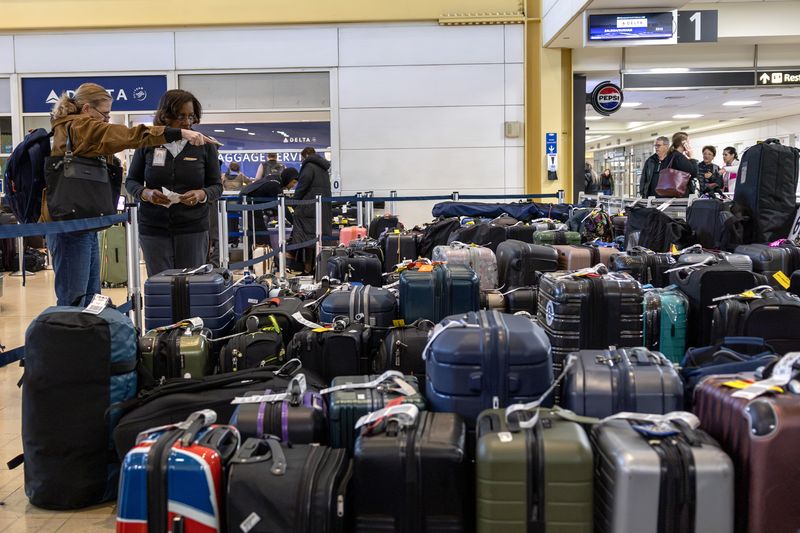
With Thanksgiving, the United States’ biggest holiday, about two weeks away, the aircraft takeoff ban imposed on the 13th (local time) is being viewed as a man-made failure caused by a combination of an outdated system and haste in the administration.
The view is that the inevitable happened: the air traffic control system had become severely outdated because of insufficient funding, and Transportation Secretary Sean Duffy’s impatience to upgrade it as quickly as possible compounded the problem.
Some have also criticized the Trump administration’s effort to upgrade the air traffic control system as reckless, like changing the tires on a car traveling at 110 kph.
There are calls for regulations to be changed so that, like other developed countries, the United States can fund improvements to its air traffic control system through fees paid by users.
Aging system... Parts made in-house with 3D printers because replacements are unavailable
According to the Financial Times (FT) on the 14th (local time), the U.S. air traffic network, one of the world’s busiest, is remarkably outdated.
For decades, Congress has been stingy with funding, leaving the system reliant on control towers built in the 1960s and technology from the 1990s. Paper logbooks, floppy-disk backups and literally rotting copper wiring—already phased out in other developed countries—keep the U.S. air traffic network running.
Unable to obtain parts for equipment models that have already been discontinued, technicians sometimes make the parts themselves using 3D printers.
Incidents have also been piling up.
From 2024 to 2025, flight delays caused by air traffic control equipment failures surged by 338%. Serious runway-incursion near misses rose from four last year to seven this year.
Working conditions are also poor. When an elevator in a control tower breaks down, controllers sometimes have to go up and down the stairs in sweltering heat nearing 60°C, forcing a suspension of air traffic control. In other cases, a short circuit in a voice switch generates toxic fumes, prompting the tower to be closed.
“Changing a car’s tires while driving at 110 kph”
Secretary Duffy faced a major setback on his first day in office. A passenger plane and a helicopter collided near Washington, D.C., killing all 67 people aboard the two aircraft.
Duffy, a former lumberjack and reality TV star, is facing a major setback. He has declared that he will complete the modernization of the air traffic control network within three years, by 2028, and is pushing ahead with the plan. Such a major project typically takes 15 to 20 years.
The U.S. Government Accountability Office (GAO) warned that the project is moving forward with more than 11,000 individual schedules being pursued at once without an integrated budget analysis, and by bypassing standard procurement rules—an approach that could lead to even greater system outages and safety incidents. Rushing the modernization could actually make system outages last longer.
Duffy countered that if he followed the GAO’s advice, the effort would still be stuck in endless discussion in 2035, but concerns are being raised on the ground.
Air traffic controllers and experts have expressed serious concern about rushing the project when controllers and technicians are in extremely short supply. They criticized the idea, as Duffy has proposed, of keeping the existing system running safely while rapidly switching to a new one, saying it is “like changing the tires on a car traveling at 110 kph (70 mph).”
More funding or structural reform
Opinions are also divided over the solution.
Duffy is asking Congress for substantial funding. He is seeking to raise his original request from $30 billion to $50 billion and is appealing to Congress for additional funds.
He is also touting progress, saying that with the funds allocated, he has already replaced 68% of the copper wiring and 49% of the voice switches.
Experts, however, say a fundamental solution is needed.
Robert Poole, director of the Reason Foundation think tank, criticized the U.S. for relying solely on budget appropriations to run its outdated air traffic control network, saying that this would inevitably lead to recurring problems. He said the problem could not be solved through the current unpredictable system of congressional appropriations, which is swayed by political considerations, and that an independent funding structure based on user fees was needed.
Other developed countries raise funds by issuing revenue bonds backed by fees collected directly from airlines and passengers. He argued that fundamental problems could be solved only if such structural reform were in place.
[email protected] Song Gyeong-jae Reporter