Shaken AI 'Circular Finance' Ecosystem... Jensen Huang's Absence Raises Fears of Crisis Spreading Across the AI Industry [NVIDIA in Crisis]
- Input
- 2026-11-14 18:12:38
- Updated
- 2026-11-14 18:12:38

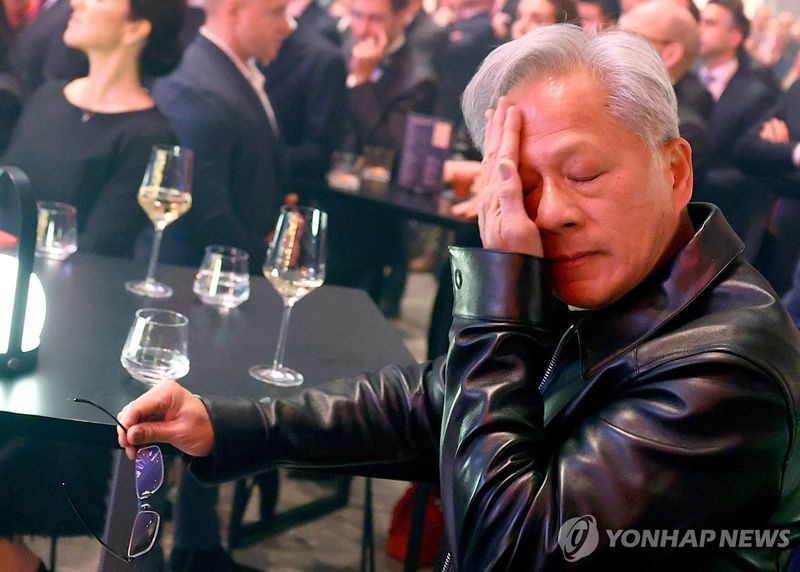
[Financial News] Could the crisis spread through a circular-financing system of astronomical scale?
Markets are on edge and concerned about whether the absence of former NVIDIA CEO Jensen Huang could cause a crisis to spread through the 'circular finance' system across the AI industry he designed and built.
That is because it could become a disaster for markets, potentially shaking not only companies but also banks and the private credit market.
Using the revenue and cash it earned from chip sales, NVIDIA has supplied liquidity by investing in or providing financial guarantees to AI developers such as OpenAI and Anthropic, as well as to the broader AI industry, including neocloud providers such as CoreWeave.
Beyond supplying semiconductors to the AI industry, NVIDIA has also taken on a kind of 'central bank' role, providing liquidity to support the industry's growth. These companies have then used the investment funds they secured in this way to buy NVIDIA chips. That is why NVIDIA has been called the 'central bank of the AI era.'
NVIDIA's Major AI Deals Total at Least $750 Billion (About 1,004 Trillion Won)
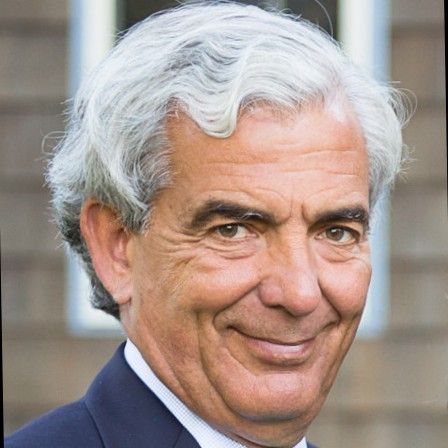
The disclosed circular-financing commitments involving NVIDIA alone are astronomical. Its investment assets stood at $99 billion (about 133 trillion won) as of the end of the second quarter this year, in addition to $25 billion in further investment commitments and $36 billion in cloud service commitments. Bloomberg estimated that major AI deals announced or under discussion by NVIDIA total at least $750 billion (about 1,004 trillion won).
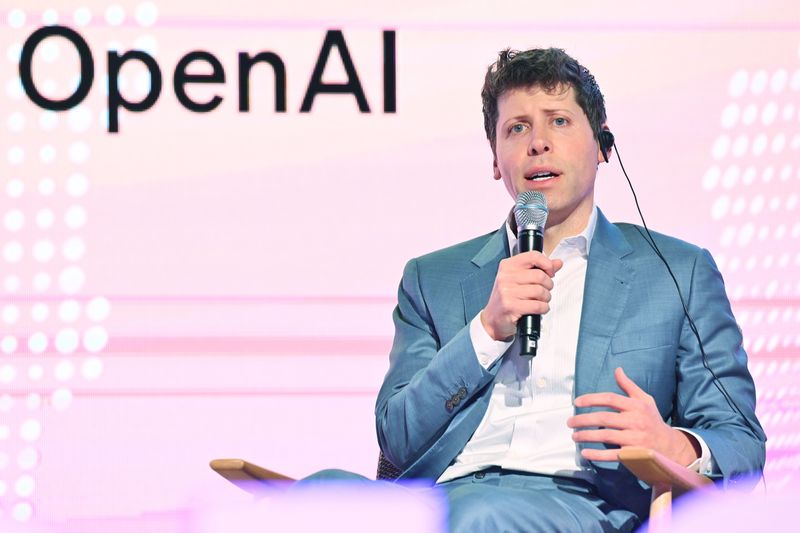
Former CEO Jensen Huang communicated directly with tech leaders such as OpenAI's Sam Altman and SoftBank Group Corp. Chairman Masayoshi Son, allocating astronomical numbers of graphics processing units (GPUs). He has served as a strong pillar of support for the AI market, providing startups with advance funding and offering $105 billion in guarantees for projects including data centers in Ohio.
The concern is that, with other executives taking over from founder and CEO Jensen Huang, the board will have no choice but to impose strict financial oversight, and that NVIDIA's circular deals, which had been driven by the founder's charisma and leadership, are likely to be substantially scaled back or readjusted more conservatively.
If NVIDIA, under new leadership, slows its efforts to support circular deals, the AI industry—which must continue making astronomical capital expenditures (CapEx)—will lose an 'accelerator' for the entire sector. NVIDIA shares plunged more than 10% immediately after the announcement that former CEO Huang had been ousted, and share prices across the AI industry, including neocloud providers, also fluctuated, reflecting these concerns.
That is because if NVIDIA reduces its investments or guarantees, the financing costs of these AI companies will rise in turn, while their investment and production will inevitably contract and slow.
It swept through cloud providers.

The NVIDIA crisis immediately swept through cloud providers. Nebius and CoreWeave shares fell 16.8% and 6.9%, respectively, while server maker Super Micro Computer also dropped 11.3%. Cloud companies have been seen as a weak link in the 'AI circular investment' structure centered on NVIDIA because they borrow vast sums to build data centers and depend on demand from AI developers such as OpenAI and Anthropic. Many of these companies have built what is known as a 'circular financing' structure, using investment from NVIDIA to buy NVIDIA's chips.
If financial support for related companies is reduced, those likely to be affected first include Nebius, CoreWeave, Nscale and Pamus. NVIDIA accounts for about 60% of Nscale's financing, while Pamus relies on NVIDIA for its GPU supply. CoreWeave is particularly interconnected because NVIDIA serves simultaneously as its investor, supplier and customer.
OpenAI receives the largest amount of support, but has a variety of financing channels.
CoreWeave, an AI cloud provider built on NVIDIA GPUs, has operated a business model in which it borrows large sums against its GPUs to expand its data centers. CoreWeave has a dual dependence on NVIDIA GPUs and borrowing. NVIDIA holds a 10–13% stake, and commitments to purchase unsold computing capacity alone total $6.3 billion. If NVIDIA reduces new investments or commitments to purchase computing capacity, CoreWeave's additional borrowing costs will rise immediately.
Dual Dependence on Funding and GPUs... Borrowing Huge Sums Against GPUs to Expand Data Centers
Nebius, a leading publicly listed neocloud provider, also faces financing risks. Of the $16.8 billion it raised from January through September this year, NVIDIA accounted for 12%, or $2 billion. Nebius lowered its earnings outlook on the 12th, and its shares at one point fell about 18% during the session, with news of Jensen Huang's resignation adding to the pressure.
Nscale, a UK-based full-stack AI cloud and data center specialist that supports AI training and infrastructure development, is also highly dependent on NVIDIA's financial guarantees. Of its $3.36 billion in financing commitments through September this year, it relies on NVIDIA for 60%, or $2 billion.
Nscale has been discussing billions of dollars in credit guarantees from NVIDIA for the development of data centers with a capacity of about 460 MW. If finalized, the guarantees would have allowed it to secure financing on terms close to investment grade. If the guarantees are withdrawn, however, the terms for obtaining construction financing would deteriorate first.
NVIDIA is Pamus's sole GPU supplier. Pamus has long-term contracts covering up to 170,000 GPUs.
OpenAI receives both direct investment and credit guarantees from NVIDIA. If NVIDIA scales back new guarantees, the pace of OpenAI's AI infrastructure expansion could slow and its financing costs could be affected. However, OpenAI has multiple investors and cloud partners, allowing it to mitigate the risk.
In February, NVIDIA made a $30 billion equity investment (42 trillion won) to strengthen long-term cooperation on AI infrastructure. Separately, its credit guarantees to OpenAI amount to $105 billion (147 trillion won).
[email protected] Lee Seok-woo, international affairs specialist Reporter