Nvidia's Market Cap Sheds $1.7 Trillion... Earnings Report on the 17th Is First Test [Nvidia in Crisis]
- Input
- 2026-11-14 15:17:57
- Updated
- 2026-11-14 15:18:13
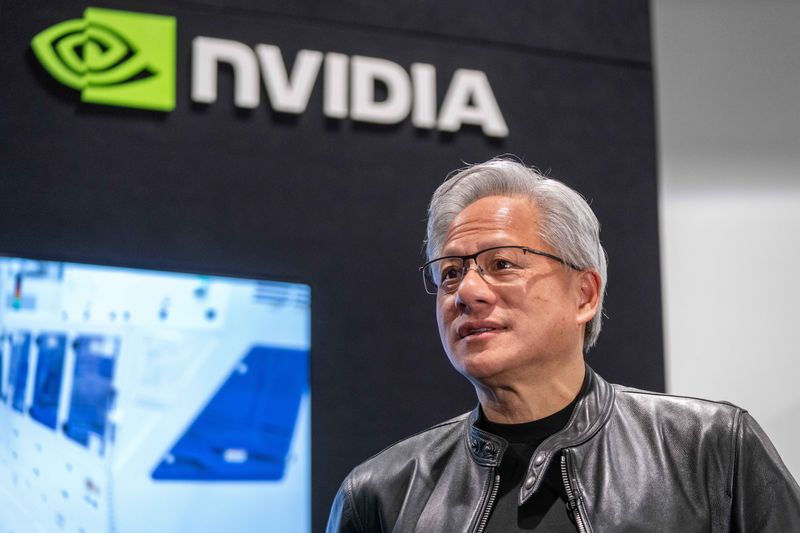
[Financial News] The departure of former Nvidia CEO Jensen Huang, coinciding with moves to regulate data centers and raise interest rates, has led to a sharp share-price decline and financial uncertainty. As of the 12th, Nvidia shares had plunged about 33% from their peak on October 6 (local time) and had fallen for six consecutive weeks on a weekly basis, their longest losing streak since 2012.
Nvidia's market capitalization, which once stood at $5.8 trillion, also fell to around $3.9 trillion, with about $1 trillion and $8,000 wiped out. Nvidia, once the world's largest company by market capitalization, was overtaken by Apple and, for a time, even Microsoft.
The third-quarter earnings report on the 17th will be the first test. Financial data provider LSEG forecast revenue of $108.9 billion, up 91% from the same period a year earlier. That is 18 times the figure for the same quarter in 2022, just before ChatGPT launched.
However, these results reflect the period when former CEO Huang was at the helm. Rather than the figures, the market is expected to focus on the forward guidance and leadership message from Colette Kress, chief financial officer (CFO) and interim CEO. Kress has signaled her resolve to steer the company through the current situation with strong leadership, including by holding an all-hands meeting on the 18th.
Can Nvidia sustain the AI ecosystem? Customer trust and continuity of the roadmap are key.
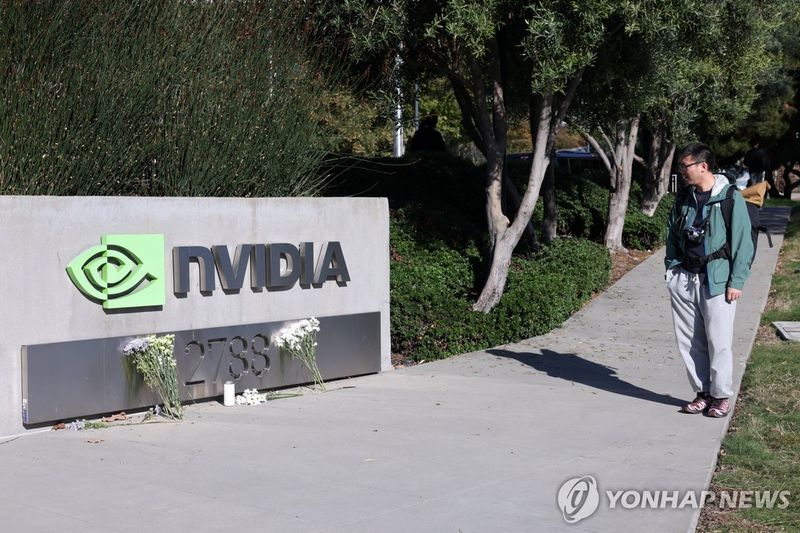
Former CEO Huang's departure has put Nvidia's business model to the test, going beyond a simple management shake-up. The company's rapid growth had long depended on Huang's personal network and decisiveness.
The key question is how to fill the instability and void left by the departure of the company's dominant leader, who had led the organization for 33 years without a successor or succession plan, and how to send a reassuring message to the market.
Concerns are growing among Wall Street and customers about decision-making delays and disruptions to the research and development (R&D) roadmap resulting from the leadership vacuum. The market is on alert for the possibility that a crisis could spread through the astronomical scale of the circular financing Huang designed, potentially shaking not only companies but also banks and private credit markets.
Advance-payment support, data center project guarantees ... Can Nvidia continue to underpin the AI market?

Former CEO Huang had directly communicated with big tech leaders such as OpenAI's Sam Altman and SoftBank Chairman Masayoshi Son, allocating astronomical quantities of graphics processing units (GPUs). Whenever startups faced liquidity crises, he would call them personally to provide advance payments or offer guarantees of up to $105 billion for an Ohio data center project, taking it upon himself to serve as a steadfast pillar of support for the AI market.
As hyperscalers such as Amazon, Google and Microsoft, along with OpenAI, accelerate development of their own AI chips and AMD and Broadcom intensify their pursuit, attention is turning to whether the next CEO can exert as strong a centripetal force as former CEO Huang, prevent customers from leaving and maintain the lock-in effect (keeping customers tied in).
Former Cisco CEO John Chambers said in an interview with U.S. financial news outlet CNBC, "How Nvidia handles this situation will determine whether it is a great company that transcends any one individual." Chris Miglino, CEO of Nvidia customer AxCompute, said, "Without Jensen Huang's leadership, AI chip technology would be years behind where it is now."
[email protected] Lee Seok-woo, international affairs correspondent Reporter