Incheon International Airport to Build World's Third-Largest 'Business Aviation Complex'
- Input
- 2026-11-14 11:03:00
- Updated
- 2026-11-14 11:03:02
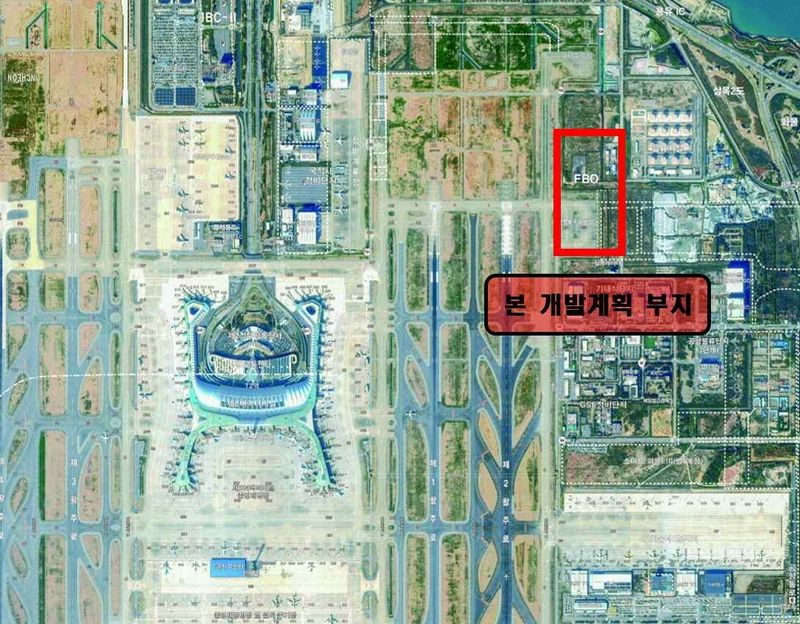
Incheon International Airport Corporation said on the 14th that it is seeking a developer for the Incheon International Airport business aviation complex project, with applications due by the 22nd of next month.
The large-scale project will develop a 170,000-square-meter site near Incheon International Airport with a private jet terminal, two hangars and a 24-hour airport service system.
The private jet terminal to be built will be the country's largest dedicated passenger facility, with a building area of at least 3,000 square meters, and will be equipped with expedited customs, immigration and quarantine (CIQ) services and security screening systems. It will also provide a comprehensive range of services, including a premium lounge for private jet passengers and crew, aircraft maintenance, repair and storage, ground support, and refueling.
The two hangars, each with a building area of at least 4,800 square meters, will be built in two phases. However, if the first hangar has a building area of at least 9,600 square meters, no additional hangar will need to be built.
The project will be carried out with 100% investment and development by a private-sector operator, while the corporation will provide infrastructure, including the project site, an aircraft apron, power and telecommunications. Eligibility is limited to companies that have operated a private jet terminal for at least two years within the past five years, or have at least two years of business experience after registering as an aircraft-handling business. Applicants may participate as a single company or as a consortium, with the lead company holding a stake of at least 30%. The corporation plans to evaluate the applicants and select the highest-scoring one as its preferred negotiating partner.
Under the development schedule, the private jet terminal is expected to open first in 2028, followed by completion of the hangars in 2030, bringing the business aviation complex to completion. The corporation expects demand for business aircraft arrivals at Incheon International Airport to surge from 943 aircraft in 2030 to 4,611 in 2040 once the complex is built.
South Korea has long been criticized for having relatively weak business aviation (FBO) infrastructure compared with the size of its economy. In particular, although a business aviation center has been operating at Gimpo Airport since 2016, nighttime noise restrictions have limited operations from 11 p.m. to 6 a.m. the following day.
Incheon International Airport plans to capitalize on its ability to operate airport services 24 hours a day to attract demand from global businesspeople and high-net-worth individuals, and to raise the competitiveness of the country's aviation industry to a new level.
Lee Sang-yong, head of the new business division at Incheon International Airport Corporation, said, "We will successfully develop the country's largest and the world's third-largest business aviation complex and further strengthen Incheon International Airport's global competitiveness."
[email protected] Jeon Min-gyeong Reporter