“Take a Short Break in a Virtual Space”: AI “Online Retreats” Gain Popularity ... Reporter Builds a Church, Too [Recorder of the Low Places]
- Input
- 2026-11-15 06:00:00
- Updated
- 2026-11-15 06:00:07
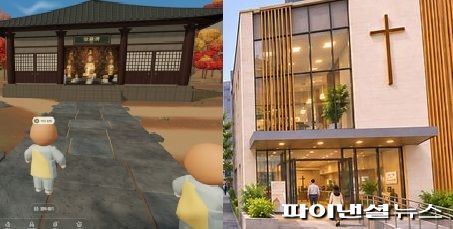
More people are using artificial intelligence (AI) to create virtual spaces themselves. The metaverse, once used mainly for corporate events and online gatherings, is now also being used as a place to enjoy activities suited to personal tastes or take a short break. To find out why people are seeking rest online, the reporter also used AI to recreate the area around Gangnam Station in Seoul and a virtual church in about an hour.
[Financial News] After work, people return home and turn on their smartphones. Some gaze at a campfire in a virtual campsite, while others spend time in an online sauna. These are places where people can take a short break without traveling far or meeting strangers.
These “online retreats” have recently grown popular, particularly on social networking services (SNS). People pray, take walks or simply spend time doing nothing in virtual spaces modeled on temples, campsites and parks.
In particular, more people are using artificial intelligence (AI) to create virtual spaces themselves. They can now bring their desired locations and features to life without being professional developers.
“I Didn’t Even Have the Energy to Go to a Temple”... 600,000 Visit Online Temple
One online retreat that has recently drawn attention is the virtual temple “Mountain Temple.” The website was created with AI by a job seeker who had graduated with a degree in English literature and was preparing to find work. In an interview with Yonhap News Agency on the 31st of last month, the creator said it was made because “I wanted to go to a temple and take a short break, but as a job seeker, I didn’t have the time or energy to get there.” According to the developer, 600,000 people visited Mountain Temple in just three days.
In the online prayer hall, visitors can move a character resembling a young Buddhist novice to bow, or listen to Buddhist chants. The site initially had only 20 meditation cushions, but the number rose to 10,000 as visitors surged. Mountain Temple was created using “vibe coding,” in which users describe the features they want to AI and have it generate the code. It drew interest because people can build a website without much programming experience.
Some of the site’s users were not Buddhists. Others said they logged on to relax in a quiet setting or spend time in the same space as other people, regardless of their religion.
“Not Enough Time, Even When I Want to Rest”... Office Workers Turn to “Virtual Spaces”
Users say one advantage of online retreats is that they can take a short break without spending time or money traveling. They can log into a space of their choice after work without making any special preparations.
A, an office worker in their 30s, said, “After talking to people all day at work, I want to be somewhere quiet at home,” adding, “It’s not a burden because I can just pop into the metaverse for a bit and then leave.” B, an office worker in their 40s who enjoys camping, said, “On days off, I’m tired, so I end up staying home,” adding, “I sometimes use the online campsite because I can just stare at the campfire and zone out.”
Surveys on leisure time also support office workers’ accounts that it is difficult to get enough rest even after work or on days off. According to the Ministry of Culture, Sports and Tourism’s 2025 National Leisure Activities Survey, people had an average of 3.8 hours of leisure time per weekday. The figure was lower than the overall average for people in their 30s, at 3.4 hours; those in their 40s, at 3.3 hours; and those in their 50s, at 3.5 hours.
C, an office worker in their 20s, said, “If you want to go somewhere after work, you have to factor in time to get ready and travel,” adding, “Online, all I need is my phone, and it’s convenient because I can just look around and leave.”
Another feature is that people can stay in the same space as other users without having to talk to them. D, an office worker in their 50s, said, “I meet people at work, too, so it’s tiring to have to talk to someone even during my break,” adding, “I found it nice to be there quietly on my own while other people were there, too.”
Many people also feel lonely in their daily lives. According to the 2026 Survey on Perceptions of Loneliness, conducted by market research firm Embrain Trend Monitor among 1,000 men and women aged 19 to 59 nationwide, 53.5% of respondents said they usually feel lonely.
By age group, the figure was highest among people in their 20s, at 60.0%, followed by those in their 30s at 49.2%, their 40s at 54.4% and their 50s at 50.4%. Reported reasons for loneliness included a lack of financial means (41.7%), feeling that there was no one to meet (37.4%) and having no one to confide in (34.2%).
For people who feel lonely but also find it burdensome to form relationships with others, online retreats are becoming a new kind of place to rest. They can stay in the same space as other users without having to talk, and log in whenever they want to spend time alone.
Reporter Builds a Virtual Church With AI... A Church Near the Office
How easy is it to create an online retreat? The reporter set out to build a virtual city with a street near Gangnam Station in Seoul as its backdrop, and place a church in it.
The project used technologies for creating three-dimensional spaces, including OpenAI’s coding tool Codex, Astra mode and Unreal Engine.
The first step was to gather reference materials for the real location. The reporter prepared street photos and Street View images from near Gangnam Station, then asked the AI to create the surrounding buildings around the Financial News Building.
The scene incorporated the building’s bright exterior walls, glass windows and blue signs, with shops, street trees and vehicles placed nearby. Virtual people were added to the sidewalks to create the feel of a busy street.
A church was then built in one part of the city. It was not a replica of a specific church at that real-world location. Instead, a new religious space was added to a city modeled on the real-life streets around Gangnam Station.
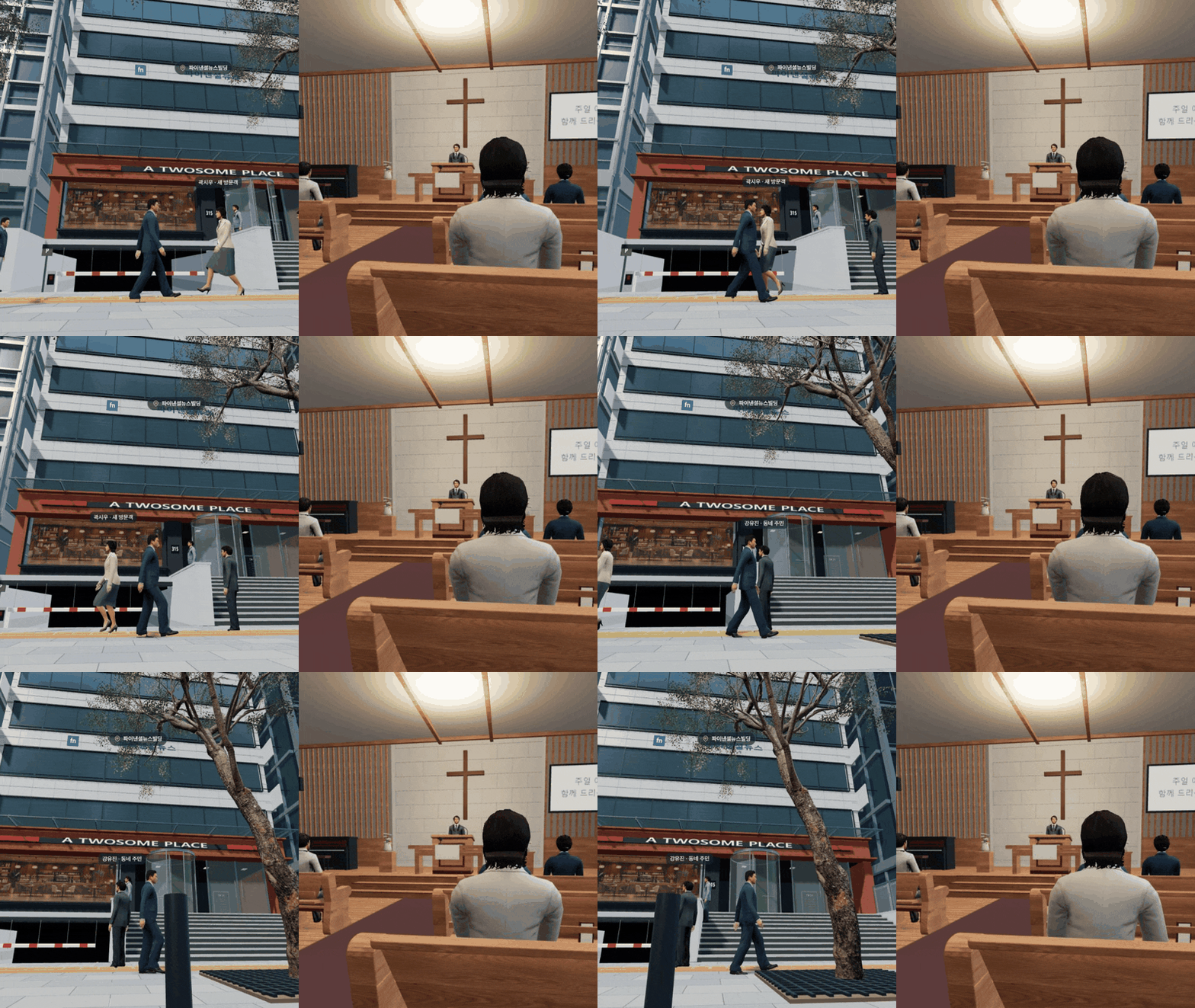
The process involved describing the desired scene and features to the AI and reviewing what it generated. The reporter did not have to model each building or person or write program code by hand.
In about an hour, the virtual space—with its streets and church interior—was complete. It was not an exact replica of the area around Gangnam Station based on precise surveying, but it was possible to create an experiential city informed by its architectural features.
Features could also be added to let multiple users move around or talk together in the space. It could be developed to let users attend online services or interact with other virtual characters. The process showed that a basic virtual city could be created simply by describing the desired location and features to AI.
From Saunas to Campsites... Individuals Can Easily Create Virtual Spaces
The popularity of online temples has been accompanied by a range of other virtual spaces, including Catholic churches, churches, saunas, campsites and fishing spots. These bring online leisure activities that people enjoy in real life, such as laying out a picnic mat in a virtual Hangang Park or watching a campfire at a campsite.
The way people use the metaverse has also changed. During the COVID-19 pandemic, companies and universities often built large virtual platforms to hold entrance ceremonies, meetings and other events. Some services saw their use decline after in-person activities resumed.
One difference is that many of the virtual spaces that have recently emerged are small websites created by individuals to suit their own tastes. As AI coding tools have become widely available, people without professional development teams can now build spaces with the features they want.
Instead of taking part in scheduled events, users log in whenever they like and enjoy short activities. In virtual spaces, people can communicate with others or play games, while some prefer to take a walk alone or spend time looking at the scenery.
B, the office worker in their 40s who earlier said they used an online campsite, said, “It can’t be the same as actually going on a trip. Still, I can be somewhere quiet for even a few minutes without going far,” adding, “After working all day and coming home, there are days when you just want to rest without thinking about anything.”
We record earnest stories of life in print. We capture the words gathered on the ground as they are, even when they are rough around the edges. From alleys and markets to someone’s workplace, the record of the ordinary days we have passed by finds its way to you, our readers.[Recorder of the Low Places]To receive it conveniently, please subscribe to the reporter’s page.
[email protected] Han Seung-gon Reporter