NYT Calls It “Exploitation,” Korea Calls It “Upfront Investment” ... The K-pop Dilemma NewJeans Set in Motion [Park Ji-hyun’s Art World]
- Input
- 2026-11-14 03:10:00
- Updated
- 2026-11-14 03:10:00
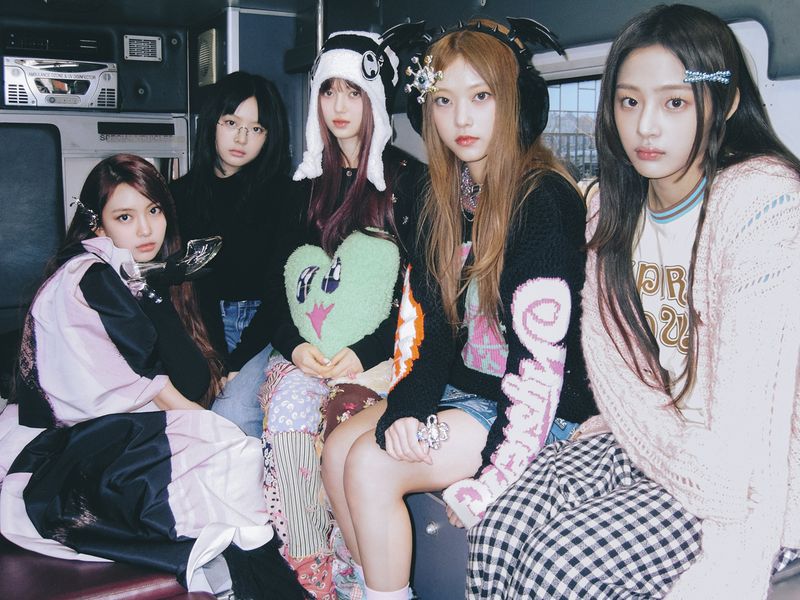
[Financial News] A major clash of paradigms that goes beyond a simple exclusive-contract dispute and calls into question the foundations of the K-pop business model has come to the fore. According to the music industry and foreign media on the 14th, the U.S. newspaper The New York Times (NYT) has published a series of articles this month focusing on the structure of the K-pop industry. In particular, after the NYT published an article examining the inner workings of the industry through an analysis of the exclusive contracts of South Korean idol group NewJeans, HYBE and the Korea Popmusic Industry Association immediately pushed back. The result is a head-on clash on the global stage between the strict yardsticks of global standards and K-pop’s distinctive “Korean-style incubation system.” Having established itself as part of mainstream global culture, K-pop now faces a crucial test: proving the sustainability of its business system beyond its expansion in scale.
■ “High-Risk Investment Fund” vs. “Ladder of Opportunity” ... Clashing Definitions of the Industry
The central issue raised by the NYT’s coverage is the economic structure unique to K-pop itself. The NYT analyzed that K-pop agencies operate like “high-risk investment funds,” using one star to cover the costs of numerous failures. Because agencies oversee the entire process, from recruiting trainees to training and debuting them, the argument goes, their contracts inevitably impose hefty penalties for breach and tightly control artists’ activities in order to recoup their investments. In an interview with the NYT, former MTV Korea executive Bernie Cho criticized the arrangements, saying, “K-pop artists often find themselves in contractual situations where they feel less like business partners and more like corporate assets—or, in the worst cases, ‘meat puppets.’” Entertainment lawyer Dina LaPolt also criticized the structure, in which agencies monopolize the roles of label, manager and agent, calling it “an outdated model that has already disappeared in the United States.”
The domestic industry, by contrast, describes it as an independent system for developing talent that cannot be judged solely through a Western lens. The Korea Popmusic Industry Association emphasized that the “upfront-investment incubation” system requires agencies to put up enormous sums in advance for everything from vocal and choreography training to housing, while bearing the full financial risk of a failed debut. Its position is that it is difficult to discuss unfairness based only on some restrictive contract clauses while overlooking the industry’s role in giving people the opportunity to enter the global arena based on talent alone, regardless of their personal financial means.
In fact, HYBE invested about 22.1 billion won over the two years following ADOR’s establishment in 2021, fully covering the initial production costs. As a result, NewJeans members, free of debt from their trainee days, were able to receive settlement payments in the 5-billion-won range per person in 2023, shortly after their debut. This is why some argue that an agency’s vast financial resources can serve as a dependable “ladder of opportunity,” especially compared with the Western pop market, where artists shoulder a substantial share of agent fees and album production costs themselves.
■ The Limits of Monetizing “Human IP” and the Dilemma of Control

The sharpest divide concerns the way artists are treated as intellectual property (IP) and turned into assets. The NYT pointed out that the contracts include provisions allowing agencies to use members’ faces and voices in AI chatbots and other applications even after the contracts expire. HYBE countered that AI content can be used only with the individual artist’s consent. Regardless of whether that is the case, the controversy points to an inevitable limitation of the industry as entertainment companies seek to use “human IP” as a perpetual source of revenue. How to define artists’ rights at the boundary between human resources and financial assets has emerged as a key risk for the K-pop market.
The boundary between control and protection is also in dispute. The NYT criticized the contracts for including subjective clauses that prohibit “unhealthy” relationships with the opposite sex or unprofessional behavior, arguing that they oppress artists. The NYT also noted that, much like the outdated U.S. system of the past, agencies in the K-pop industry hold all the control.
HYBE, however, countered that the morality clause is a minimal measure to protect artists and prevent legal risks such as defamation. The Korea Popmusic Industry Association also said that management infrastructure, including in-house medical professionals and mental health care programs, should not be dismissed as mere control. Given the economic structure of the K-pop industry, where an artist’s scandal can directly lead to the evaporation of trillions of won in a company’s market value, the industry sees this as an essential area of risk management. There are also growing concerns that if lawful contracts intended to prevent tampering (prior contact), among other things, are unilaterally broken, the “investment-recovery-reinvestment” ecosystem underpinning K-pop could be damaged.
■ Global Standards Grow More Exacting ... Differences Between Korea’s Legal Safeguards and Western Systems
Unlike the criticism from foreign media, South Korea’s popular music industry has also continued to strengthen its legal and institutional safeguards, learning from past mistakes. A prime example is the Popular Culture and Arts Industry Development Act, enacted in 2014. The law explicitly guarantees basic rights for young popular culture artists, including the right to education and the right to sleep, and strictly limits working hours to 35 per week for those under 15 and 40 per week for those aged 15 and older. Major agencies, including HYBE, are also implementing institutional measures, such as requiring the signing of nationally standardized supplementary agreements for minors and appointing officials responsible for protecting young people.
Even so, demands for global standards are becoming more exacting. Western countries focus on artists’ economic autonomy and the separation of rights. In the United States, strong financial safeguards include California’s Coogan Act, which requires at least 15% of the income of child actors and minor performers to be placed in a trust account until they reach adulthood. This is why calls are growing for the Korean industry to move beyond simply expressing grievances or adopting a defensive posture and consider how to incorporate and adapt the principles behind such advanced global systems within K-pop.
The K-pop industry has reached a new turning point alongside its remarkable growth in scale in the global market. As the industry becomes more sophisticated and corporate value depends ever more heavily on artists as human capital, a clash with the ethical standards demanded by global capital markets is inevitable. It is important to preserve the industrial efficiency of the existing upfront-investment incubation model, which develops global stars through meticulous planning and investment. But the time has come for K-pop to preserve that dynamism while building reasonable contract standards and transparent risk-management systems aligned with global standards—and to prove the sustainability of its ecosystem for itself.
[email protected] Park Ji-hyun Reporter