“The More You Tell Me Not to Buy It, the More I Want It” ... “Scarf Uncle” Has Namdaemun Buzzing
- Input
- 2026-11-15 15:28:29
- Updated
- 2026-11-15 15:28:29
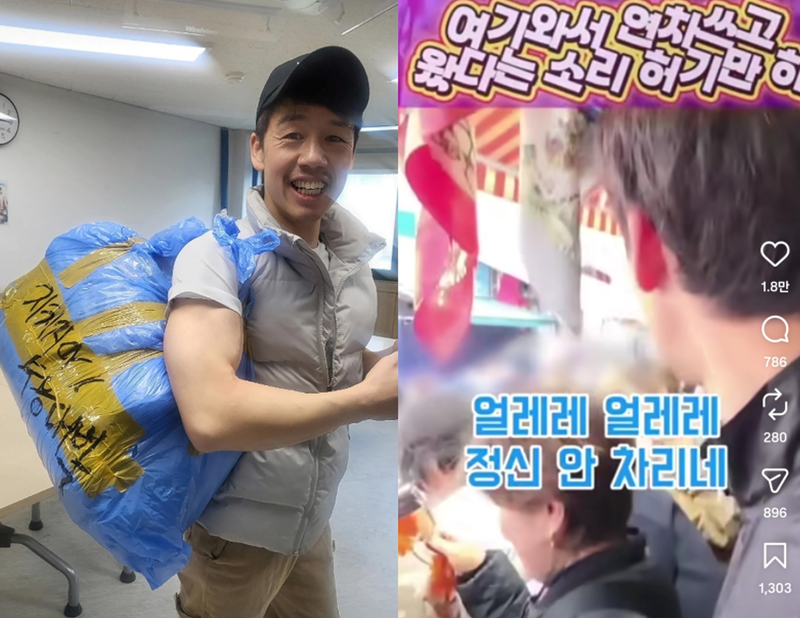
According to industry sources on the 15th, meeting and talking with vendors has recently become as much of a draw at traditional markets as the products themselves. The Scarf Uncle at Namdaemun Market is a prime example. He sells six scarves for 10,000 won and shows off his signature banter, telling customers, “Even if you buy it, you won’t wear it once you get home,” and “Don’t risk your life over one scarf.” His manner, which seems to involve scolding customers but does not actually pressure them to buy, became a sensation on social media. Because he resembles Hollywood actor Leonardo DiCaprio, he has also earned nicknames such as “Scarf-rio” (scarf + DiCaprio) and “Namdaemun Lim Young-woong.”
People who saw videos online are coming to the shop in person, bringing new energy to the market. On the afternoon of the 12th, a remarkable scene unfolded in front of the Scarf Uncle’s shop at Namdaemun Market, where visitors from other parts of the country as well as foreign tourists gathered to take photos and videos. Some visitors had even traveled up by train from other regions. A woman in her 60s who said she had come from Daejeon said, “My friends and I share several videos of the Scarf Uncle in our group chat.” Another woman said, “At other shops, they try to sell you one more thing, but here he tells you not to buy anything, so I actually trust him more.” One visitor said they had become such a fan that they watched related videos for four to five hours a day, including during their commute.
The trend is not limited to Namdaemun Market. The souvenir shop Deungdae Geujip in Mukho, Donghae-si, Gangwon, is also drawing attention as a place young travelers visit to meet a vendor who has become famous for distinctive greetings and a friendly manner. The shop’s owner, nicknamed “Kkoro Kkogok,” welcomes customers with distinctive greetings such as “Kkorok Kkogok” and “Kkeoi Kkeoi Kkeoi.” As more visitors seek to experience in person what they saw on social media, take photos with the owner, or chat with them, visiting the shop has become part of their travel itinerary.
There are also examples overseas of vendors’ personalities drawing tourists. Alper Temel, who sells corn and chestnuts in Istanbul, Türkiye, became a social media sensation for his good looks, and tourists from around the world began visiting his stall. Li Junyong, a street vendor in Jingdezhen, Jiangxi, China, also attracted tourists after going viral on social media for his style of selling, trading jokes with customers.
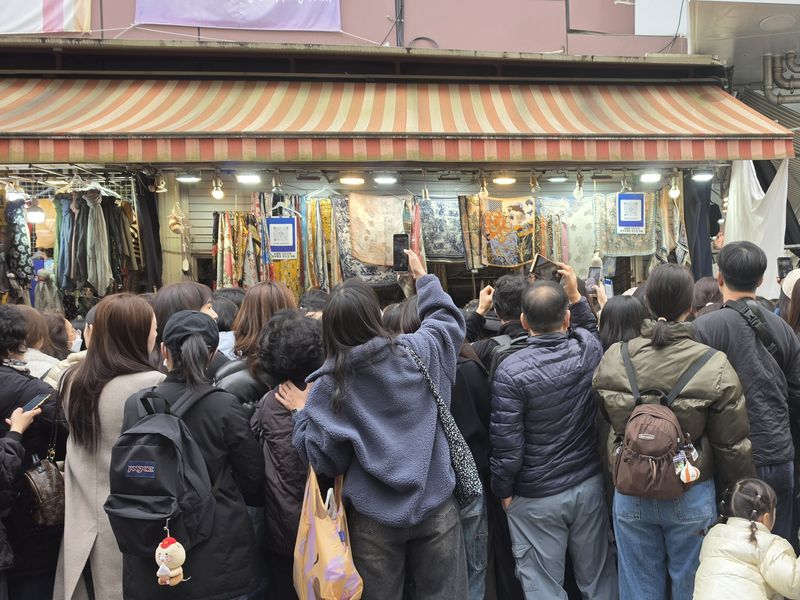
High prices are also a factor that makes traditional markets more appealing. The opportunity to enjoy a range of experiences, such as trying different foods and browsing the market at relatively low prices, is drawing consumers in. Professor Heo Gyeong-ok of the Department of Consumer and Industry at Sungshin Women's University said, “Traditional markets are places where people can save money, and interest in them is growing as information sharing through social media becomes more active and visiting the market itself is seen as an experience and a source of fun.”
Experts stress that for this interest to extend beyond one-time visits and bring lasting vitality to traditional markets, they need to build competitiveness that encourages people to return. Professor Lee Hongjoo of the Department of Consumer Economics at Sookmyung Women's University said, “Traditional markets should strengthen distinctive experiences, such as unique products and interactions with vendors, while also improving basic aspects of the shopping environment, including price transparency and ease of payment. Ultimately, what brings people back is satisfaction with the products and services.”
[email protected] Seo Ji-yoon Reporter