'ROHTKO' Director: 'AI Co-Creator Eventually Fired... Humans Are Expensive but Beautiful'
- Input
- 2026-11-14 07:00:00
- Updated
- 2026-11-14 07:00:07
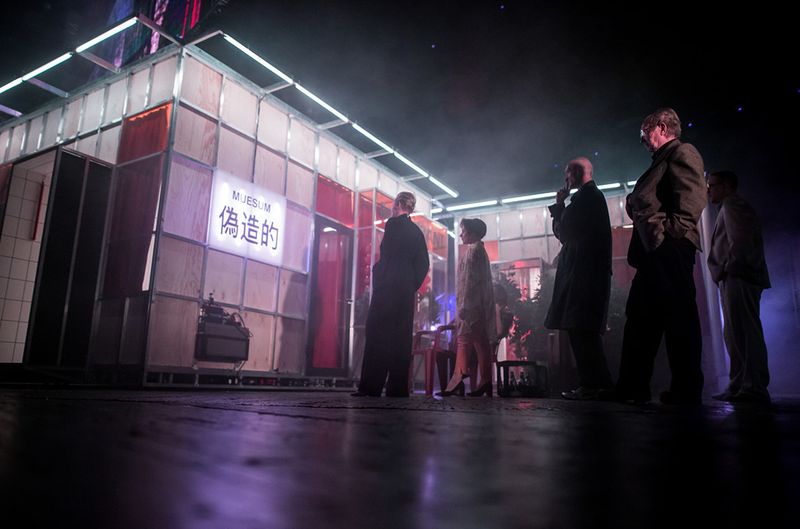
[Financial News] “Which is closer to the original: an authentic work whose colors have faded over time, or a replica that perfectly recreates how it looked when first painted?”
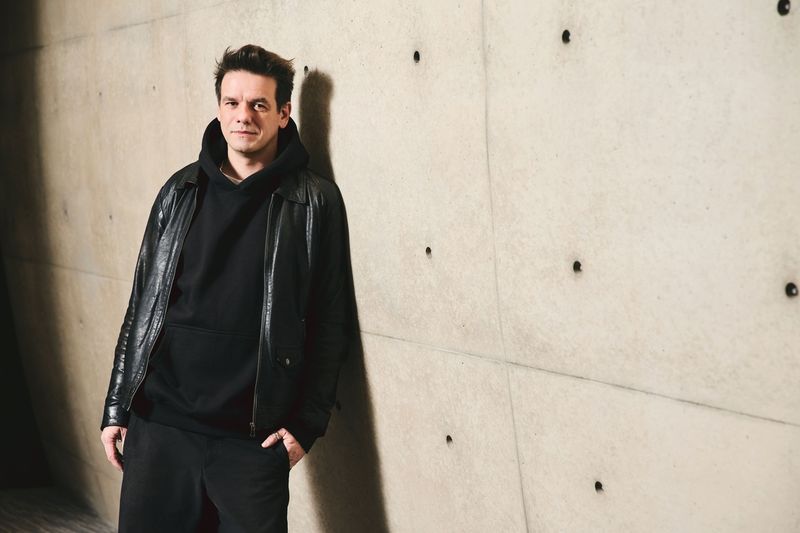
Polish director Łukasz Twarkowski, a figure of interest in European theater, uses the play ROHTKO to question the boundaries between original and copy, real and fake. ROHTKO is based on the forgery scandal involving Mark Rothko that shook the U.S. art market. A Rothko work sold by New York's Knoedler Gallery for about $8.3 million in 2004 was revealed seven years later to be a forgery painted by the little-known Chinese artist Pei-Shen Qian.
A notorious forgery scandal that rocked the art market
At a press conference held on the 11th at LG Arts Center Seoul in Magok, Seoul, Twarkowski said, “Mark Rothko used pigments that were not very durable, and the colors in some of his paintings faded completely over time.” He added, “From the viewer's perspective, a replica that accurately recreates a work as it looked when completed may actually be closer to the original than an authentic work that has lost the effect Rothko intended.”
Playwright and dramaturg Anka Herbut connected the case with the Chinese concept of “shanzhai,” which views copying as a new form of creation. The title is also spelled ROHTKO, with the positions of the T and H switched from the artist's English name, ROTHKO. The spelling is almost identical to the original, but subtly askew, revealing the unclear boundary between original and copy.
“Europe has judged value based on physical objects and unique originals,” Twarkowski said. “But shanzhai offers a different perspective, one that is not fixed on the original. A replica can be equal in value to the original or even more valuable,” he explained.
Video, music and performance combined
Twarkowski is a director who fearlessly breaks down the boundaries between theater and film. Video, sound and the architectural set are not devices that support the dialogue; each is a protagonist creating its own independent narrative.
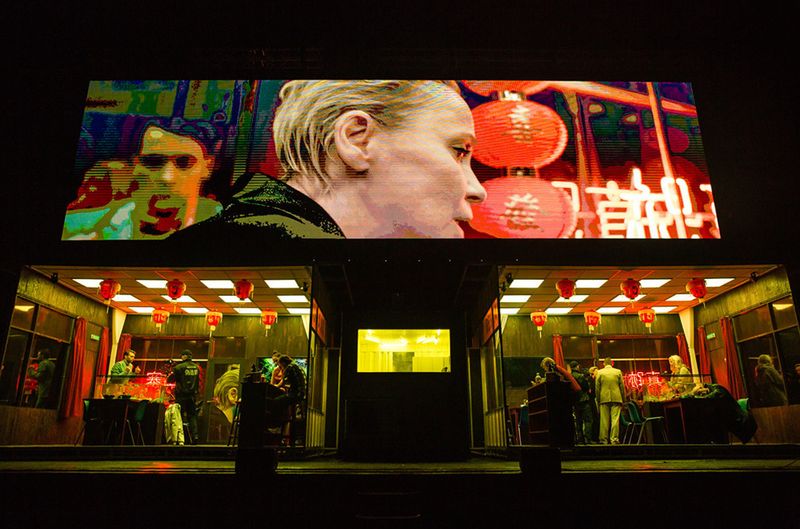
The stage features a vast set resembling a film studio, designed by French visual artist Fabien Lédé. The actors' performances are filmed by cameras onstage and relayed live to a large screen. The audience watches the camera operator's movements and sees firsthand how each scene is created, while also taking in the finished cinematic image on the screen.
“We look at our phone screens countless times a day and have more contact with screens than with any other person or object,” Twarkowski said. “This everyday routine has even changed how we perceive the world and our relationships.” He continued, “The audience sees both what is actually happening onstage and the process of filming it, but comes to believe that the familiar image on the screen is more real than the reality before their eyes.” He explained, “It was important to show the tension of cinematic fiction seeming more real than actual actions.”
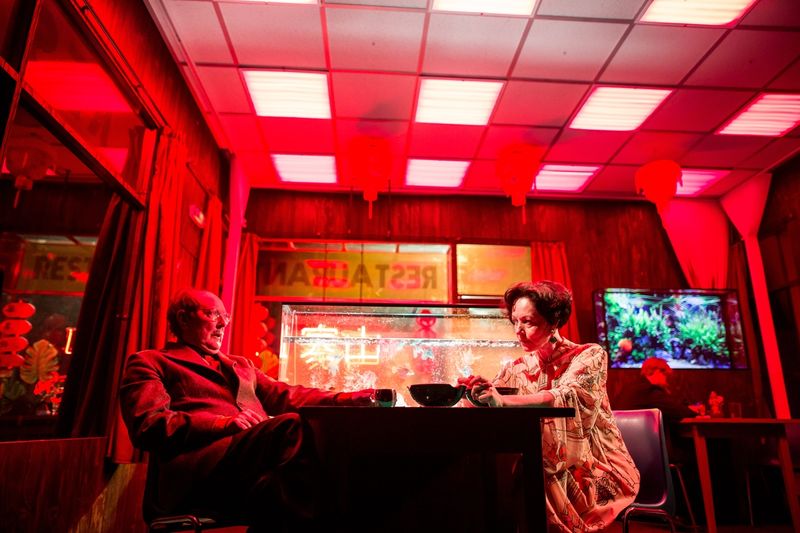
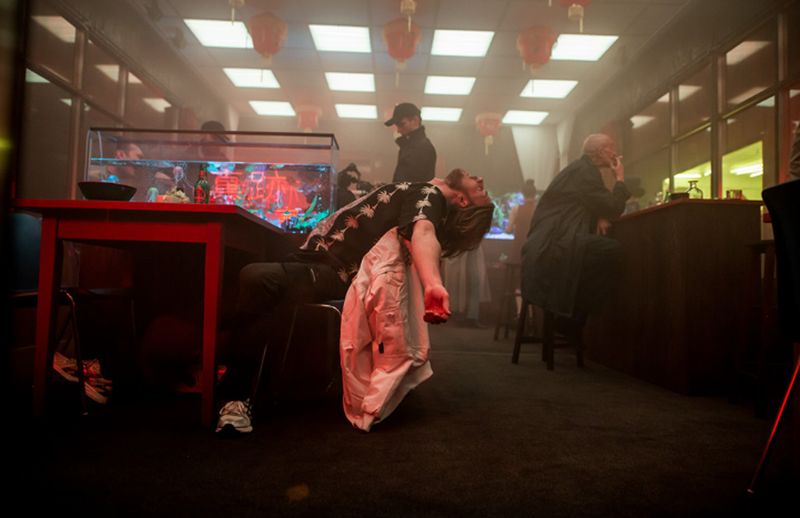
The performance's official running time is 3 hours and 55 minutes, including a 25-minute intermission. Actors from Latvia, Poland and China perform in several languages, while Lubomir Grzelak's powerful techno music and neon-lit video transform the venue into an art gallery, a film studio and a vast club.
The age of AI, awash in copies
In the four years since the work premiered in Latvia in 2022, questions about originals and copies have become more pressing. We now live in an era when generative artificial intelligence (AI) learns the styles of specific artists to create new images, while fake information that is difficult to distinguish from reality is mass-produced.
In his previous work Oracle, Twarkowski also brought an AI agent named Daisy into rehearsals as a co-creator. The experiment had actors try to bring AI-generated ideas to life onstage, no matter how absurd they were. “The process was fun, but it didn't lead to major artistic achievements,” he said with a laugh. “In the end, I fired Daisy from the production.”
He believes technology should be used as a tool for understanding the human condition today, rather than rejected. However, he stressed that the reasons for using technology must be clear. “If you can express something without video or technology, it's much better not to use them,” he said.
He also predicted that as technology advances, the “liveness” of the performing arts will become even more precious. “At some point, the experience of having direct contact with another person may become a kind of luxury,” he said. “It may become much easier to exclude the human element, so we should support live art.” He added, “Humans are expensive, but beautiful.”
Meanwhile, ROHTKO won five awards, including Best Production and Best Director, at the Latvian Theatre Awards Spēlmaņu nakts in 2022. In 2024, it received the Best Foreign Production award at Italy's Ubu Awards.
[email protected] Shin Jin-a Reporter