“100 Million Won Invested, Yet 26 Million Won Vanished Even If the Index Recovers”... The Trap of ‘This’ That Retail Investors Flocked to [Money Signal]
- Input
- 2026-11-14 09:00:00
- Updated
- 2026-11-14 09:00:10

[Financial News] Imagine 30 million won, painstakingly saved by setting aside part of each paycheck and living frugally. Suppose you invested this hard-earned money in NVIDIA, the world’s largest artificial intelligence (AI) semiconductor company. If the stock price flashing on the ticker plunged 14% in a single day, the mark-to-market loss alone would be 4.2 million won. That is cash that would take more than eight full months of diligently saving 500,000 won every month to amass, vanishing into thin air overnight. For some, that is a child’s after-school academy tuition; for others, a month’s worth of family living expenses.
Yet this seemingly unreal crash actually played out in the market. The stock plunged more than 14% intraday after Jensen Huang, CEO of NVIDIA and both a symbol of the global AI industry and an emperor of its empire, suddenly stepped down.
The truly surprising scene came next. As the stock collapsed and the market turned into a bloodbath, individual investors began scooping up NVIDIA shares. Net purchases totaling $111 million poured in during just the first 30 minutes after the opening bell—about 150 billion won. That was the largest amount individual investors had ever bought in the first 30 minutes after the open in NVIDIA’s history. What exactly did they believe in to make such a bold bet?

According to financial industry sources and foreign media on the 14th, NVIDIA officially announced on the 12th (local time) that CEO Jensen Huang had immediately resigned as president, CEO, and a member of the board of directors. The driving force behind transforming a gaming graphics processing unit (GPU) company into the heart of the global AI semiconductor industry over the 33 years since co-founding it in 1993 had returned to life outside the corporate world overnight.
Controversies in his personal life and allegations surrounding semiconductor export controls to China have been cited as possible reasons for the resignation. Although neither the facts nor any legal responsibility have yet been fully established, what the market feared most was the vacuum left by an ‘irreplaceable decision-maker.’
The shock was reflected plainly in the numbers. On the 12th, NVIDIA opened at $151 on the New York Stock Exchange, down 13.08% from the previous day, and its intraday loss widened to as much as 14.35%. At one point, about $600 billion (approximately 800 trillion won) in market capitalization evaporated.
But as trading progressed, the mood took a curious turn. Bargain hunters poured in at a startling pace, taking advantage of the sharp drop in the stock price. NVIDIA ultimately recouped much of its intraday loss, closing down 4.34% at $166.19.
Overseas-investing retail traders were at the center of the rebound. According to market research firm Vanda Research, the $111 million in net purchases by individuals during the first 30 minutes of trading on the 12th was more than 40 times the usual amount for that period. At the height of the panic, retail investors instead hit the button for ‘record-breaking bargain hunting.’ Vanda Research data show that, even before Huang’s resignation was announced, about $42.5 million had flowed into six 2x leveraged NVIDIA ETFs from the 9th through the 11th, while inverse products—bets on a decline—saw no inflows. In other words, individual investors had already been betting on a rebound rather than further losses.
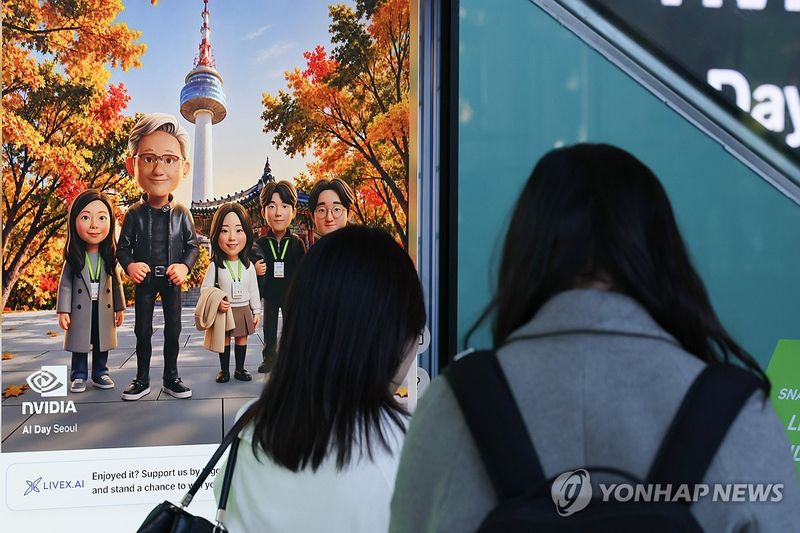
The most powerful weapon underpinning their blind faith is NVIDIA’s ‘moat.’ Its core competitive edge lies in more than simply designing semiconductor chips. Its real weapons are the CUDA software ecosystem, networking technology, and a global pool of developers, all closely interwoven around GPUs over decades. Even if competitors come up with their own chips, it is difficult to bear the switching costs of replacing existing development environments and software. The market’s calculation is that Huang’s departure will not bring down this vast ecosystem overnight.
But the risks behind the ticker must be viewed dispassionately. Jensen Huang was not merely a ‘salaried CEO.’ He was a founder who cultivated relationships with Big Tech customers and built a vast ecosystem by investing in AI companies that would then buy his company’s semiconductors. Whether interim management can fill this leadership vacuum remains uncertain. Reports in foreign media that China’s AI projects worth $3 billion are at risk as uncertainty grows over U.S. export controls on China are also troubling. Another unsettling development is that rivals Advanced Micro Devices, Inc. (AMD) and Broadcom Inc. each surged into the 5% range on the 12th, benefiting in turn.
The market is now focused on the earnings announcement for the third quarter of fiscal 2027, scheduled for the 17th (local time). It will be the first report card since Huang’s departure. More important than the revenue figures alone is whether demand for AI data centers remains strong and whether the supply schedule for next-generation chips faces any disruptions.
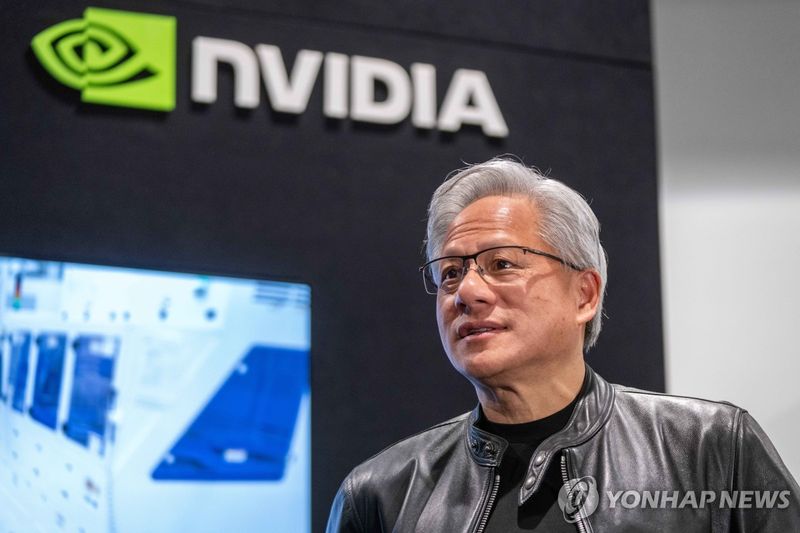
There is a mathematical trap here that individual investors must understand. If a stock bought for 30 million won falls 14%, the mark-to-market loss is 4.2 million won. If the stock then rebounds 14%, the original investment is not restored. A 14% gain on 25.8 million won brings it to 29.41 million won. It takes a 16.3% rise to get back to where it started. The deeper the valley, the steeper the climb back out.
The earnings report on the 17th will show whether the retail investors’ 150-billion-won bet was a victory for smart money or a hasty blunder that sends them digging deeper into the basement. One fact is clear: retail investors firmly believe that the fundamentals of the ‘empire’ NVIDIA built over 33 years are stronger than the presence of its ‘king,’ Jensen Huang.
But more important than blind faith is the ‘stamina of my account.’ A company can overcome a crisis and resume its upward trajectory at any time. But if you do not have money you can afford to leave invested until the recovery comes, the company’s growth will not translate into returns for you. Faced with NVIDIA’s 14% plunge, the real question we should ask is not, ‘Is this the bottom?’ but, ‘Can my money withstand this volatility in full?’
[email protected] Jeon Sang-il Reporter