Jeju City Festivals Estimated to Generate 5.14 Billion Won in Regional Production—1.19 Times Spending
- Input
- 2026-11-13 18:05:29
- Updated
- 2026-11-13 18:05:29
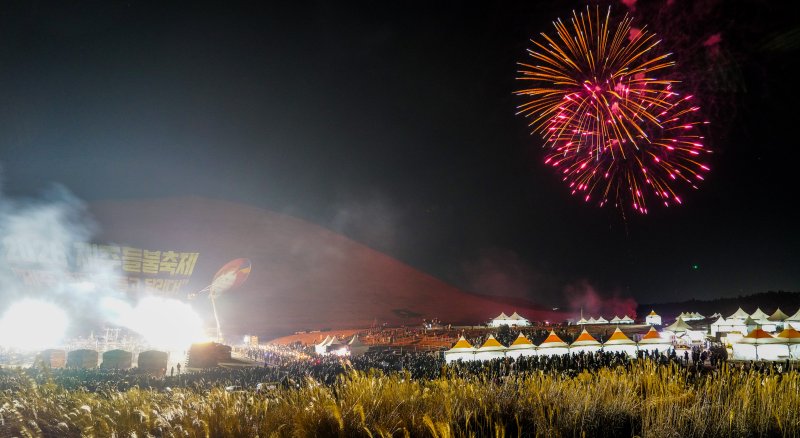
【Financial News, Jeju = Jeong Yong-bok】 The production impact within Jeju from budget spending on 39 festivals held in Jeju City last year was estimated at 5.14 billion won. The production impact from spending by visitors from outside Jeju was separately estimated at 11.82 billion won.
According to the Jeju Research Institute on the 13th, associate research fellow Jo Nam-un and research fellow Lee Jung-hwa presented these findings in a policy issue brief titled “Economic Ripple Effects and Implications of Jeju City Festival Projects in 2025.”
The research team analyzed settlement data, expenditure records for individual projects, and final reports for 39 festivals organized last year by Jeju City Hall and its eup, myeon and dong units. Using the Bank of Korea's 2020 Jeju regional input-output table, they calculated the respective effects of budget spending and visitor spending on the local economy.
Last year, Jeju City allocated 4.237 billion won in its own funds to 39 festivals. Eleven were organized by city hall, and 28 by eup, myeon and dong units. Some festivals also received about 248 million won in contributions from residents.
The 37 festivals for which expenditure records were available spent 4.336 billion won, including residents' contributions. The researchers estimated that 4.13 billion won, or 95.2% of the total, was paid to businesses in Jeju.
The production impact within Jeju from budget spending was 5.144 billion won, or 1.19 times the amount spent. The researchers estimated value added at 2.69 billion won and the employment impact at about 32 jobs.
Production impact refers to the direct and indirect output generated across regional industries as festival budgets are spent on event operations and transactions in goods and services. It is an estimate of the economic ripple effect based on an input-output model, not actual sales or net profit.
By spending category, sports and entertainment services, including event management and performances, accounted for the largest share at 57.0%. Equipment rentals for stages, sound systems and tents made up 11.6%, printing promotional materials 7.6%, purchases of goods 7.2%, and restaurants and lodging 2.7%.
The researchers also analyzed the economic effects of spending by visitors from outside Jeju. They estimated that about 85,709 such visitors spent money in Jeju in connection with their festival visits. Their spending was calculated at 9.026 billion won.
That spending was estimated to generate 11.823 billion won in production and 4.989 billion won in value added within Jeju. The employment impact was estimated at about 120 jobs.
Lodging and food and beverage accounted for 62.2% of visitor spending. Spending across industries such as lodging and restaurants, transportation, and shopping generated production across Jeju.
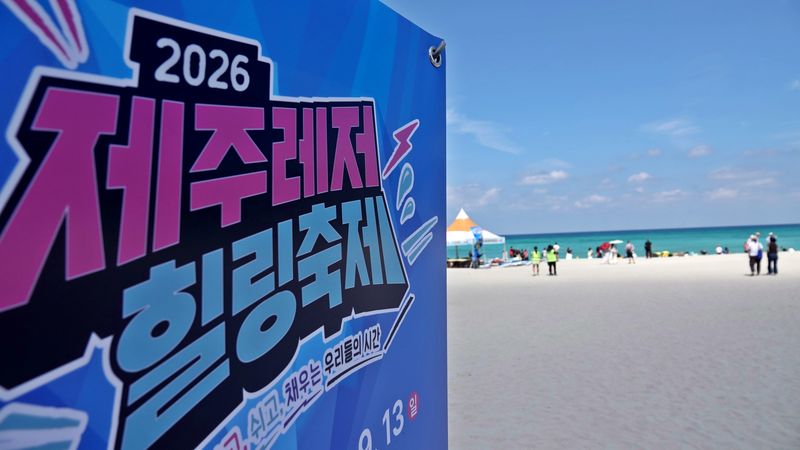
The festivals also varied in scale and character. Jeju City allocated 49% of its own funds to three festivals: the Jeju Fire Festival, the Jeju Leisure Healing Festival, and Art Festa in Jeju. The remaining festivals were held using resources such as beaches and ports, old downtown areas, and villages' natural, historical and cultural assets.
Festivals organized by Jeju City Hall focused on attracting tourists and on cultural and artistic activities, while festivals organized by eup, myeon and dong units also served functions such as encouraging resident participation, fostering community activities and preserving local culture.
The researchers proposed linking efforts to attract visitors from outside Jeju to longer stays and spending for tourism-oriented festivals, and applying performance indicators suited to each festival's character—such as resident participation and satisfaction—to village-level festivals. They also recommended coordinated promotion of festival schedules, partnerships with local restaurants and lodging businesses, and a shared analytical framework for Jeju City and Seogwipo City as directions for future festival policy.
[email protected] Jeong Yong-bok Reporter