Applying Steroids to a Red Face Can Be Poisonous ... Learn About Rosacea and Treat It Properly [Woo Su-han's Excellent Skin Notes]
- Input
- 2026-11-16 09:00:00
- Updated
- 2026-11-16 09:00:02
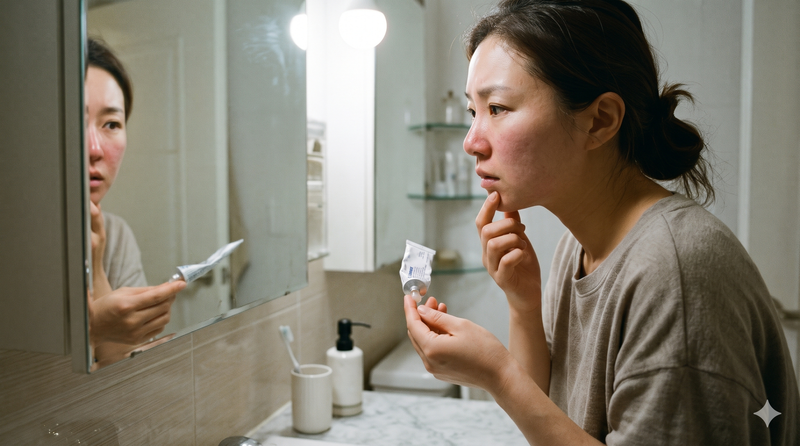
[Financial News] If your face easily turns red and feels hot even in cold weather or in response to minor irritation, you should suspect rosacea, a chronic inflammatory skin condition, rather than simply a predisposition. Rosacea looks similar to adult acne, but its underlying mechanisms and treatment are entirely different. Overusing exfoliants based on self-diagnosis or applying steroid ointment on your own can damage the skin barrier and trigger a vicious cycle of dilated capillaries. We look at the causes of a red face, which can become chronic if left untreated, and the right personalized ways to manage it.
Mistaking it for acne and overusing steroids ... the vicious cycle of misguided self-care
Some people with rosacea repeatedly develop red bumps or small, pus-filled pustules on their faces. As a result, quite a few mistake it for adult acne and use acne products or exfoliants. However, while blackheads and whiteheads—known as comedones—are a key feature of acne, comedones are generally not seen with rosacea. Instead, rosacea involves persistent redness and a burning sensation in the center of the face, along with dilated blood vessels and red papules or pustules. Repeatedly applying harsh acne scrubs or exfoliants and irritating cosmetics to this skin can increase irritation and further worsen redness and stinging.
You should also be wary of assuming that a red, itchy face is dermatitis and applying steroid ointment. Steroids may temporarily calm inflammation, making the redness seem to improve, but long-term or repeated use can thin the skin and worsen capillary dilation. They may also greatly aggravate existing rosacea symptoms. When the medication is stopped, rebound effects can make the face even redder, creating a vicious cycle that makes it difficult to stop using the medication. Therefore, you should never use steroid ointment long-term on your own without first identifying the cause.
No one-size-fits-all treatment ... personalized treatment based on the presentation of the lesions
Rosacea treatment varies completely depending on each patient’s most prominent symptoms. If inflammatory lesions such as red papules or pustules are the main problem, topical medications such as metronidazole, ivermectin, or azelaic acid, or low-dose oral antibiotics such as doxycycline, may be used.
By contrast, if persistent redness or dilated capillaries are the main problem, it can be effective to use topical medications that temporarily constrict blood vessels or light-based treatments such as lasers and IPL, which selectively destroy blood vessels. The important point is that there is no single, “cure-all” solution for rosacea. For some patients, redness and dilated blood vessels are the greatest concern; for others, it may be inflammatory lesions or a burning or stinging sensation. It is therefore important to have your skin condition accurately assessed and develop a treatment plan tailored to it.
Skin barrier care to reduce irritation ... don’t dismiss it as a mere “constitution”
Rosacea is often accompanied by impaired skin barrier function. As a result, even when using the same cosmetics as other people, the skin can easily sting or burn, and the skin can become extremely dry and sensitive. Alongside medical treatment, it is essential to take steps to reduce everyday irritation. Wash with lukewarm water, and avoid rubbing the skin vigorously or using scrubs or peels until symptoms subside. After washing, protect the damaged barrier with a gentle moisturizer. Rather than layering multiple products with active ingredients, it is best to minimize the number of steps to reduce irritation. Sun protection is also important, but sunscreen ingredients themselves can cause irritation, so choose a product that feels comfortable on your skin.
A temporary flush caused by heat, exercise, or emotional changes is a normal physiological response. However, if your face becomes red more often than before and the redness lasts longer, or if redness remains around your cheeks and nose and is accompanied by stinging, visible tiny blood vessels, or bumps, you should not dismiss it as a mere predisposition. Rosacea is a chronic condition that is managed over time by avoiding triggers and keeping symptoms under control, rather than being fully cured. It is wise to get an accurate diagnosis early and begin appropriate treatment and care.

/Chief director of the Mapo Gongdeok branch of THE HEAL MAPO
[email protected] Kim Hyun-sun Reporter