Hanwha Aerospace to Develop Indigenous Aircraft Engine
- Input
- 2026-11-13 15:45:57
- Updated
- 2026-11-13 15:45:57
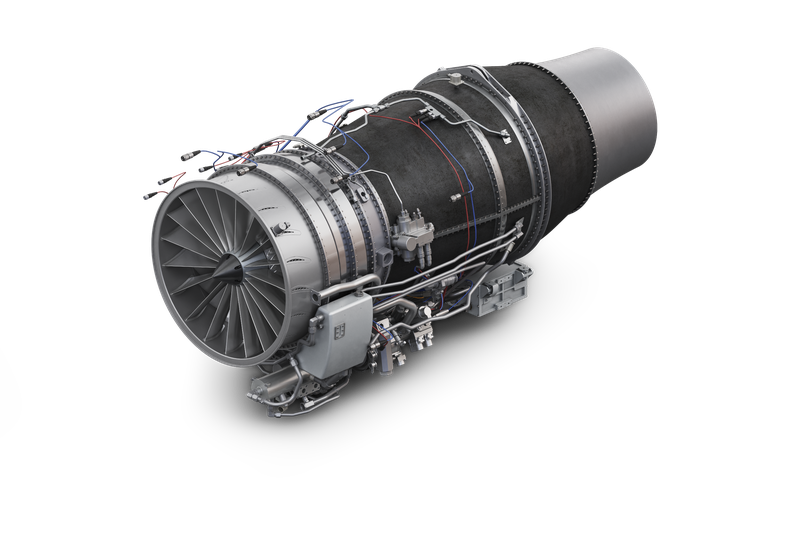
[Financial News] Hanwha Aerospace has been selected as the preferred bidder for a 177.3 billion won project to develop an indigenous aircraft engine. The company plans to boost thrust by using core technologies from existing engines, then build on them to expand into developing advanced aircraft engines for next-generation fighters.
Hanwha Aerospace said on the 13th that it had been selected as the preferred negotiating partner for the Agency for Defense Development’s (ADD) project to develop a 10,000-pound-class high-bypass turbofan engine. The project is worth 177.3 billion won in total, and development is scheduled to run through October 2031.
The goal of the project is to develop, using indigenous technology, a turbofan engine with at least 10,000 pounds of thrust for use on low-observable reconnaissance UAVs. These aircraft are designed to reduce the likelihood of detection by enemy radar and other systems, and require engines with high fuel efficiency and durability to carry out long-duration reconnaissance missions. Hanwha Aerospace will handle the entire development process, from detailed engine design and production of key components to assembly, production of four complete engines, and testing and evaluation.
The engine under development is designed for a service life of thousands of hours or more, with the goal of achieving the highest turbine inlet temperature (TIT) in the country. A higher turbine inlet temperature helps improve an engine’s thermal efficiency and power output.
High-bypass-ratio technology will also be applied to improve fuel efficiency. The bypass ratio is the ratio of the air that passes through the engine to the air that flows around it. A higher ratio can reduce fuel consumption and improve propulsion efficiency, which is why the technology is used mainly in commercial aircraft and military reconnaissance aircraft.
In particular, the new engine will use core technologies from a 5,500-pound-class turbofan engine currently under development by ADD and Hanwha Aerospace. The approach is to increase thrust to at least 10,000 pounds using a core engine comprising a high-pressure compressor, combustor, and high-pressure turbine, which determine engine performance.
Hanwha Aerospace plans to use this project to build its capability to develop derivative engines by adapting existing technologies for engines with various thrust ratings. It also intends to advance lightweight design to reduce engine weight, high-temperature heat-resistance technology, and long-life technology. A lighter engine can extend an aircraft’s range and reduce fuel consumption while also allowing it to carry more weapons and equipment.
Developing an indigenous aircraft engine is also significant for the domestic defense industry’s technological independence. Military aircraft engines are a critical technology subject to export controls and restrictions on technology transfer by major countries overseas. Reliance on foreign engines can create constraints not only in aircraft development and performance upgrades but also in the export of complete aircraft.
Hanwha Aerospace has accumulated related technologies through 47 years in the aircraft engine business since 1979. It is currently pursuing independent development projects for a 5,500-pound-class turbofan engine and a 1,400-horsepower-class turboprop engine, among others. The company plans to use technologies secured through this project as a basis for the phased development of advanced aircraft engines for next-generation fighters such as the KF-21 Block 3.
A Hanwha Aerospace official said, “This project is an important milestone that will raise the thrust and performance of domestically developed aircraft engines by one level while securing key technologies essential to the phased development of advanced aircraft engines. Building on the aircraft engine development capabilities we have accumulated, we will contribute to technological independence in South Korea’s aircraft engine sector and strengthen the competitiveness of its future aviation industry.”
[email protected] Jung Won-il Reporter