“If Even an Accomplice Got the Date Wrong, It Is Not Corroborating Evidence”... Supreme Court Vacates 3-Year, 6-Month Prison Sentence
- Input
- 2026-11-13 15:06:40
- Updated
- 2026-11-13 15:06:40
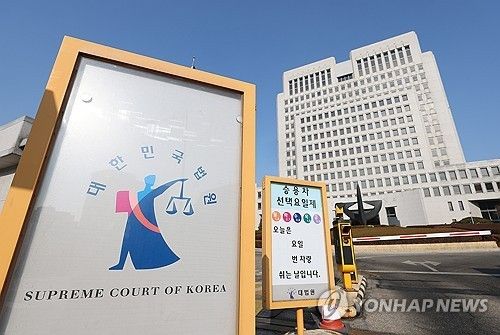
According to legal sources on the 13th, the Supreme Court’s First Division, with Justice Shin Sook-hee in charge of the case, overturned in full the part of the lower court ruling concerning Lee Dong-hyun and remanded the case to the Seoul High Court on the 27th of last month. Lee had been indicted on charges of violating the Act on the Aggravated Punishment, etc. of Specific Crimes (psychotropic substances) and the Narcotics Control Act (psychotropic substances and cannabis). He was sentenced to three years and six months in prison at trial, and his additional collection amount was the only thing reduced on appeal. He will now be sentenced again from the beginning.
The issue concerned one count of cannabis smoking among several charges. Lee was indicted on suspicion of smoking cannabis with Lee Gil-yong, Choi Woo-tae, Lee So-ryong and Im Hee-cheol at around 9 p.m. in late April 2024, at a record label office in Seoul’s Gangnam District. They allegedly put 1 gram of cannabis into an empty can punctured with an awl, lit it with a lighter and inhaled the smoke.
All three confessed to this charge at trial, and the Seoul Central District Court found them guilty on January 30. Lee Gil-yong and Choi Woo-tae did not appeal, making their convictions final. Lee, who was the only one to appeal, argued, “The indictment incorrectly stated the date of the offense as late April 2024, when it was actually late April 2023, and the three of us confessed because we mistakenly thought we had been indicted for the April 2023 incident.”
The issue was whether there was evidence to corroborate Lee’s confession at trial. The key question was whether statements by accomplices who had confessed alongside him could serve as corroborating evidence when they might concern an offense committed at a different time.
The record supported Lee’s claim. All the suspect-interrogation records cited as evidence at trial concerned only cannabis smoking in “late April 2023,” and every interrogation had taken place before late April 2024. The drug-test reports based on urine and hair samples had also all been prepared before then. Nevertheless, on July 8, the Seoul High Court, acting as the appeals court, upheld the convictions, finding no reason to doubt that the three men’s confessions were voluntary.
The Supreme Court focused on this point. Article 310 of the Criminal Procedure Act bars the use of a defendant’s confession as evidence of guilt when it is the sole evidence against that defendant. The court said the accomplices’ statements were “insufficient to be considered probative enough to corroborate the defendant’s confession, as it is difficult to rule out the possibility that they concerned cannabis smoking in ‘late April 2023.’” It therefore held that Lee’s confession at trial “constituted the sole evidence against him and could not be used as evidence of guilt.” It also said the remaining evidence did not establish that the cannabis smoking took place in April 2024 “beyond a reasonable doubt.”
The scope of the reversal was not limited to the cannabis-smoking charge. Because that charge and the remaining counts of conviction were treated as concurrent crimes under the first part of Article 37 of the Criminal Act and were covered by a single sentence, all the convictions were overturned. The related finding of not guilty in the reasoning, based on the offenses constituting a single crime, and the additional collection order, a supplementary penalty, were also overturned. By contrast, the conviction for Lee’s sale of cannabis to five people, including Lee So-ryong, was upheld after the court found joint principal liability based on conspiracy.
[email protected] Kim Dong-gyu Reporter