Suncheon Bay’s Ecological Value Accumulated Over 27 Years Proven ... Ranks Second in National Wintering Migratory Bird Habitat Assessment
- Input
- 2026-11-13 15:07:03
- Updated
- 2026-11-13 15:07:03
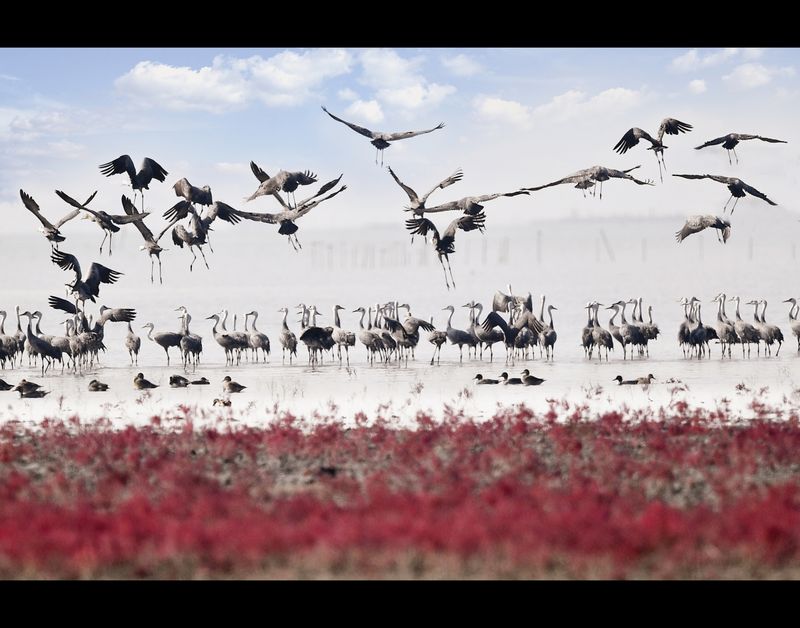
【Financial News | Suncheon = Hwang Tae-jong】Suncheon Bay ranked second in the National Institute of Biological Resources’ comprehensive assessment of wintering migratory bird habitats nationwide, demonstrating the ecological value accumulated over 27 years.
According to Suncheon City on the 13th, Suncheon Bay ranked second among 100 habitats nationwide in the comprehensive assessment of major wintering migratory bird habitats recently announced by the National Institute of Biological Resources and was selected as a ‘core conservation type,’ the highest management category.
A ‘core conservation type’ refers to a habitat that wintering migratory birds use consistently over an extended period and that therefore requires active protection. This designation shows that Suncheon Bay has high ecological value as a stable wintering ground for migratory birds and a major habitat for endangered species.
Suncheon Mayor Son Hun-mo emphasized, “The results of this study are significant because they scientifically confirm that Suncheon Bay has remained a stable habitat for wintering migratory birds for a long time.”
The assessment was conducted through a comprehensive analysis of the ecological value and conservation needs of 100 major wintering migratory bird habitats nationwide, based on data from the ‘Winter Bird Simultaneous Census,’ which the National Institute of Biological Resources has carried out for 27 years, since 1999.
The assessment used six indicators: △average number of individuals △year-to-year stability △stability of dominant-species structure (dominant species are those that account for a greater proportion than other species in a particular biological community and determine and represent its character) △persistence of representative species △long-term trends △presence of endangered species.
Suncheon Bay scored 0.788 points overall, ranking second nationwide after the eastern coast of Jeju (0.798 points). It received particularly high scores for year-to-year stability (0.931), long-term trends (0.981), and the presence of endangered species (0.907), and was selected as a ‘core conservation type.’
Suncheon City plans to continue monitoring changes in wintering migratory bird populations and their habitat use, and to use the findings to strengthen an integrated habitat management system connecting tidal flats, reed beds, the Dongcheon Estuary, and surrounding farmland.
The city also plans to continue promoting eco-friendly agriculture and habitat restoration in cooperation with local residents, and to expand science-based conservation policies addressing climate change and changes in wintering conditions for migratory birds.
Mayor Son Hun-mo said, “Together with local residents, we will protect Suncheon Bay’s ecological value and develop a sustainable wetland conservation model in which migratory birds and people coexist.”
[email protected] Hwang Tae-jong Reporter