“EV Subsidies Alone Have Limits” ... Charging and Used-Car Markets Need an Overhaul
- Input
- 2026-11-13 14:51:12
- Updated
- 2026-11-13 14:51:12
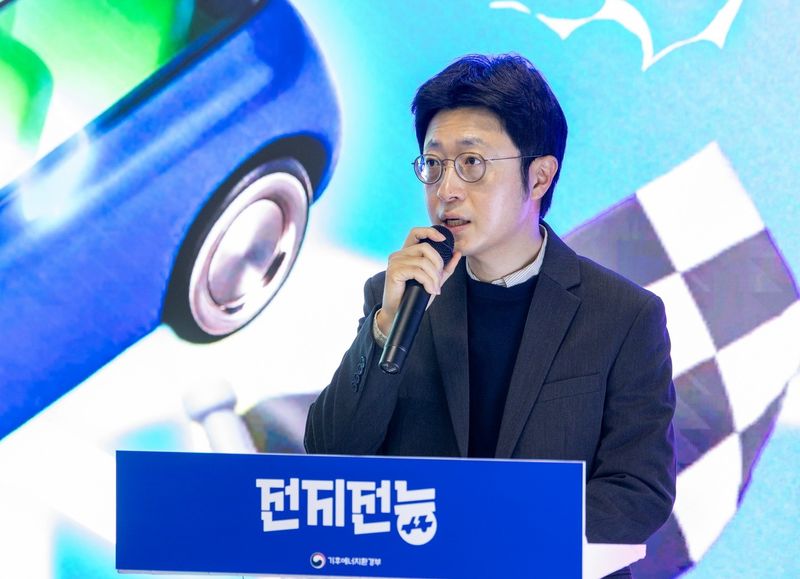
[Financial News] There have been calls to shift support policies from a focus on purchase subsidies to improving charging infrastructure, electricity rates and the used-car trading environment in order to accelerate the mainstream adoption of EVs. The argument is that, amid intensifying price competition from Chinese-made EVs, South Korea should strengthen domestic automakers’ competitiveness in affordable EVs and extend electrification policies, now focused on passenger cars, to commercial vehicles.
The Korea Automobile Journalists Association (KAJA) said it held the “EV Media Insight Talk” on the 13th at “Jeonji Jeonneung: Exhibition to Promote EV Adoption,” held at Space S50 in Seongsu-dong, Seoul. The event was attended by Choi Yeong-seok, a professor in the Department of Future Automotive Engineering at Halla University in Wonju; Kim Gyeong-yu, a senior research fellow at the Korea Institute for Industrial Economics and Trade; and KAJA President Ryu Jong-eun. They discussed changes in the EV market and ways to strengthen the industry’s competitiveness.
Experts said the EV market had moved beyond its initial group of consumers and entered the mainstream adoption phase, but that price burdens, difficulties with charging and safety concerns continued to hamper growth.
Kim Gyeong-yu, a senior research fellow, said, “The EV market is entering a growth phase as it moves from an early market centered on early adopters to the mass market.” He analyzed, “The launch of various new domestic EV models and price competition from imported brands such as Tesla and BYD have greatly expanded consumers’ choices.”
In particular, experts called for domestic companies to secure price competitiveness in response to the rapid rise of Chinese EVs. Kim said, “Domestic automakers, too, need to introduce affordable EVs with competitive prices.” He stressed, “Going forward, policy needs to shift away from subsidy-centered efforts to promote EV adoption and toward improving the user experience, including charging infrastructure, electricity rates and the used-car system.”
There were also calls to approach EV adoption policies not simply as a way to increase sales but as part of a shift in the industrial structure. Professor Choi said, “EV adoption policy needs to move beyond simple purchase support and shift to a perspective focused on growing an industry.”
Professor Choi explained, “In particular, we need to move beyond a focus on passenger cars, actively promote the electrification of large transport vehicles such as electric trucks and buses, and take a comprehensive approach that links vehicle adoption, charging infrastructure, and logistics and transport policies.”
He also said that, although consumer perceptions of EVs had improved, it was important to reduce uncertainty after purchase. He pointed out, “In the past, we had to explain the characteristics of EVs and how to use them to people around us one by one, but perceptions have now improved to the point where EVs can be used conveniently without much explanation.” He added, “Concerns about repairs, used-car prices and safety remain issues that need to be addressed.”
KAJA President Ryu Jong-eun said, “Rather than focusing on short-term sales growth driven by subsidies, it is important to create an environment where consumers can make trusted, informed choices and to strengthen the competitiveness of South Korea’s auto industry.”
Meanwhile, the Jeonji Jeonneung event, hosted by the Ministry of Climate, Energy and Environment (MCEE), runs through the 15th. Domestic and international automakers, including Hyundai Motor Company, Kia Corporation, Mercedes-Benz, Volvo, BMW, KGM and Volkswagen, are taking part, displaying major EVs and showcasing related technologies and hands-on programs covering charging, cost-effectiveness and carbon reduction, among other topics.
[email protected] Kim Dong-ho Reporter