"If You're Facing Spine Surgery, Quit Smoking at Least 4 Weeks Beforehand"... Smoking Accelerates Disc Aging [Health Talk]
- Input
- 2026-11-13 14:41:10
- Updated
- 2026-11-13 14:41:10
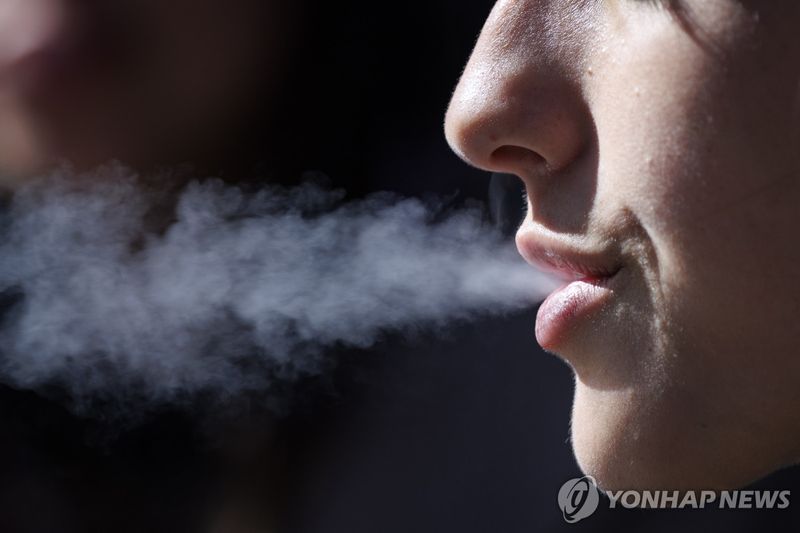
[Financial News] Continuing to smoke after spinal fusion surgery raises the risk of the bones failing to fuse properly to about twice that of nonsmokers.
It is well known that smoking is a major risk factor for lung cancer and cardiovascular disease. Less widely known is that it also harms spinal health, including lower-back disc problems. Smoking can accelerate disc degeneration and interfere with the process of bones fusing after spinal surgery. Particular caution is needed for patients who have undergone spinal fusion, as smoking can have a significant impact on their recovery.
Nicotine and carbon monoxide impede the supply of nutrients to discs
Discs, which absorb shock between the vertebrae, have very few blood vessels. They receive oxygen and nutrients through the endplates at the ends of the vertebrae, making them sensitive to the surrounding blood flow and oxygen supply.
Nicotine in tobacco constricts blood vessels, while carbon monoxide reduces the blood's ability to carry oxygen. As a result, when the supply of oxygen and nutrients to the discs becomes insufficient, cellular metabolic activity and the ability to maintain tissue can decline.
Kim Gyeong-tae, director of the Spine Center at Suwon Nanuri Hospital, explained, “Smoking can increase reactive oxygen species and inflammatory responses, accelerating damage to disc cells,” adding, “It can also adversely affect the synthesis of proteoglycans, which help discs retain moisture and elasticity, increasing the likelihood of degenerative changes progressing over the long term.”
Smoking after surgery roughly doubles the risk of bones failing to fuse
The harmful effects of smoking also appear during recovery from spinal surgery. In spinal fusion surgery, which stabilizes unstable vertebrae and encourages the bones to join, the key to success is whether the bones fuse properly after the operation (“bone fusion”).
However, smoking can interfere with the blood supply needed for bone formation and delay bone fusion, increasing the risk of “nonunion,” in which the bones fail to join even after surgery. According to a meta-analysis published in 2025 in the international journal Global Spine Journal, a review of 29 studies found that the risk of nonunion after spinal fusion was about 1.97 times as high among smokers as among nonsmokers.
Kim emphasized, “With spinal fusion, the process of the bones fusing securely afterward is as important as the surgery itself,” adding, “Smoking can interfere with this recovery process, so it is advisable to quit before surgery and continue abstaining afterward.”
Lower-back disc problems and degenerative spinal diseases result from a combination of factors, including aging, genetics and lifestyle. Smoking is also one of the risk factors that can interfere with the supply of nutrients to spinal tissues and their recovery.
Practicing smoking cessation in everyday life is important for spinal health. In particular, patients facing spinal surgery are advised, if possible, to quit smoking at least four weeks before the operation and to continue abstaining afterward in accordance with their medical team's instructions.
Kim advised, “Quitting smoking is an important lifestyle habit for protecting not only the lungs and heart but also spinal health,” adding, “For patients about to undergo surgery or recovering from it, quitting smoking is an important part of care that improves treatment effectiveness.”
[email protected] Jeong Myeong-jin, medical correspondent Reporter