Jeonnam-Gwangju Public Agencies to Pursue Four Key Initiatives With Tangible Impact for Citizens
- Input
- 2026-11-13 14:45:16
- Updated
- 2026-11-13 14:45:16
【Financial News Jeonnam-Gwangju = Hwang Tae-jong, reporter】Public agencies under the Jeonnam-Gwangju Integrated Special City (Gwangju Special City) will move ahead in earnest with four key innovation initiatives designed to make a tangible difference to citizens.
The four key innovation initiatives are: redefining roles and functions—drawing up innovation plans for each agency; delivering results citizens can feel—improving and linking user-centered services; an autonomy-based operating system—standardizing work procedures; and improving convenience—transforming work practices based on AX (artificial intelligence transformation).
Gwangju Special City plans to provide phased support through 2030 to help each public agency implement its innovation plans and service improvement measures, including by reforming systems and regulations and establishing digital work environments.
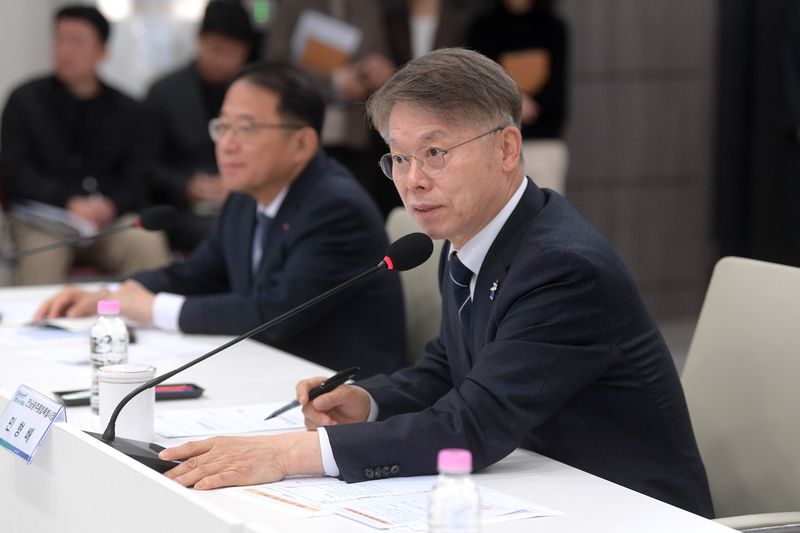
Min Hyeong-bae, mayor of Gwangju Special City, presided over the third meeting of public agency heads at the conference room in the Gwangju government building on the 13th. He stressed, “Public agencies slated for integration should bring the process to a stable conclusion and work to raise the caliber of public agency services by a notch so citizens can feel the difference in their everyday lives.”
Earlier, Gwangju Special City held the first meeting of public agency heads last July and established the principle of consolidating 22 of the 41 public agencies under the former Gwangju Metropolitan City and South Jeolla Province—those with similar functions—into 11. So far, nine agencies have agreed on how to integrate and are preparing to take the first step by enacting ordinances for the integrated agencies; seven draft ordinances are now awaiting review by the council. The remaining agencies plan to prioritize drafting ordinances and reaching agreement on the integration method through mutual consultations.
According to Gwangju Special City, the third meeting of public agency heads held that day was attended by Mayor Min Hyeong-bae, Vice Mayor for Civic Sovereignty Yun Nansil, Vice Mayor for Industry and Economy Kang Myeong-su, relevant office and bureau heads including the chief of the Planning and Coordination Office and the director of the Policy Planning Bureau, and the heads of 36 public agencies. Departing from the previous practice of formal reporting, the meeting was conducted in a “report followed by discussion” format.
Gwangju Special City shared its “Direction for Promoting Public Agency Innovation” that day and stressed the phased pursuit of the four innovation initiatives citizens can feel by improving service quality, expanding access and narrowing disparities between regions.
The meeting also featured successful examples of integration efforts and key issues at individual public agencies.
First, the tourism agency (Gwangju Tourism Organization–Jeonnam Tourism Foundation) shared an example of a participatory, consensus-based integration process grounded in participation and communication. Drawing on past integration experience, joint workshops held by the two organizations, a task force dedicated to citizen forums and expert consulting, the process was pursued in keeping with “citizen sovereignty,” a principle of the ninth popularly elected administration.
The cultural foundations (Gwangju Cultural Foundation–Jeonnam Cultural Foundation) introduced a cultural forum titled “Connection and Transformation, a Just Leap Forward,” held on the 6th at the Gwangju Chamber of Commerce and Industry with cultural policy experts and 100 members of a special-city residents’ discussion panel in attendance. The forum gathered expert opinions and explored directions for shifting cultural policy in response to administrative integration.
Global Gwangju Broadcasting (GGN) announced the “A Boy’s Path: K-Democracy Humanities Radio Tour Plan,” scheduled for the 14th. Linked to author Han Kang’s novel Human Acts, the program is a walking route through historic sites related to May 18 (Chonnam National University–Gwangju Station–May 18 Democracy Square). Around 300 people, including local residents, foreign residents and international students, are expected to take part, with historical and literary commentary accompanying live radio broadcasts in Korean and English.
[email protected] Hwang Tae-jong Reporter