The CEO's Biggest Risk Is the CEO [Kim Mun-Gyeong's Leadership Tech] (32)
- Input
- 2026-11-15 09:00:00
- Updated
- 2026-11-15 09:00:05
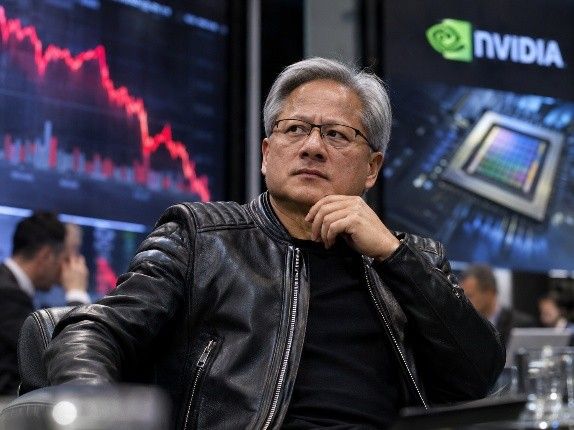
Companies analyze market risks, diversify investment risks and manage technology risks. Risk management reports are packed with exchange rates and interest rates, supply chains and regulations. But what should a company do if the CEO who signs off on those reports becomes the source of the risk? That is the most painful question this incident poses to every company and leader.
It’s about the position, not the private life
This is not an incident unique to NVIDIA. In 2019, McDonald’s dismissed CEO Steve Easterbrook for violating company rules through an inappropriate relationship with an employee. Initially, his departure was treated as a non-disciplinary termination, and he left with a massive payout. But after further relationships with other employees and signs of a cover-up came to light, the matter led to litigation. In 2021, he eventually agreed to return more than $105 million in cash and stock.
Last year, a somewhat different kind of incident unfolded at U.S. department store chain Kohl’s. Ashley Buchanan, who had been CEO for barely more than 100 days, awarded a deal on unusually favorable terms to a company founded by someone with whom he had a personal relationship, without disclosing the conflict of interest. After an external investigation, the board dismissed him immediately. The moment a personal relationship distorts the flow of company funds, it is no longer just a private matter.
We often dismiss such incidents as the misconduct of a “bad person” and assume the problem can be solved simply by replacing that person. But setting these cases side by side reveals a very different underlying issue. Both a founder who had devoted 33 years to the company and a professional manager who had been in the job for just three months fell into the same trap. The problem goes beyond individual character: it lies in the power that the position at the “top” exerts over people.
Organizational psychology locates the force behind this in a distorted relationship between power and confidence. A research team led by Professor Kelly See at New York University (NYU) in the United States examined this relationship in a study published in the journal Organizational Behavior and Human Decision Processes in 2011. The greater a person’s power, the more their confidence in their own judgment swells, while their willingness to accept advice from others declines. Experiments even found that the final judgments of high-power groups were less accurate. Of course, this research cannot fully explain any particular executive’s personal misconduct. But it clearly shows how psychologically difficult it becomes to question one’s own confidence and accept criticism as one rises higher in an organization.
The bigger problem is that organizations fall into the same illusion. When they overlook small problems because of strong performance and begin making exceptions for misconduct because of exceptional ability, internal checks and balances gradually rust away. Ultimately, what brings a company down is not so much a leader’s flawed judgment itself as the structure of silence in which no one dares to speak frankly and say “no” to that judgment.
CEOs need brakes, too
The cost of executive misconduct does not end with a simple drop in the stock price. A study published in the Journal of Financial Economics in 2018 analyzed companies whose executives’ personal misconduct had been made public. It found that when a CEO’s misconduct came to light, shareholder value fell by an average of 4.1%, or about $226 million. Even more noteworthy was the damage to business that followed. Companies also saw a marked decline in their success at securing new major customers and joint venture partners. The market does not separate private life from management ability. A leader’s ethics and judgment are assessed together as a single measure of corporate trust.
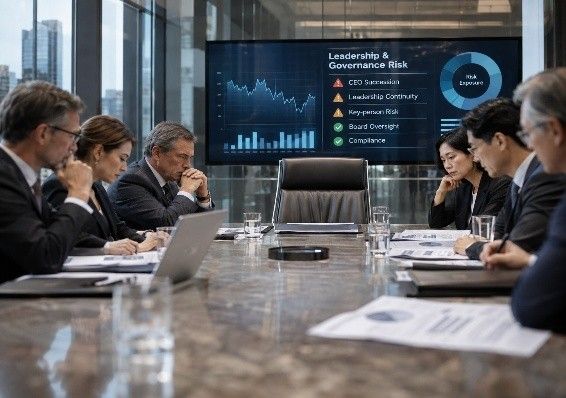
There are, of course, counterarguments. Some contend that excessive checks and balances can undermine a founder’s speed and bold decision-making. No one can deny that NVIDIA’s remarkable growth stemmed from Jensen Huang’s distinctive intuition and willingness to make bold bets. But the answer becomes clear if you think of a car: the faster it goes, the more it needs high-performance brakes. Brakes are not there to stop a car; they are a safety feature that lets a leader confidently drive at full speed. Independent board oversight, transparent disclosure of conflicts of interest, a healthy internal whistleblowing system and a carefully planned emergency succession plan are not shackles that hold an executive back. They are reliable brakes that protect what the executive has built.
In this incident, NVIDIA’s board appointed CFO Colette Kress as interim CEO and, for the first time since the company’s founding, created a board chair position and appointed Harvey Jones to it. The crisis exposed a vulnerability that had long unsettled investors: the official succession plan had remained shrouded in secrecy. Swift action after a crisis erupts is important, but what executives really need to examine is the system that was in place beforehand. They must take a clear-eyed look at whether there was a channel for conveying uncomfortable truths to the CEO without reservation, whether safeguards were working to identify potential conflicts of interest in advance, and whether the organization was prepared to remain steady even if its leader were suddenly unavailable.
The more a Korean company is dominated by its owner and founder, the less it can afford to delay building these systems. If you are a CEO, try seeking opposing views today at your most important meeting before stating your own conclusion. Simply giving the floor first to the lowest-ranking team member can completely change the atmosphere in the room. You should also check whether there are any transactions or personnel decisions entangled with your personal relationships, and if there are, disclose them voluntarily to the audit committee or compliance officer. The board, too, must thoroughly check two things: Are the code of ethics’ conflict-of-interest provisions applied to the CEO without exception? And is a succession plan documented so the company can be led even if the CEO is absent tomorrow morning?
Great executives drive companies to grow rapidly. But great companies never stake everything on the judgment and fate of a single executive. A CEO’s true leadership begins with the humility to restrain their own power, while a company’s sustainability is fully realized only through a robust system capable of keeping that power in check.
/Kim Mun-Gyeong (adjunct professor at Kookmin University and vice president of the Korean Leadership Association)

[email protected] Jung Myung-jin, medical specialist Reporter