Gwangjin District Pushes Ahead With 75 Urban Improvement Projects, Including Redevelopment and Reconstruction, to Speed Housing Supply
- Input
- 2026-11-13 16:33:09
- Updated
- 2026-11-13 16:33:09
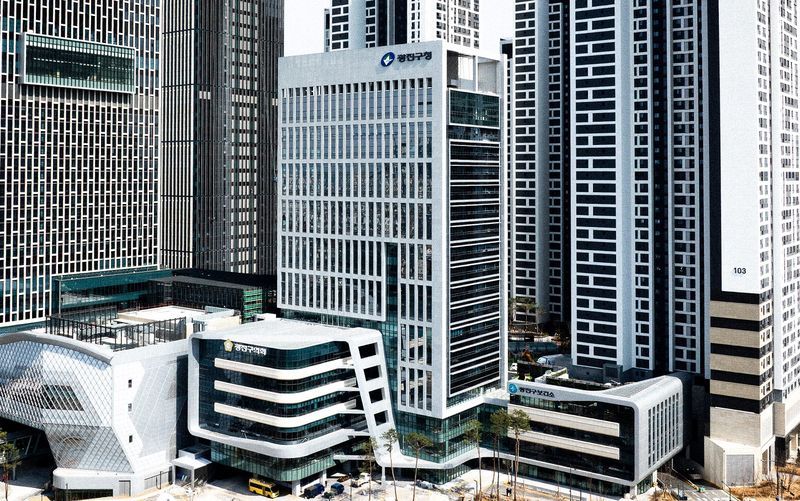
[Financial News] Seoul’s Gwangjin District is accelerating redevelopment and reconstruction, with a focus on Rapid Integrated Planning. Large-scale urban improvement projects in Jayang-dong, Gwangjang-dong and Junggok-dong are going through permitting procedures, while projects are also progressing in small-scale housing renewal, including the start of move-ins.
According to Gwangjin District on the 13th, a total of 75 urban improvement projects are currently underway in the district. These include 17 housing-focused redevelopment projects, two urban improvement-type redevelopment projects and seven reconstruction projects, as well as 15 Moa Town projects, three small-scale reconstruction projects and 14 street housing renewal projects.
Major projects are gaining momentum through Rapid Integrated Planning. One example is Jayang 4-dong A District (around 57-90 Jayang-dong), which has received approval to establish a residents’ association, with resident consent at 80.56%, and is preparing for an integrated review. Plans call for an apartment complex on a site of about 139,000 square meters, with up to 49 floors, 19 buildings and 2,999 units in total.
The Geukdong Apartments reconstruction project in Gwangjang-dong and the Jayang 3-dong redevelopment project have also completed the official designation of their improvement districts and are preparing to obtain approval to establish residents’ associations. Geukdong Apartments is planned to have up to 49 floors, 12 buildings and 2,049 units, while the area around 227-147 Jayang 3-dong is set to have up to 49 floors, 11 buildings and 1,030 units.
Junggok 1-dong A District is also going through the urban improvement process. On September 28, Seoul Metropolitan Government’s review approved with revisions the proposal for an improvement plan and designation of the improvement district. The plan is to build a waterside residential complex with up to 35 floors and 2,200 units around 254-15 Junggok-dong. Reconstruction of Shinhyang Villa in Junggok 4-dong is planned to comprise up to 20 floors, six buildings and 339 units.
A small-scale housing renewal project has also been completed. Jayang-dong Hanyang Row Houses, the first Moa Housing project, finished construction two years and six months after work began and started move-ins in September. The project replaced an aging row-house complex with 99 units with an apartment complex comprising two basement levels, 15 floors above ground, four buildings and 215 units.
The district has also established dedicated teams for different types of projects. To support urban improvement projects, it created a Housing Bureau and a Moa Housing Division on July 31. Responsibilities were divided so that the Housing Projects Division handles large-scale redevelopment and reconstruction, while the Moa Housing Division is exclusively responsible for Moa Town and small-scale housing renewal projects.
The district is also strengthening communication to improve residents’ understanding and resolve conflicts. Area-specific consultation centers provide advice tailored to each project site, and the Urban Improvement Academy explains project procedures. Resident meetings address differences of opinion and current issues that arise during project implementation.
Kim Kyung-ho, mayor of Gwangjin District, said, “I will improve the residential environment and continue to raise residents’ quality of life through fast-paced housing improvement projects.” He added, “I will always communicate with residents and actively resolve conflicts on the ground to create a premier residential city everyone wants to live in and Happy Gwangjin, a place that is comfortable to live in.”
[email protected] Choi A-young Reporter