Jeju April 3 Incident Distortion Penalties Bill Filed With National Assembly... Minister Yun Ho-jung: “Law Revision Needed”
- Input
- 2026-11-13 12:49:48
- Updated
- 2026-11-13 12:49:48
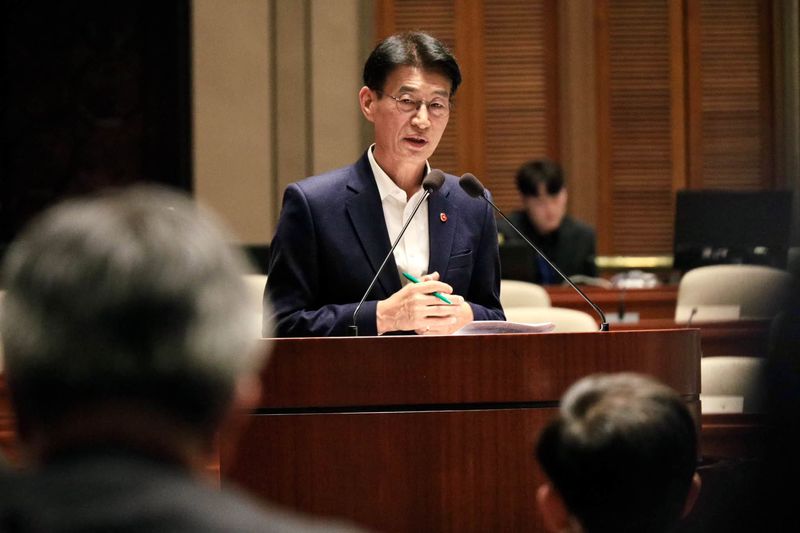
【Financial News, Jeju = Jeong Yong-bok, reporter】 The National Assembly is again pursuing the creation of penalties to prevent historical distortion of the Jeju April 3 Incident and disparagement of its victims. Minister of the Interior and Safety Yun Ho-jung said he recognized the need to revise the law and would actively respond to calls for the bill to be passed within the year.
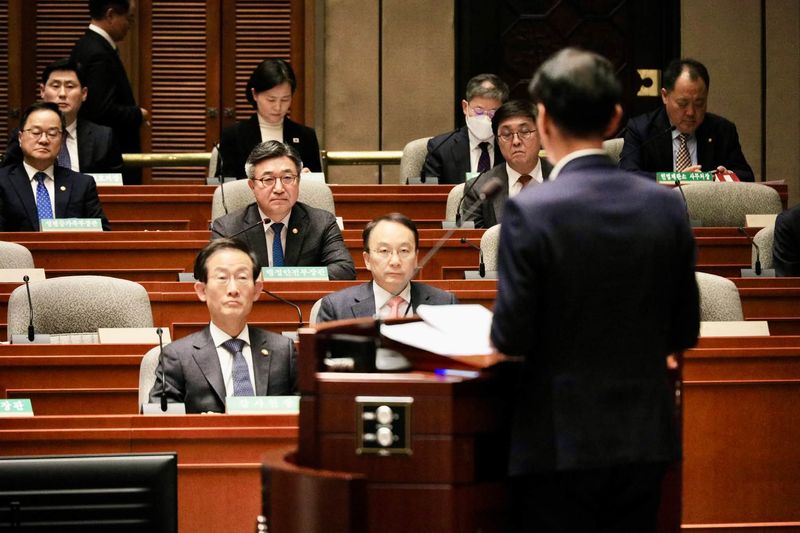
The office of Moon Dae-rim, a DPK lawmaker representing Jeju-si Gap, said on the 13th that Moon had called for the swift passage of an amendment to the Jeju 4.3 Special Law during a review of non-economic ministries by the National Assembly’s Special Committee on Budget and Accounts. He also urged Ahn Chang-ho, chair of the NHRCK, to retract his remarks about the April 3 Incident and issue an official apology.
Moon pointed out that bills intended to prevent distortion and disparagement of the April 3 Incident and restore the honor of its victims have not been passed by the 22nd National Assembly. He particularly cited the previous government’s passive stance and called for an active response from the Ministry of the Interior and Safety, the ministry responsible for the matter.
Minister Yun replied that “measures to eradicate this must be established through a revision of the law” and that he would “respond actively” to the request for passage within the year.
The current Jeju 4.3 Special Law prohibits the dissemination of false information intended to disparage victims and their bereaved families, but it has no separate penal provision. This is why calls have been made for a legal basis to effectively regulate historical distortion.
Legislative efforts also continued. An amendment to the Jeju 4.3 Special Law, introduced by DPK lawmaker Kim Seong-beom as its lead sponsor, was filed with the National Assembly on the 12th. Moon Dae-rim, Kim Han-gyu and other lawmakers also co-sponsored it.
The amendment would prohibit the dissemination of false information about the April 3 Incident and prescribe a penalty of up to five years in prison or a fine of up to 50 million won. However, it would exempt cases involving art, scholarship, research, journalism and similar purposes from punishment.
The amendment would also allow relevant honors to be revoked and medals recovered if a final court ruling or a decision by a truth-finding body confirms involvement in illegal human rights violations, including civilian massacres and torture, during the suppression of the April 3 Incident. It also includes support for bereaved families’ associations and improvements to procedures for securing remedies for victims.
The amendment is currently at the filing stage. The criteria for determining whether information is false, the scope of penalties and the appropriateness of exceptions to protect academic and press freedoms are among the issues that must be reviewed during National Assembly deliberations.
Ahn Chang-ho, chair of the NHRCK, also influenced the latest debate with remarks he made during a recent parliamentary audit.
At a parliamentary audit by the National Assembly’s Steering Committee on the 29th of last month, Chair Ahn responded to questions about theories that North Korea was behind the Jeju April 3 Incident, saying to the effect that “the government’s fact-finding report contains no related information, but further historical verification is needed.”
The government officially finalized the Jeju 4·3 Incident Truth Investigation Report in 2003. The report investigated the armed uprising by the Jeju Provincial Party of the South Korean Workers’ Party and the suppression efforts by the military and police, among other events, and established that many civilians were killed. No evidence was found to support claims that North Korea or Kim Il-sung directly ordered the uprising.
Moon criticized the head of a public institution for questioning historical facts officially investigated by the state and called for Ahn to retract his remarks, apologize and resign.
Lee Suk-jin, a standing commissioner of the NHRCK who attended the Special Committee on Budget and Accounts in place of Chair Ahn, replied that the remarks were the chair’s personal views, not the commission’s official position. Lee said she would convey Moon’s demands to Ahn.
Earlier, the Jeju Provincial Council also adopted a resolution at a plenary session on the 10th condemning Chair Ahn’s remarks and calling for an official apology.
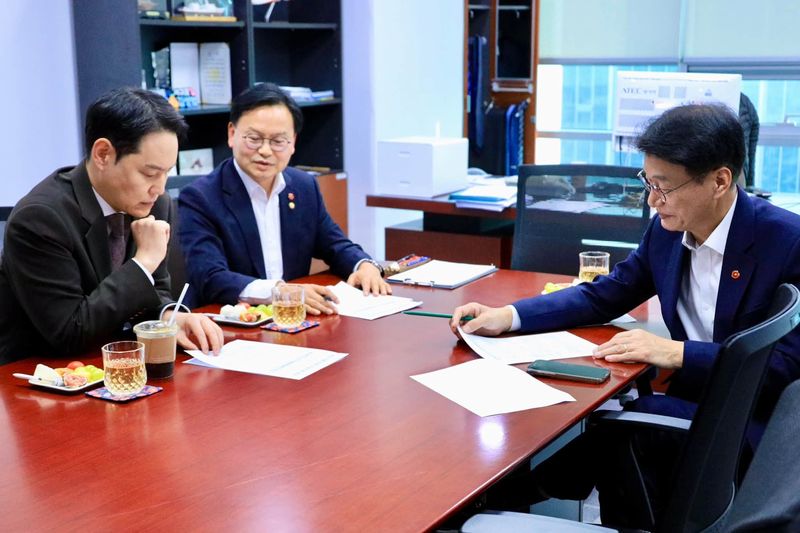
Joint action by Jeju lawmakers also continued. Moon Dae-rim, Kim Han-gyu and Kim Seong-beom met with the director general in charge at the Ministry of the Interior and Safety to discuss key issues in the amendment to the April 3 Special Law and how to advance it, and agreed to work together to pass it within the year.
During the same budget review, Moon also raised the issue of reduced state funding for the Jeju Forum for Peace and Prosperity.
According to Moon’s office, state funding for next year’s Jeju Forum for Peace and Prosperity will fall from 673 million won this year to 237 million won, a decrease of 436 million won (64.8%).
Moon argued that “since the Ministry of Foreign Affairs has co-hosted the Jeju Forum for Peace and Prosperity with Jeju Province since this year, and the minister serves as co-chair of its organizing committee, funding commensurate with its national standing is needed.” He called for an additional 2.763 billion won to be included in next year’s government budget proposal, raising state funding to 3 billion won.
Deputy Foreign Minister Park Yun-ju replied that the ministry would work to secure the budget, while Deputy Minister Jo Seong-beom of the Ministry of Planning and Budget said his ministry would review the matter together with the Foreign Ministry.
Further National Assembly deliberations are still pending on both the amendment to the April 3 Special Law and the increase in state funding for the Jeju Forum for Peace and Prosperity. The key issue going forward is whether the government’s recognition of the need to revise the law and the joint efforts of Jeju lawmakers will lead to actual legislative and budget decisions.
[email protected] Jeong Yong-bok Reporter