Lee Rebukes 'Holdouts' Who Stay Put Even After Receiving Compensation... Ministry of Land, Infrastructure and Transport: 'Enforcement Fines and Incentives in Tandem'
- Input
- 2026-11-13 14:37:56
- Updated
- 2026-11-13 14:37:56
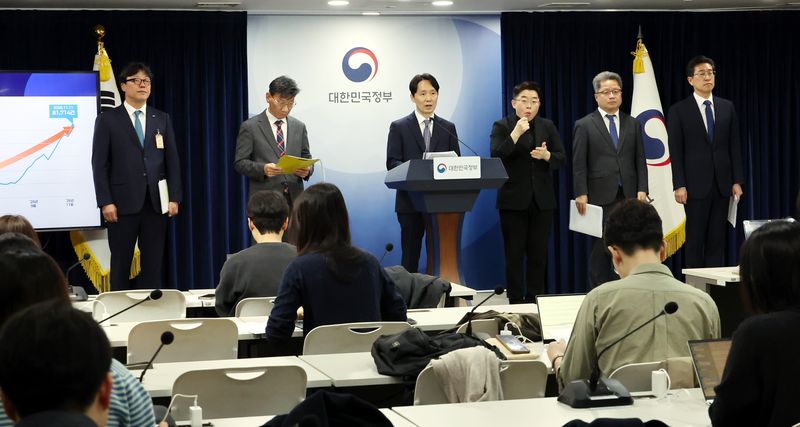
Jung Woo-jin, head of the Housing Supply Promotion Headquarters at MOLIT, said during a Q&A at the third regular housing-supply briefing on the 13th, regarding measures for people who do not vacate after receiving compensation, “We believe applying enforcement fines and incentives together will help encourage them to leave.”
Last month, at a housing-supply site in Gyeyang, Incheon, President Lee pointed to projects being delayed by people who refused to leave despite receiving compensation or made additional demands, and called for legislative improvements. At a Cabinet meeting on the 10th, he cited cases of people using physical force to obstruct eviction proceedings at redevelopment sites and ordered a nationwide survey of the situation.
MOLIT is examining whether the current procedure can be improved, under which LH must file an eviction lawsuit if people do not vacate despite receiving compensation. Director Jung said, “The president’s directive is also under legal review,” but added, “We’re not yet at the stage where we can discuss specific proposals.”
The government expects the enforcement fines, which are soon to take effect, to have some effect in resolving the problem of people refusing to vacate. Alongside the penalties, incentives for cooperation to encourage voluntary relocation are also scheduled to take effect in March next year.
The government will gather opinions and prepare supplementary measures in response to local opposition to the new housing sites unveiled at the second briefing. Regarding Gimpo Ara District, Director Jung said, “We have completed consultations with Gimpo City through official correspondence, but residents’ opinions were not gathered during that process, so local opposition is greater than expected,” adding, “We fully understand local residents’ concerns.” He continued, “Taking into account concerns about transportation and self-sufficiency, we will draw up comprehensive measures to address issues arising in housing development districts, including district designation.”
On the jeonse and monthly rental market, he said listings were increasing but that supply needed to grow further. Kim Yeong-guk, director general of MOLIT’s Housing and Land Office, said, “Listings for jeonse and monthly rentals have increased to some extent, but they are not at the levels seen in the past,” and analyzed that the recent increase in move-in volumes had contributed to the rise in listings.
Kim added, “There are also risk factors, such as issues in the jeonse and monthly rental market and rising prices in Gangbuk and Gyeonggi Province, so we will move ahead with rapid supply.” Specifically, under the Housing Stability Plan, the government plans to have 100,000 public housing units occupied by next year and to increase supply through legislative amendments to promote long-term rentals.
He said it was difficult to predict the future direction of home prices.
Meanwhile, the government announced plans for approximately 44,000 households in the Seoul metropolitan area to move into homes by the first quarter of next year, and for about 11,000 units to be sold by year-end. It will supply 284 shared-equity public housing units in Goyang Changneung this December, while LH plans to invite proposals in the second half for public housing projects with private-sector participation, totaling about 9,000 units.
[email protected] Choi Ga-young Reporter