“Where Is My Home?” Government Says “Price Growth in Seoul’s Housing Market Has Lost Steam,” but What Is the Evidence? [3rd Regular Housing Supply Briefing]
- Input
- 2026-11-13 11:00:00
- Updated
- 2026-11-13 13:13:49
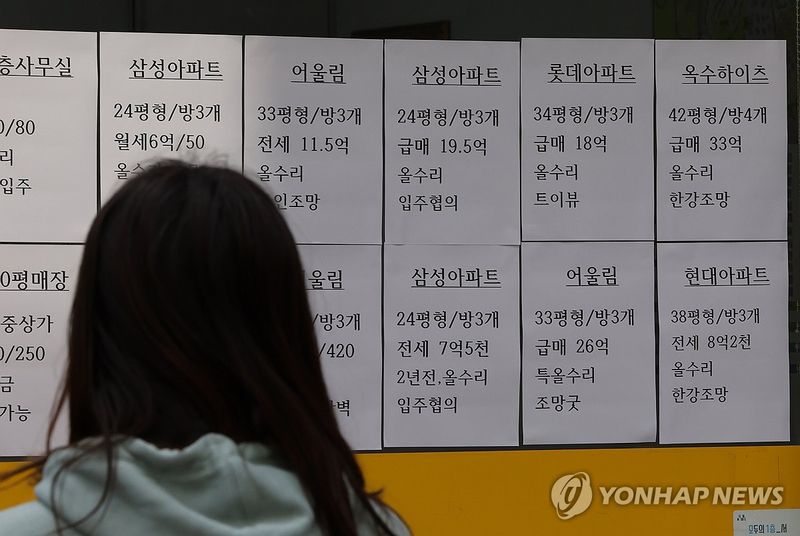
[Financial News] Seoul’s housing market has recently seen slower price growth and an increase in listings. Home prices in Gangnam and Seocho districts have fallen for 14 weeks, while those in the three Gangnam districts, including Songpa District, have declined for 12 consecutive weeks. This week, Seongdong and Gangdong districts also turned to declines. Since July, the rate of increase in Seoul apartment sale prices has slowed, while transaction volumes have fallen since May and dropped below the typical level for September.
On the 13th, the government held its “Third Regular Housing Supply Briefing” in the briefing room at Government Complex Seoul and gave an update on recent conditions in the real estate market. The briefing was attended by officials including the Director General for Economic Coordination at the Office for Government Policy Coordination, the head of the Housing and Land Office at the Ministry of Land, Infrastructure and Transport, the head of the Housing Supply Promotion Headquarters, the Director General of the Financial Policy Bureau at the Financial Services Commission (FSC), and the head of the Public Housing Division at Korea Land and Housing Corporation (LH). It covered (1) recent housing-market trends and the volume of move-ins and homes offered for sale in Seoul and the Seoul metropolitan area through March next year, including notices inviting applications for public rental housing; (2) progress on regulatory improvements to speed up housing supply and efforts to ease financing difficulties; and (3) LH’s plans for a second-half call for proposals for public housing projects involving private-sector participation.
The government said that, as of the 11th, more than 80,000 Seoul apartments were listed for sale, an increase of at least 40% from the start of this year. Over the past three weeks, listings for jeonse and monthly rentals also increased by 5.0% and 10.6%, respectively. The combined number of listings for sale, jeonse and monthly rent was tallied at more than 123,000.
Housing permits and construction starts in Seoul are also increasing. From January to September this year, the number of housing units permitted in Seoul rose 33% from the same period last year. Apartment permits totaled 38,000 units, 1.5 times the average for the past 10 years. Construction starts during the same period also increased 36% from last year, to 22,000 units. More than 40,000 apartments are scheduled for occupancy in Seoul and the Seoul metropolitan area by the first quarter of next year, including about 6,000 in Seoul alone.
About 4,000 homes are also scheduled for occupancy in Mapo, Seocho and Yongsan districts. The Seoul metropolitan area is expected to see about 16,000 move-ins in November and December and about 28,000 in the first quarter of next year. As for homes offered for sale, 16,000 units went on sale in October, including 1,305 in Godeok Gangil in Seoul. Another 11,000 units are expected to be offered by the end of the year. Sales in the third-phase new towns, including 1,100 units in Goyang Changneung, 400 in Namyangju Wangsuk and 500 in Bucheon Daejang, are also set to ramp up by year-end.
The government is also stepping up regulatory improvements to speed up housing supply. It has completed 65 of the 145 regulatory-improvement tasks included in the Aug. 13 housing supply package. It has finished 46 tasks, including streamlining housing-supply permitting procedures and easing regulations on project implementation. In September, it selected and announced 11 new candidate sites in Seoul for urban public complex development projects. It is also pursuing legal amendments to speed up the development of public housing sites and urban renewal projects.
The way public housing for sale is supplied has also been redesigned. In December, 284 equity-accrual public housing units for sale will be supplied in Goyang Changneung, allowing buyers to pay just 25% of the sale price upon moving in and pay the remaining share in installments over 20 years. The average relocation rate in the first-phase districts of the third-phase new towns rose from 53% in July last year to 91% last October. The demolition rate also climbed from 34% to 70%.
In later-phase districts such as Gwangmyeong-Siheung, surveys and appraisals are being conducted at the same time, cutting four months off the time needed to begin compensation. An additional 1.3 trillion won in compensation funding has also been injected to expedite payments. A working group with the Public Procurement Service (PPS), property management authorities and others has been operating on a trial basis since October to facilitate the acquisition of state- and public-owned land.
Support is also being provided to ease financing difficulties. The FSC has completed 19 regulatory-improvement tasks in the financial sector and resolved financing difficulties for housing projects at eight sites involving about 6,000 homes. The KAMCO Fund invested 76 billion won in a distressed project site in the Sinchon area, where construction is scheduled to begin next September on 435 homes. As of the 6th, the project financing (PF) and construction-company financial difficulties relief center had received 64 cases. Consultation and review have been completed for 50, while 14 have been referred to relevant institutions and are under review. A proposed amendment to the Enforcement Decree that would make dormitories and goshiwon eligible for PF guarantees was also published for public comment on October 26.
In the second half of the year, LH plans to invite proposals for private-sector-participation public housing projects across 10 blocks, including Namyangju Wangsuk, covering about 9,000 homes. On this day, it opened a call for proposals for six blocks covering 5,782 homes, including Namyangju Wangsuk 2 and Goyang Changneung. The total project cost is 1.6 trillion won. LH aims to select project operators within the year and begin construction in 2027. Calls for proposals for four more blocks, including the Wirye business district, covering about 3,000 homes and worth 900 billion won, are also scheduled to be issued in stages by December.
The government plans to keep monitoring the progress of key projects to ensure housing supply plans lead to actual construction starts, sales and move-ins. To minimize inconvenience for residents of new housing sites in the Seoul metropolitan area totaling 77,000 homes, it plans to gather input from local residents and local governments and work to expand transport networks near the sites. Starting at the end of December, it will make public a digital housing supply dashboard with information on supply plans and progress for major projects. It will also fully launch an integrated housing supply support center to quickly address difficulties on the ground.
[email protected] Park Mun-su Reporter