Inha University Students Test RC Car Performance With Batteries They Made Themselves
- Input
- 2026-11-13 09:43:47
- Updated
- 2026-11-13 09:43:47
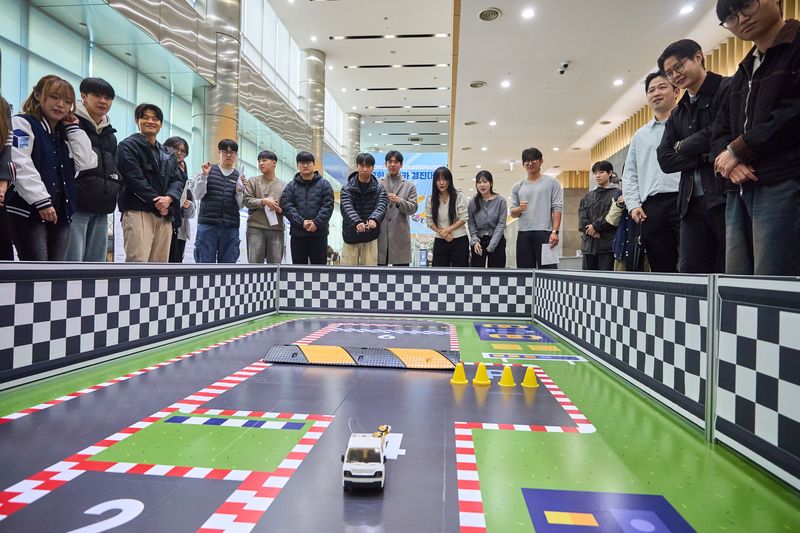
【Financial News, Incheon = Han Gab-soo, reporter】 Inha University students gained practical experience with battery technology by carrying out every step, from designing and making secondary batteries to evaluating their performance. They drew attention by applying electrochemical principles learned in theory to making actual batteries and taking on a project to power a car with the finished batteries.
Inha University’s Secondary Battery Specialized University Project Group said on the 13th that it had recently held a mini-car competition in which students powered radio-controlled cars (RC cars) with batteries they had made themselves.
The most notable aspect of the competition was that students made the batteries that powered the RC cars themselves. Participants formed teams and designed and built coin-cell batteries in the 2032 size, suitable for RC cars operating at 3.7 V.
The key challenge was to pack enough energy and output for driving into a small battery about the size of a coin. The students considered the properties of cathode materials, electrode placement and battery capacity as they designed batteries to deliver optimal performance within the given size.
They went beyond simply completing the batteries and also checked whether they could power an actual car. They examined how the design conditions set during production affected driving performance and evaluated the batteries based on the results of their experiments.
In the process, the students had to consider not only how much energy a battery could store but also whether it could supply enough power when needed. By connecting their understanding of battery materials with the design requirements of an actual product and validating their finished work through drive tests, they added practical value to their education.
The competition was judged through a comprehensive assessment of battery module capacity, design quality and RC car driving results. The participating teams presented posters outlining their battery-making processes and experimental data, and analyzed and explained the differences between their original design goals and the performance they actually measured.
Through the program, Inha University’s Secondary Battery Specialized University Project Group enabled students to learn not only the skills needed to make batteries but also team-based research and problem-solving abilities. It focused on developing the practical skills required in the secondary battery industry by giving students direct experience at every stage, from design to production and testing.
Choi Jin-seop, head of Inha University’s Secondary Battery Specialized University Project Group, said, “We will expand educational opportunities centered on projects and hands-on training to develop professionals with battery design skills and the ability to solve problems in industrial settings.”
[email protected] Han Gab-soo Reporter