95 Billion Won Sale and JDC Development Plan Both Fall Through... Jeju KAL Hotel Still an 'Empty Building' 4 Years and 6 Months On
- Input
- 2026-11-13 09:45:45
- Updated
- 2026-11-13 09:45:45
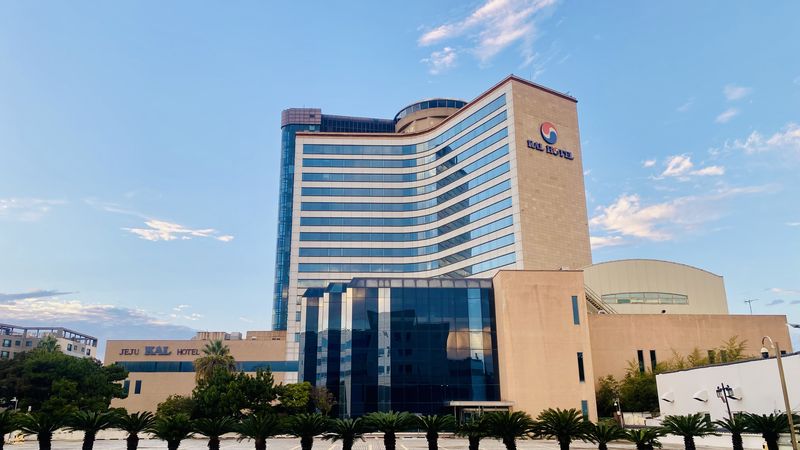
【Financial News, Jeju = Reporter Jeong Yong-bok】 Four years and six months have passed since Jeju KAL Hotel ceased operations, but it has yet to find a new owner. After a private sale agreement worth 95 billion won fell through, the Jeju Free International City Development Center (JDC) also halted its plan for public use over concerns about business viability, leaving the large building in Jeju City's old downtown area idle for an extended period.
According to Hanjin KAL's corporate disclosures and the Jeju Special Self-Governing Provincial Council, among others, on the 13th, Jeju KAL Hotel has been pursuing a sale since it ceased operations on April 30, 2022, but no deal has been completed. Hanjin KAL's half-year report, submitted on August 14, also states that it plans to proceed with reselling the hotel building and land.
Located in Ido 1-dong, Jeju City, Jeju KAL Hotel is an iconic facility in Jeju's tourism industry, having opened in 1974. It has two basement levels and 19 above-ground floors, on a site of about 12,500 sq. m., with a gross floor area of 38,661 sq. m. Once the tallest building in Jeju, it served as a hub for tourist accommodation, banquets and various events.
■ 95 Billion Won Sale Falls Through... Public Acquisition Also Fails
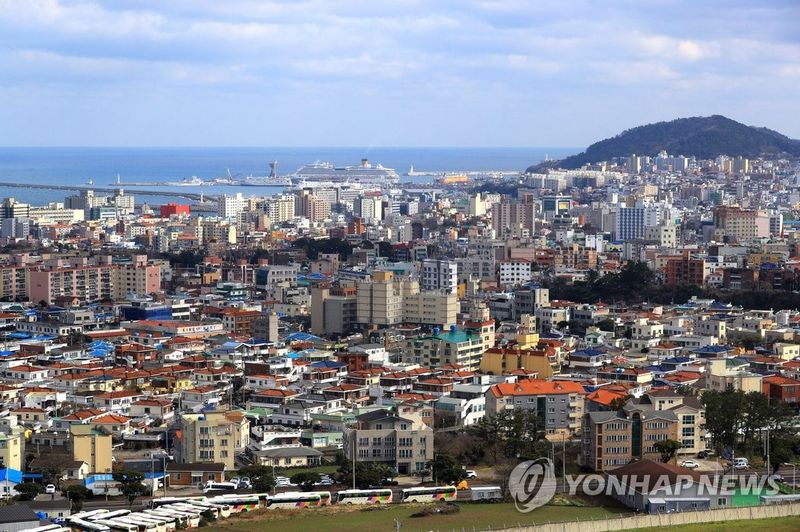
KAL Hotel Network, the hotel's operator, halted operations citing accumulated operating losses and a decline in tourism demand due to COVID-19, among other reasons. In August 2022, it signed a 95-billion-won sale agreement with Jeju Dream PFV, a real estate development special-purpose company.
However, the deal fell through when the buyer failed to pay the remaining 85.5 billion won, after accounting for the 9.5-billion-won deposit. Hanjin KAL disclosed the matter on July 28, 2023.
A lawsuit over the return of the deposit also followed. Jeju Dream PFV filed suit arguing that the contract was invalid, but after the appellate ruling in August 2025, it gave up on a further appeal, making the Hanjin side's victory final. Even after the legal dispute was resolved, no new buyer was secured.
Jeju Province's plan for a public acquisition also failed to materialize. During the 2022 local elections, gubernatorial candidate Oh Young-hun pledged to acquire Jeju KAL Hotel for public use. Jeju Province later considered using it as a public recreation space and a workation center, among other options.
However, as of 2022, the appraised value of the building and land was about 68.7 billion won, while the private sale agreement was worth 95 billion won. The public acquisition did not go ahead amid the combined concerns of the fiscal burden and the lack of a concrete operating plan.
■ JDC's 309.8-Billion-Won Global Exchange Hub Plan Also Hits Viability Hurdle
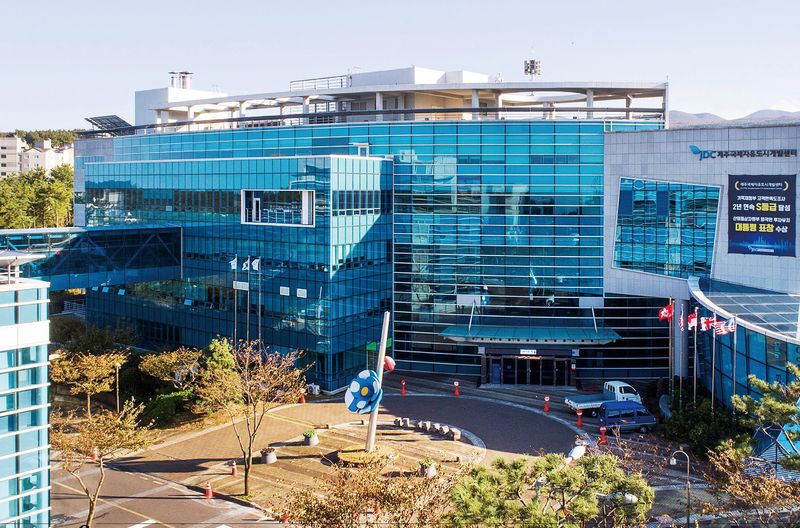
In 2024, new possibilities for using Jeju KAL Hotel emerged when JDC considered it as a candidate site for a downtown regeneration project.
JDC's proposed global exchange hub project would invest a total of 309.8 billion won by 2031 to bring together international business facilities, cultural and commercial facilities, and startup support spaces in Jeju City's old downtown area. Jeju KAL Hotel was considered a leading candidate site for the project. The 309.8 billion won is the total project cost for the exchange hub; it is not an investment amount allocated specifically to the hotel.
JDC began a preliminary feasibility analysis at the end of 2024, examining the building's safety and structural limitations, the costs of renovation and new construction, and financial feasibility, among other factors.
However, the analysis concluded that adapting the existing hotel for a new business purpose would require substantial costs and make it difficult to secure economic viability. JDC gave up on acquiring Jeju KAL Hotel in 2025.
JDC also said that in June it had concluded its review of the proposed use of Jeju KAL Hotel, deeming it unsuitable, and had not settled on an alternative site or begun a detailed review. The downtown global exchange hub project has also made no progress at the site-selection stage.
This contrasts with the disposal of other hotel assets owned by Hanjin Group. KAL Hotel Network completed the sale of Grand Hyatt Incheon West Tower on January 6 this year. Jeju KAL Hotel, by contrast, remains slated for resale.
The burden of maintenance costs from the property's prolonged vacancy also continues. KAL Hotel Network said last August that maintaining the power and fire safety systems, among other facilities, costs about 50 million won a month.
■ Rep. Han Kwon Renews Call for Measures to Use the Old Downtown Site
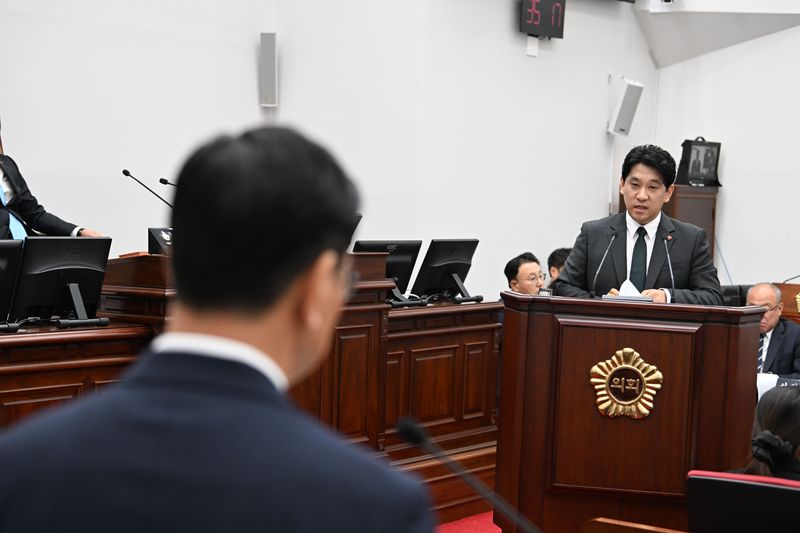
The prolonged vacancy of Jeju KAL Hotel was again raised at the Jeju Special Self-Governing Provincial Council. On the 12th, council member Han Kwon (Democratic Party of Korea; Il-do 1-dong, Ido 1-dong and Geonip-dong) identified the hotel's future use as a key issue during a provincial administration question session at the second regular session of the 456th session.
Han called for clarification on how well Jeju Province understood JDC's plans for using the hotel and what consultations the two organizations had held. His questions also included the governor's position on operating a consultative body with JDC and local residents, and specific measures to address the hollowing-out of the old downtown area.
In July, Han had proposed a real estate co-investment plan using tokenized securities (STO). Under the proposal, numerous investors would share the large amount of capital needed to acquire the hotel and share the returns. However, applying the model to an actual project would require examining investor protection, legal requirements and the operating entity, among other issues.
The closure of Jeju KAL Hotel also left challenges for nearby businesses. The hotel had been connected to economic activity in the old downtown area not only through lodging guests but also through people using its banquet and food-and-beverage facilities.
Any future plan for the site must take into account the private owner's sale terms, Jeju Province's urban regeneration policies and public agencies' assessments of business viability. Options include reopening the hotel, changing its use, demolishing it for mixed-use redevelopment, or pursuing a public-private partnership, but no specific plan has been finalized.
Jeju KAL Hotel, once a major hub for tourism in Jeju for nearly half a century, has yet to find a new use even in its fifth year since closing. With private sales and public development plans having repeatedly fallen through, calls are growing for a practical alternative that can balance downtown regeneration with private property rights.
[email protected] Jeong Yong-bok Reporter