Dell Unveils Servers With AMD's Next-Generation Processors... Boosting AI Infrastructure Efficiency
- Input
- 2026-11-13 10:51:00
- Updated
- 2026-11-13 10:51:04
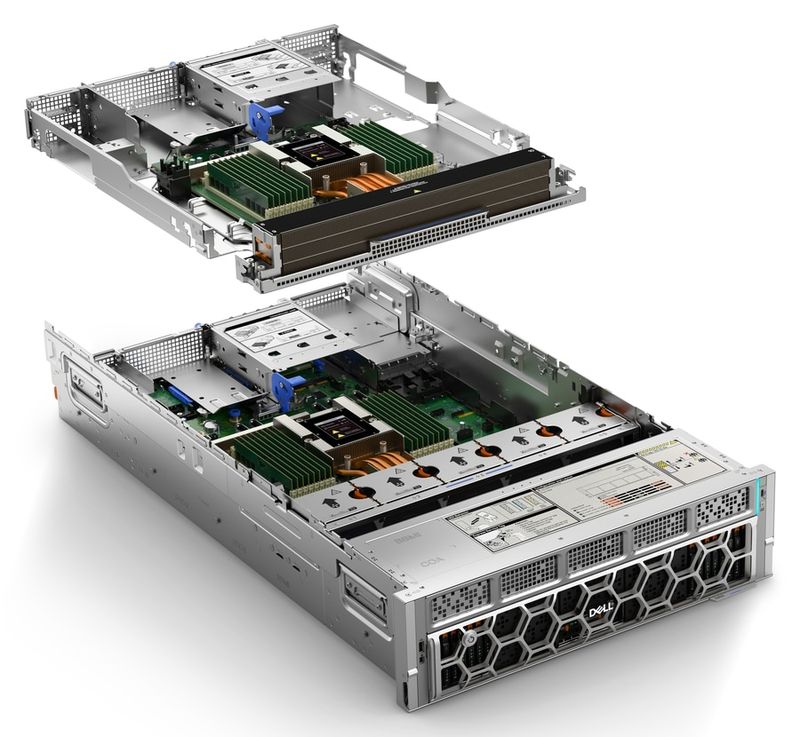
Using existing data centers as they are... up to 512 cores per server
On the 13th, Dell Technologies announced that it had unveiled the Dell PowerEdge R9825 and Dell PowerEdge R9815 servers, equipped with AMD's sixth-generation EPYC processors. The two servers are designed for air cooling as standard, allowing them to use existing data center racks and cooling equipment, and can also be switched to direct liquid cooling as needed.The newly unveiled servers are based on AMD EPYC 9006 SP7 processors and support up to 256 cores per socket and a thermal design power (TDP) of up to 600 W. They are designed to handle compute-intensive workloads such as AI inference and high-performance computing (HPC) while making better use of space in existing data centers.
The PowerEdge R9825 is a 3U server that supports dual sockets and offers up to 512 cores per server. It can handle multiple high-performance workloads simultaneously, making it suitable for complex AI workloads or large-scale computing environments. In particular, its chassis design improves airflow, enabling high computing density even in existing rack space.
According to Dell, in a 42U rack configuration using about 33 kW of power, a dual-socket 3U server such as the R9825 can provide up to 1,024 more cores than comparable 2U servers consuming the same amount of rack power. The company says this makes it possible to secure more computing resources with the same power and space.
The PowerEdge R9815 is a 2U server with a single-socket design. It is built to deliver greater computing performance per socket, allowing it to handle workloads previously assigned to dual-socket servers. This enables companies to consolidate multiple servers and reduce the number of physical machines.
Server consolidation helps reduce data center power consumption and cooling demands while also lowering software licensing costs. In particular, companies using software licensed based on the number of servers or sockets can expect to save costs by consolidating equipment.
Dell said the R9815 can improve scalability in AI and HPC environments when paired with its exascale storage. Companies can respond to future increases in computing demand while replacing existing infrastructure in stages.
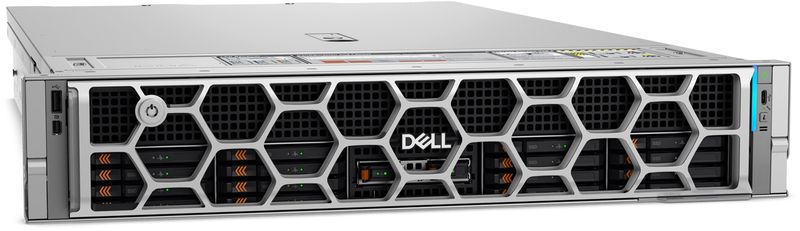
Supports both air and liquid cooling... enhanced management and security features
The two servers are designed to support air cooling as standard, with direct liquid cooling available as workloads change. This setup allows cooling methods to be adjusted gradually as AI computing demand grows, without requiring an immediate conversion of the entire data center to liquid cooling.Operational management features have also been enhanced. Dell's server management solutions, iDRAC 10 and OpenManage Enterprise, allow air-cooled and liquid-cooled servers to be managed in the same environment. Companies can operate conventional computing infrastructure and AI infrastructure together without adding separate management tools or retraining operations staff.
The servers also support the next-generation expansion technology PCI Express 6.0 (PCIe Gen6). This provides the connectivity performance needed to adopt high-speed networking equipment and computing accelerators in the future.
For security, a verification framework has been applied from the hardware through to the firmware. The servers support encryption-based identity authentication, component and firmware verification, and automated software bill of materials (SBOM) capabilities. They also offer compliance features for the Security Technical Implementation Guide (STIG), helping public institutions and regulated industries meet security management and audit requirements.
The servers also support post-quantum cryptography (PQC) to prepare for security threats arising from advances in quantum computing. Dell also plans to improve long-term server supply stability by securing multiple suppliers for key components.
Dell expects the servers to help reduce the facility investment and operating cost burdens companies face as they expand their AI infrastructure. The company says they are suited to businesses pursuing infrastructure modernization in stages, as they can secure high-performance computing resources while using existing data center environments.
Yoo Sang-mo, president of Dell Technologies Korea, said, "With AI workloads increasing, improving the performance and efficiency of aging servers and minimizing the operational burden of existing data centers are emerging as key challenges for businesses." He added, "These servers help create a high-performance computing environment while retaining existing data center facilities, and reduce operating and software licensing costs through server consolidation."
[email protected] Yoon Hong-jip Reporter