Iran's 'Jeju Island,' Qeshm, Sees Tourism Devastated Amid War [Then and There with Park Jong-won]
- Input
- 2026-11-14 06:00:00
- Updated
- 2026-11-14 06:00:12
[Financial News] Last August, Jamshid Hamzehzadeh, chairman of Iran’s Hotel Association, told local outlet Sarg that hotel occupancy rates across Iran were close to 0%. He warned that hotel closures were surging, particularly on Qeshm Island, and that if things continued this way, widespread closures would be inevitable because of fixed costs.
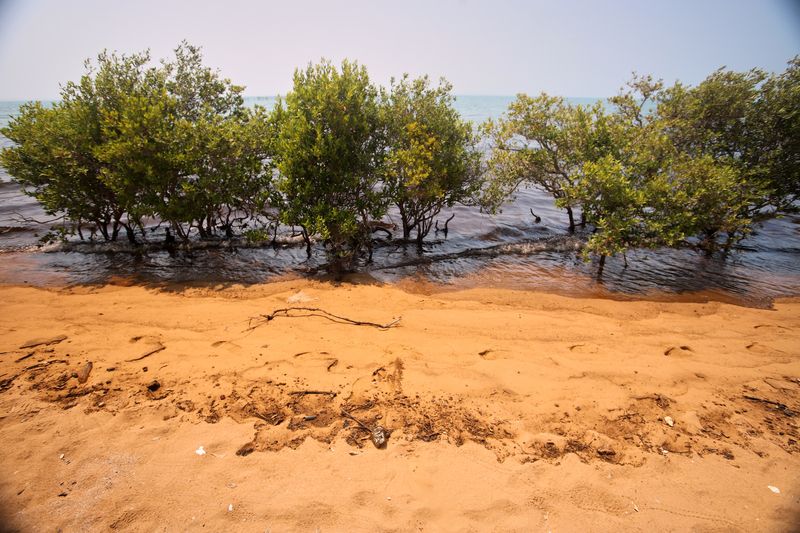
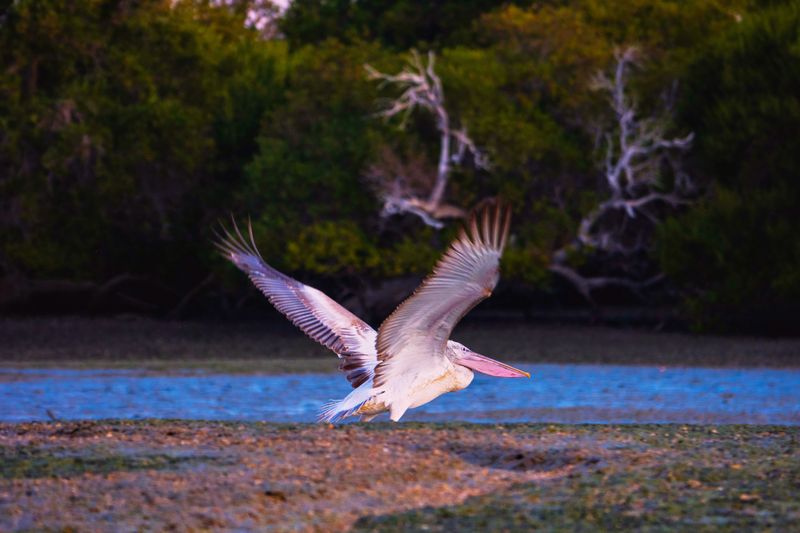
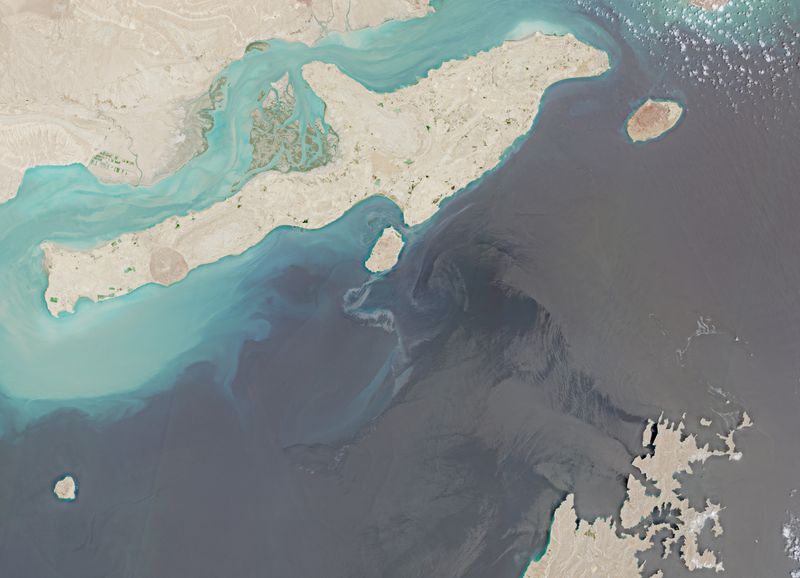
Qeshm Island, which has become known for frequent US bombings since the Iran war began, was once a famous resort in Iran, much like South Korea’s Jeju Island. From March to December last year, 10,843,000 domestic and international tourists arrived on the island by sea, a 7% increase from the same period the previous year. The island, called Qeshm or “Keshm,” is the largest in the Persian Gulf. At 1,491 km2, it is about 2.5 times the size of Seoul and 81% the size of Jeju Island. Its population of about 190,000 is roughly a quarter of Jeju Island’s. Most of the island is desert and rocky terrain, making it unsuitable for agriculture, but it has many tourist attractions with unusual geological features, enough to earn it designation as the Middle East’s first UNESCO Global Geopark in 2017. The Hara mangrove forest, submerged in seawater, is also famous.
Another reason tourists head to Qeshm Island is that Iran designated it a free-trade zone in 1990. Foreign visitors entering the island can stay for up to two weeks without a visa and shop at duty-free prices across the island.
Iran established a free-trade zone on Qeshm Island because of its strategic location. Situated at the entrance to the Strait of Hormuz, the island has been a center of trade and transportation since ancient times. It was part of the ancient Persian Empire from the sixth century BC to the seventh century AD and was known as “Abarkavan.” From the mid-seventh century onward, it was incorporated into the territories of the Islamic Umayyad and Abbasid caliphates, and Islam spread there. From the 11th to the 16th centuries, it belonged to the Kingdom of Hormuz, a maritime trading power, and in 1507 it came under Portuguese rule. The Portuguese built a fortress on Qeshm Island and occupied it for 115 years, controlling trade routes.
The island became part of the Safavid realm in 1622 after a joint attack by the Persian Safavid dynasty and the English East India Company. But after the Safavid dynasty fell and the central government’s control weakened, Qeshm Island was used as a trading port by nearby maritime powers or as a pirate haven. The Qajar dynasty, which succeeded the Safavids, leased Qeshm Island to the Sultanate of Oman in 1789, and a British naval base was established there in 1820. The Qajars regained control of the island in 1868. Iran’s Pahlavi dynasty, which succeeded the Qajars, withdrew British forces in 1935 and then began developing Qeshm Island in earnest. The Islamic Republic of Iran, which overthrew the Pahlavi dynasty in 1979, incorporated the island into Hormozgan Province and developed it as an oil-trade hub. The island is home to crude oil storage facilities, natural gas processing plants and desalination facilities.
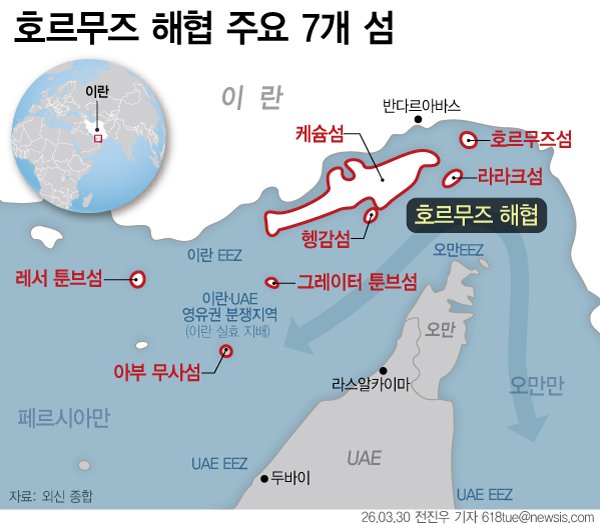
Iran deployed a large number of troops on Qeshm Island to protect local energy facilities and control the Strait of Hormuz, through which about 25% of seaborne oil shipments passed. The island is home to the Islamic Revolutionary Guard Corps (IRGC) and the navy of Iran’s regular armed forces. Fast-attack boats, mine-laying forces, drone bases, anti-ship missiles and air-defense batteries have also been deployed there.
The United States, which has been attacking Iran since February, has periodically struck Qeshm Island and bombed facilities there since the war began. The most recent bombing was on the 8th of this month. In an interview that same day, US President Donald Trump said the possibility of resuming a full-scale war with Iran was “extremely low,” but did not say that the bombing of Qeshm Island would stop. Trump has refrained from striking mainland Iran since last September, but has frequently carried out airstrikes in areas near the Strait of Hormuz, including Qeshm Island, citing the destruction of air defenses. As a result, Qeshm Island has no choice but to wait until the war, with no end in sight, is completely over before it can welcome tourists again.
[email protected] Park Jong-won Reporter