“Saved 1.8 Million Won Every Month Without Fail” ... 29-Year-Old With 52 Million Won Wonders What to Do Next [Money Planning Office]
- Input
- 2026-11-14 15:00:00
- Updated
- 2026-11-14 15:00:04

Ji-hun’s monthly take-home pay is 3.4 million won, of which he saves 1.8 million won. Living with his parents has helped him save considerably on housing costs and build up his financial assets. He also has no debt. His term deposit and installment savings account mature in a month.
The problem is that he doesn’t know how to use this lump sum. People around him advise him to invest in U.S. stocks. But Ji-hun wants to move out in two years and live near his workplace. He wants to grow his assets over the long term, but has no clear idea how much he can afford to invest.
Moving out? Start by making a budget
Financial planner Park Chan-jong (AFPK), who advised Ji-hun, assessed that “rather than cutting spending further, he needs to connect the money he has already saved and will continue to save with his goals.”
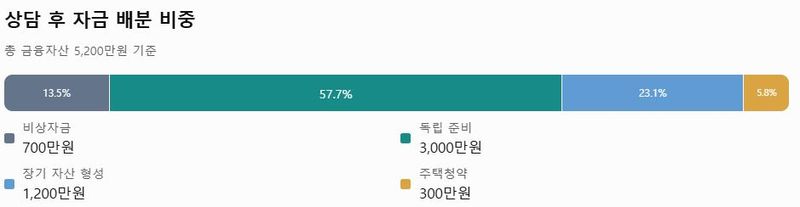
The planner first clarified when Ji-hun plans to move out and how much it would cost. He estimated that renting in the area Ji-hun is targeting would require a 50 million won deposit, plus 3 million won in initial expenses such as moving costs, brokerage fees, appliances and household goods, for a total of 53 million won. If Ji-hun sets aside 30 million won from his current funds and saves 1 million won a month for the next two years, he will have 54 million won, even without counting interest.
The remaining 22 million won can serve other purposes. The planner proposed setting aside the 7 million won in Ji-hun’s on-demand account as emergency funds in a bank parking account or a securities firm’s comprehensive asset management account (CMA), while keeping the 3 million won in his housing subscription savings account. That would leave 12 million won for long-term investment.
The planner noted, “That doesn’t mean he has to invest all of that amount,” adding, “He should decide after checking whether he has plans involving major expenses, such as getting married or buying a car.”
Invest only as much as you can afford to lose
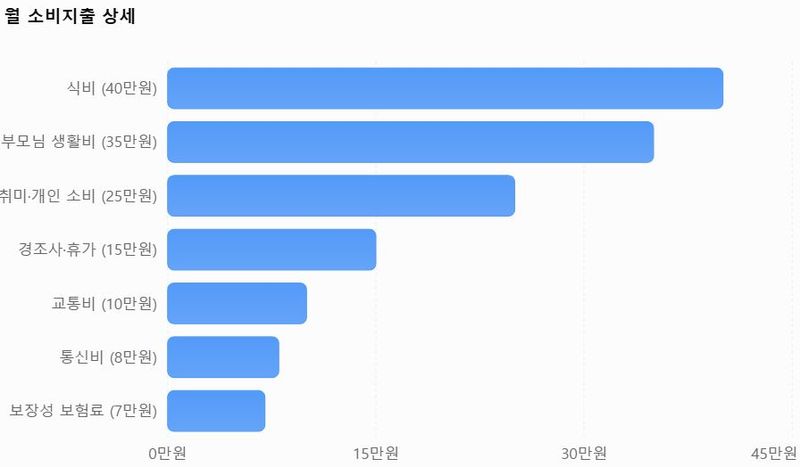
Instead, the proposal was to allocate 1 million won of his existing 1.8 million won in monthly savings to his moving fund and 800,000 won to long-term asset building. Rather than leaving the remaining 200,000 won idle in his salary account, he can keep it available for when his goals change or expenses rise.
So how should he invest? Given Ji-hun’s limited investment experience, the plan was to split the 12 million won in long-term funds evenly between deposits and stock-index exchange-traded funds (ETFs). He could also put 400,000 won each into deposits and investments using the 800,000 won he sets aside each month for long-term asset building.
The planner said, “When choosing ETFs, you should look beyond their names and recent returns and consider which markets and stocks they invest in, what the costs are, and how they account for exchange-rate fluctuations.” He added, “If you can’t tolerate losses, you should lower the proportion you invest.”
He added, “It’s also best to let go of the idea of making up a shortfall through long-term investing if you find yourself short of money before moving out,” because “a plan that only works if you earn investment returns will inevitably be vulnerable to market conditions.”
How to keep saving after moving out

After moving out, however, he will no longer need to save 1 million won each month toward the rental deposit. If he uses 800,000 won of that amount for his higher living costs and puts the remaining 200,000 won toward emergency savings, he can maintain the existing 800,000 won monthly contribution to long-term asset building.
The planner advised him to build up sufficient emergency funds. The 7 million won set aside earlier would cover about 3.2 months of his projected monthly expenses after moving out. The appropriate amount may need to change depending on factors such as job security and his actual essential living costs.
Making a plan is not the end of the process. Ji-hun decided to save an additional 6 million won for moving out over the next six months while checking actual deposit and rent levels in his target area. He will then review how his funds are allocated and reprioritize if new plans arise, such as marriage or a job change.
The planner emphasized, “After saving a lump sum, what matters is distinguishing when and where the money will be used, rather than looking for products with high returns,” adding, “Securing the funds needed for your goals first and managing the rest within what you can afford will help you continue building assets over the long term.”
Earning, spending and saving money are things we do throughout our lives, but financial planning is always pushed to the back burner. Yet money has a clock of its own and won’t wait. Without making choices, it is left unattended; without setting a direction, it slips away. That is why we need to plan the flow of money throughout our lives.[Money Planning Office] works with the Korea Financial Planner Association (IFPK), an AFPK certification body, to support people in planning their lives.
[email protected] Kim Tae-il, Lee Hyeon-jeong Reporter