[Editorial] Jensen Huang Scandal Sends Shock Waves Far and Wide; Could Spur Market Diversification
- Input
- 2026-11-12 18:27:33
- Updated
- 2026-11-12 18:27:33
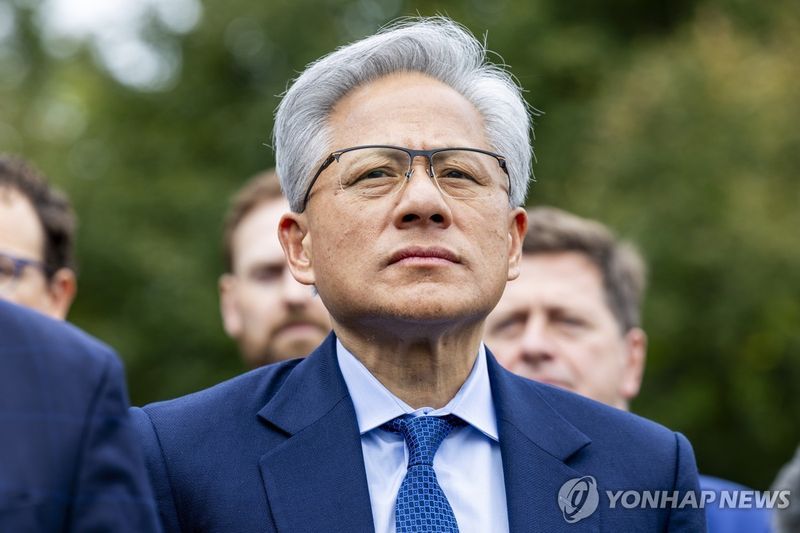
According to foreign media reports, Huang recently admitted to having an affair, and allegations of an improper relationship with a company executive have also emerged. Reports have even said that NVIDIA’s board discussed removing him and began looking for a successor. His future has not yet been decided, but it is clear that uncertainty has grown around the leadership of the NVIDIA CEO, who has led the global AI semiconductor market.
The impact Huang’s future could have on South Korea’s semiconductor industry is also significant. Building on close cooperation with NVIDIA, Korean companies have established themselves as key suppliers in the global AI value chain. Samsung Electronics and SK hynix, in particular, have enjoyed growth by supplying high-bandwidth memory (HBM) to NVIDIA’s AI ecosystem. With semiconductor exports accounting for nearly half of the country’s total exports, Huang’s replacement could shock South Korea’s economy as well as its semiconductor industry.
The possible tightening of U.S. restrictions on China following allegations that NVIDIA chips were smuggled into the country is another factor to watch. The U.S. Congress is advancing measures including the AI Overwatch Act, which would strengthen oversight of advanced AI chip exports; the Chip Security Act, which would use semiconductor tracking to prevent smuggling into China; and the MATCH Act, which would require allies to tighten export controls on semiconductor equipment to China. The bills are still at the legislative stage, but if passed, they could place a significant burden on Korean companies.
In particular, if the MATCH Act leads allies to tighten export controls on semiconductor equipment to China, restrictions could increase on equipment imports and facility upgrades at Samsung Electronics and SK hynix, both of which have production facilities in China. Samsung Electronics produces NAND flash memory in Xi’an, while SK hynix produces DRAM and NAND flash memory in Wuxi and Dalian, respectively. Tighter restrictions could significantly disrupt operations at these plants.
Above all, this uncertainty comes amid growing concerns about investment and demand in the AI industry. In the United States, there are moves to restrict new data center construction because of the facilities’ enormous consumption of electricity and water. Debate also continues over whether Big Tech’s astronomical AI investments amount to a bubble. At a recent meeting with Samsung executives, OpenAI CEO Sam Altman also pointed to cases in which AI demand in some markets had been double-counted, noting the possibility of short-term fluctuations in demand. This means that investment and demand can change at any time, regardless of the AI industry’s long-term growth trajectory.
Huang’s future, U.S. semiconductor restrictions on China and uncertainty over AI investment are all factors that could reshape the global semiconductor industry. Korean companies need to reduce their reliance on specific customers such as NVIDIA and diversify their supply chains and partnerships. They also need to adjust the pace of capital investment to prepare for short-term fluctuations in demand. The government, too, should step up trade diplomacy with the U.S. Congress and administration to minimize the impact of restrictions on China on Korean companies’ operations at their factories there. Reducing reliance on any particular company or individual through technological competitiveness and market diversification is the way to withstand uncertainty.