Foreign tourists top 20 million; spending nears 16 trillion won [Weekend Culture]
- Input
- 2026-11-12 18:18:04
- Updated
- 2026-11-12 19:50:01
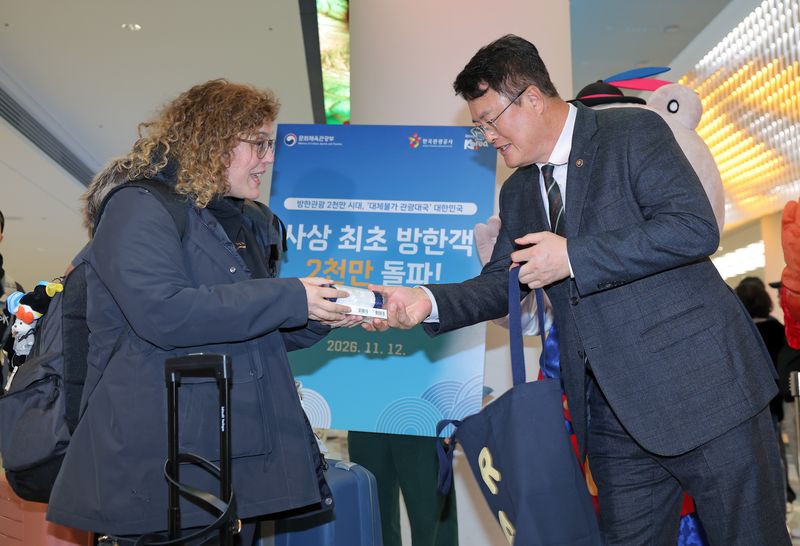
The Ministry of Culture, Sports and Tourism (MCST) said on the 12th that the cumulative number of visitors to Korea had exceeded 20 million. The figure is an estimate based on the previous day’s cumulative total of 19.97 million visitors (provisional) and this year’s average of about 64,000 visitors per day. Annual arrivals, which stood at 17.5 million in 2019, plunged after the COVID-19 outbreak before recovering to 16.37 million in 2024. Last year, the total reached a record annual high of 18.94 million. The MCST forecast that arrivals would reach 23 million by the end of this year if the upward trend continues.
From January to September this year, foreign tourists spent 15.9416 trillion won by card in Korea’s tourism sector, 47.7% more than the 10.794 trillion won spent during the same period last year. Over the same period, arrivals rose 21.5%, from 14.08 million last year to 17.11 million this year. The growth rate in card spending was more than twice the growth rate in the number of visitors to Korea.
By September, 3.24 million tourists had entered Korea through airports outside the capital region, including Gimhae, Jeju Province, Cheongju and Daegu, accounting for 19.0% of all visitors to Korea. Arrivals through seaports outside the capital region, including those in Busan, Jeju, Seogwipo, Yeosu and Gunsan, totaled 1.58 million (9.2%). Compared with the same period a year earlier, arrivals through airports increased 37.4% and those through seaports rose 14.5%.
The MCST cited the growing reach of Hallyu as a factor behind the increase in visitors to Korea. In the 2026 Overseas Hallyu Survey conducted by the MCST and the Korean Foundation for International Cultural Exchange (KOFICE), 55% and 53% of respondents, respectively, said Korean food and beauty were popular in their countries. The survey was conducted in November and December last year among 27,400 people in 30 countries and regions overseas who had encountered Korean cultural content.
At the 11th National Tourism Strategy Meeting on February 25, the government proposed improving entry and exit procedures, expanding international flights at regional airports and strengthening penalties for price gouging.
Kim Dae-hyun, the MCST’s second vice minister, welcomed arriving passengers at Incheon International Airport on the 12th. The MCST plans to hold commemorative events, meetings with tourism industry representatives, welcome events for passengers arriving at regional international airports, and events linked to the Korea Grand Sale.
[email protected] Jang In-seo Reporter