Government sets aside 2 trillion won for SMEs under Mega Project; launches councils in five major regions
- Input
- 2026-11-12 18:35:04
- Updated
- 2026-11-12 18:35:04
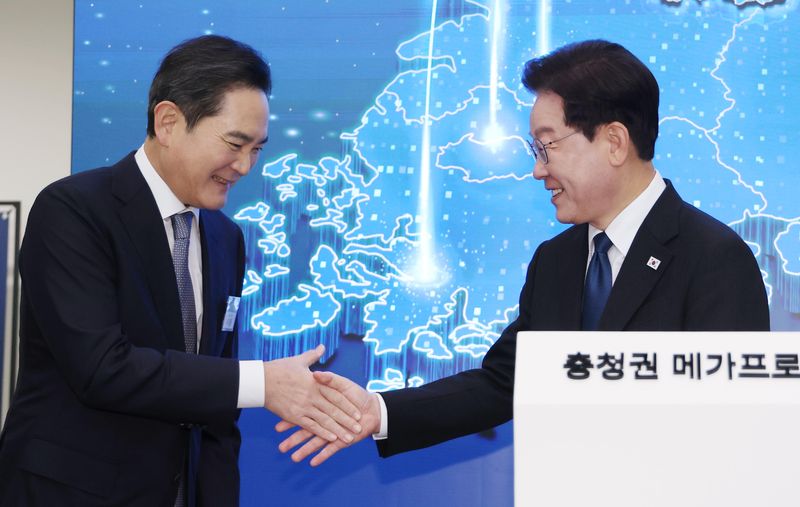
The Ministry of SMEs and Startups reported a plan to strengthen SMEs’ role at the fourth public-private joint review meeting on Mega Project, chaired by President Lee Jae-myung and held on the 12th at the Onyang Campus of Samsung Electronics’ Asan plant.
Mega Project is an initiative by the Lee Jae-myung administration to foster advanced industries and infrastructure through large-scale investment by the private sector and government, centered on semiconductors, artificial intelligence (AI) data centers and physical AI.
Existing partner companies of anchor conglomerates and mid-sized companies are seeking support for new facility investments and stronger manufacturing capabilities in the relevant regions to prepare for Mega Project.
The Ministry of SMEs and Startups has therefore decided to create 2 trillion won in mutual-growth funding by 2030, using dedicated funds within the Mutual Growth Cooperation Fund as well as investment and loan funds raised through contributions from large companies and others. The funding will be used to localize supply chains through technological cooperation between large and small businesses and strengthen capabilities to improve environmental, social and governance (ESG) performance.
It will also introduce project finance (PF) guarantees for regional projects to support the construction of local production infrastructure. Loans for production funding based on purchase orders and the expansion of the win-win payment system to second-tier and lower-tier suppliers will also help reduce financing gaps in the supply chain.
In particular, for local SMEs seeking to enter supply chains, the ministry will identify the technologies and products needed by large companies and their top-tier suppliers, match them with the SMEs, and support demonstrations and research and development (R&D).
Companies seeking to enter related new businesses by leveraging their existing technologies, facilities and workforce will receive coordinated support, including consulting, financing and technology development.
Starting this month, the ministry will also launch SME councils for Mega Project in each of the five major regions to connect SMEs with large and mid-sized companies and central and local governments.
The councils’ discussions will be reported to a joint public-private consultative body, and the ministry will work with local governments to help companies relocating to regional areas settle in. Relevant government ministries will work together to improve regulations.
In addition, together with anchor companies, local governments and the Fund of Funds, the government will create a regional growth fund worth 2 trillion won over five years to promote investment in startups and venture companies in Mega Project fields.
Six more startup cities will also be designated, in addition to the four currently being developed, to encourage startup activity.
Minister of SMEs and Startups Lee So-young said, "I will serve as a bridge between SMEs and large and mid-sized companies, as well as between central and local governments, while helping ensure that the large-scale market opened up by Mega Project becomes an opportunity for innovative growth for SMEs."
[email protected] Kim Hyeon-cheol Reporter