Rebuilding Korea Party and Progressive Party push back against Cheonghae Unit expansion, calling it a “backdoor deployment”
- Input
- 2026-11-12 16:19:33
- Updated
- 2026-11-12 16:47:05
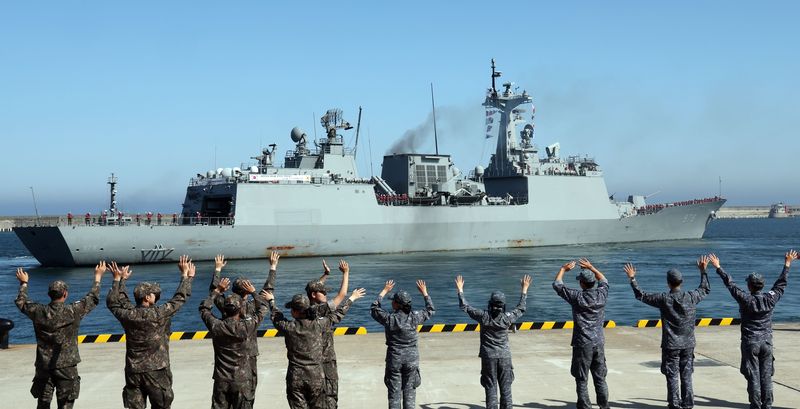
According to political circles on the 12th, the Rebuilding Korea Party held a Supreme Council meeting at the National Assembly that day and formally adopted opposition to the revised motion to extend the Cheonghae Unit’s deployment. Floor leader Kim Jun-hyung said, “We oppose this revised motion to extend the deployment, and all of our party’s lawmakers are expected to vote against it.”
Earlier, the government approved the revised motion to extend the Cheonghae Unit’s deployment at a Cabinet meeting on the 10th and submitted it to the National Assembly. The proposal would expand the operational area from the Gulf of Aden to the high seas south of Oman and add a P-8A maritime patrol aircraft, an explosive ordnance disposal team and unmanned minesweeping equipment. It would also increase the personnel from 320 to around 395 and add “support for restoring freedom of navigation along international sea lanes” to the mission. The government says the measure is intended to protect Korean citizens and vessels in response to instability in the Middle East and is unrelated to a direct deployment to the Strait of Hormuz. The Ministry of National Defense stressed that the Strait of Hormuz is not included in the operational area and that the government will maintain its principle of non-involvement in war.
Floor leader Kim asked rhetorically, “Do pirates lay mines? Are they sending a patrol aircraft, an explosive ordnance disposal team and even unmanned minesweeping equipment under the pretext of countering pirates?” He went on to warn that South Korea could take on unnecessary military risks if the United States labels the measure a troop deployment or Iran considers it a hostile act.
The Progressive Party also called for a halt to consideration of the motion in a statement issued in the name of its floor leader, Yun Jong-o, that day. “We can never agree to a deployment to the Strait of Hormuz to show goodwill to the United States,” Yun said, criticizing the government: “It cites protection of Korean vessels as a pretext, but this is an underhanded deployment that effectively incorporates our armed forces into U.S. military operations.”
The ruling party appears to be backing the government’s explanation that expanding the operational area is a response to increased pirate activity. Jeon Eun-su, the Democratic Party’s floor spokesperson, earlier defended the government’s position, saying, “This is not a backdoor deployment to the Strait of Hormuz.” Despite opposition from some parties in the broader ruling camp, observers say the motion is likely to clear the National Assembly, given the Democratic Party’s majority.
However, the actual scope of the additional assets’ missions is expected to emerge as a point of contention during review by the National Assembly’s National Defense Committee. In particular, concerns have been raised that, depending on how information gathered by the maritime patrol aircraft is used and the conditions for deploying mine-clearing assets, the mission could end up supporting U.S. military operations rather than simply protecting Korean vessels. Since the government has said that actual participation in operations in the Strait of Hormuz in the future would require separate approval from the National Assembly, the key issue in the review is likely to be how broadly to define the activities permitted under this revised motion.
[email protected] Jiwon Song Reporter