“Like Smoking Scented Cigarettes”... ‘This’ Is the ‘Worst’ Culprit Behind Indoor Ultrafine Dust [Health Talk]
- Input
- 2026-11-13 04:50:00
- Updated
- 2026-11-13 04:50:03
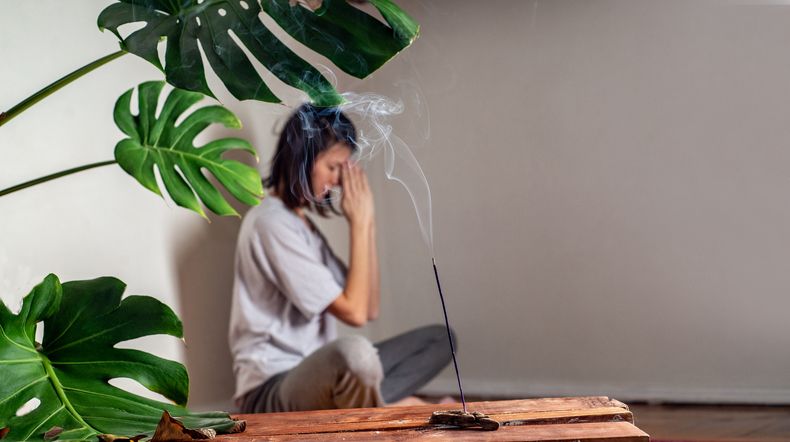
[Financial News] Many households use air-freshening products such as incense sticks, scented candles and diffusers to get rid of unpleasant odors at home or lift their mood. But a growing number of studies show that the habit of making a home smell nice can instead pollute indoor air to levels comparable to cigarette smoke and release even Group 1 carcinogens that threaten respiratory health.
According to climate and environmental researchers on the 11th, a team at Imperial College London in the United Kingdom analyzed indoor air quality in 112 London homes and found that incense sticks were the biggest culprit among air-freshening products, producing the highest indoor PM2.5 concentrations. When incense was used, the hourly PM2.5 concentration rose to as high as 1,293 μg/m3. That is about 17 times the domestic outdoor PM2.5 threshold for “very bad” (more than 76 μg/m3).
Incense and diffusers used to get rid of odors... like smoking “four cigarettes” at home
Studies in South Korea have also clearly demonstrated the harmful effects of incense sticks. In a 2024 experiment conducted in an enclosed space by researchers from Eulji University and Seoul National University, the average PM2.5 concentration measured right next to the products was 17.4 μg/m3 for scented candles, compared with 1,901.3 μg/m3 for incense sticks—about 109 times higher. Made by mixing wood powder, fragrances and adhesives, incense sticks burn incompletely, releasing large amounts of fine particles along with benzene and formaldehyde, Group 1 carcinogens designated by the International Agency for Research on Cancer (IARC), as well as carbon monoxide and other substances. A 2003 experiment by Taiwanese researchers also found that the amount of PM2.5 emitted by burning one incense stick (32.6–52.7 mg) was comparable to that from about two to four cigarettes.
So is it safe to use scented candles or diffusers instead of incense? Experts warn that these products are not safe either.
When scented candles burn, benzene and toluene concentrations rise, and PM2.5 levels can also change sharply depending on how the flame is extinguished. When researchers from Eulji University and Seoul National University blew out a scented candle, the PM2.5 concentration surged to an average of 2,365.7 μg/m3. By contrast, when they put a lid over it to cut off the oxygen, the average was just 13 μg/m3—a difference of at least 180-fold.
17 times the “very bad” indoor air threshold... air fresheners’ betrayal: they emit Group 1 carcinogens
Oil diffusers, which do not involve lighting a flame, are not a safe haven either. In the Imperial College London study, the highest hourly PM2.5 concentration associated with using an oil diffuser was 858 μg/m3, exceeding the highest level observed for scented candles. The U.S. Environmental Protection Agency (EPA) notes that fragrance compounds in diffusers can react with other substances in indoor air to produce secondary pollutants such as fine particles and formaldehyde.
Experts stress that pollutants can linger for long periods and could be fatal, especially in homes with limited space and poor ventilation, such as studio apartments. A 2021 study by researchers from Sungkyunkwan University also found that indoor PM2.5 concentrations remained above the standard even 30 minutes after indoor activities such as burning candles had ended.
Professor Kwon Hyuk-soo of the Division of Allergy and Clinical Immunology at Asan Medical Center recently explained on the YouTube channel Jisik Hansang: “Air-freshening products that create smoke by burning something spread enormous amounts of fine particles and chemicals, which are toxic to our bodies. Volatile organic compounds (VOCs) and phthalates in diffusers can also cause inflammation in the nose and bronchial tubes, and long-term inhalation can disrupt immune and hormonal balance.”
Professor Kwon advised: “Rather than trying to mask odors with artificial fragrances, it is better to remove the source of the odor in the first place or use natural deodorizers such as charcoal.” He added: “Indoor air is often more polluted than outdoor air, so even on days when fine dust is in the air, you should open the windows wide three to four times a day and ventilate briefly, for up to five minutes, to expel pollutants.”
[email protected] Moon Young-jin Reporter