Jeju’s Autonomous-Driving Push: Taking on Driverless “Level 4” and Seeking to Host a National Demonstration Project
- Input
- 2026-11-12 15:46:41
- Updated
- 2026-11-12 15:46:41
【Financial News, Jeju = Reporter Jeong Yong-bok】 Jeju Province is shifting from autonomous-driving pilot operations centered on having safety personnel ride along to a commercial Level 4 system that operates without driver intervention. It plans to enter next year’s government competition for a large-scale autonomous-driving demonstration city and introduce unmanned, on-demand transport services in areas with limited public transit.
According to Jeju Special Self-Governing Province on the 12th, the 9th popularly elected provincial administration plans to connect and expand existing autonomous-driving pilot operation zones in stages and advance AI-based driving technology to lay the groundwork for Level 4 commercialization.
Level 4 is a stage of autonomous driving in which a vehicle operates on its own without driver intervention within designated operating areas and conditions. Its level of automation is higher than Level 3, which requires the driver to respond directly when necessary.
Jeju currently operates and manages four autonomous-driving pilot operation zones: the route from Jeju City Hall to Seogwipo City Hall’s First Office, the High-Tech Science and Technology Complex, Seongsan Ilchulbong, and smart logistics.
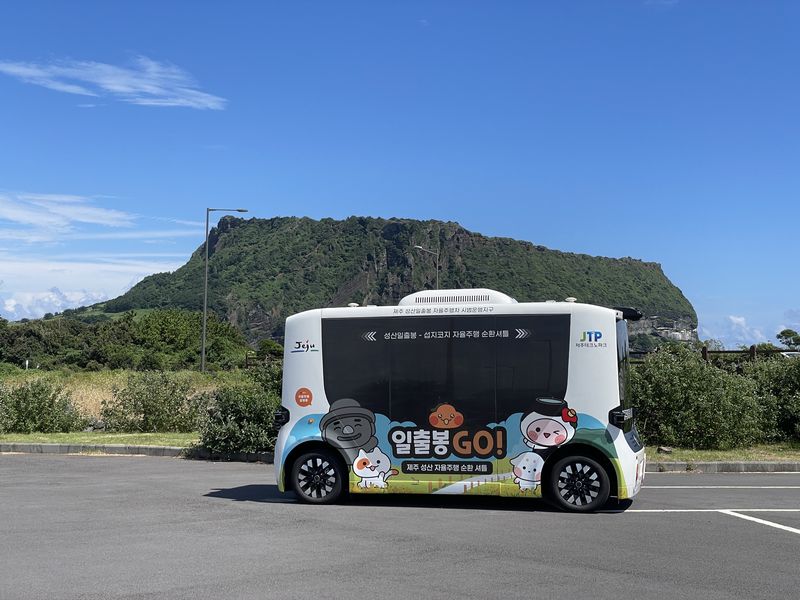
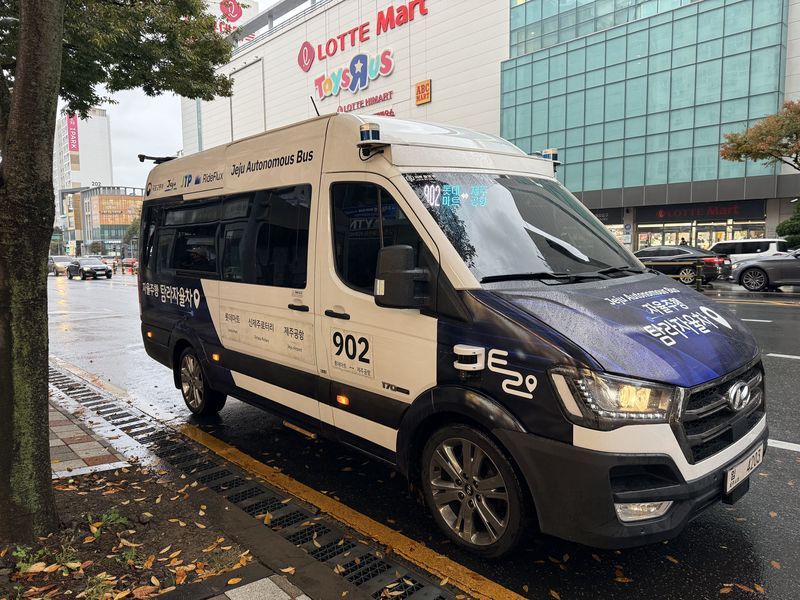
Passenger services include “Tamna Autonomous Vehicle,” on-demand autonomous vehicles in the High-Tech Science and Technology Complex, and the tourist-oriented circular shuttle “Ilchulbong Go!” at Seongsan Ilchulbong. On-demand transport operates vehicles in response to users’ requests or reservations.
As of the end of October, cumulative ridership on Jeju’s autonomous-driving passenger services had exceeded 16,775. Last December, the province received an A, the highest grade nationwide, in the Ministry of Land, Infrastructure and Transport’s evaluation of autonomous-driving pilot operation zones. Of the 36 zones evaluated, six received an A, including Jeju.
The demonstration will also expand into freight transport. Jeju Province plans to begin an autonomous logistics demonstration in the first half of 2027 along an approximately 15.7-kilometer route from the Jeju Samdasoo plant to the Hoecheon Logistics Center. The project will extend operating experience gained primarily in passenger transport to industrial logistics.
End-to-end artificial intelligence (E2E AI) is at the heart of the technology development. The approach trains vehicles on information collected by sensors and other means so they can perceive their surroundings and make driving decisions. Jeju Province plans to expand the driving data collected on real roads and use it to advance the technology.
The institutional framework is also changing. The Autonomous Vehicles Act, revised last September, will take effect on December 23. Mayors and provincial governors will be able to designate autonomous-driving pilot operation zones within their jurisdictions after consulting the Minister of Land, Infrastructure and Transport and obtaining deliberation and approval from a local committee. Jeju Province plans to use these powers to connect and expand, in stages, pilot zones centered on individual routes and areas.
Expanded government investment in autonomous driving is also an opportunity Jeju is targeting. The 2027 government budget proposal includes 841.5 billion won for the nationwide Autonomous Driving Demonstration City Promotion Project and 32.2 billion won for a support program for unmanned demand-responsive transport (DRT) in areas and time periods with limited transportation.
The demonstration city project is a national initiative to deploy large numbers of autonomous vehicles and collect driving data for AI training. The government is pursuing plans to increase the nationwide fleet of demonstration vehicles from 200 to as many as 3,000.
The unmanned DRT support program is a new competitive grant project to be carried out over three years in 50 transportation-disadvantaged areas nationwide. Jeju Province plans to develop a proposal focused on rural communities and times when public transit is difficult to use.
However, the budgets for both programs are part of a nationwide government proposal, not funds allocated to Jeju. Congressional budget review and the competition process are still pending, so it has not been decided whether Jeju will be selected or how much national funding it could secure.
Expanding actual unmanned operations will also require addressing issues such as safety verification in complex road environments, accident-response systems, and securing operating funds. The existing pilot-operation record does not mean Level 4 commercialization has been completed.
Jang Cheol-won, director of Jeju Province’s Future Industry Bureau, said, “We have steadily achieved results as an autonomous-driving testbed,” adding, “We will take a leap forward as a leading city for fully autonomous Level 4 driving that residents can experience in their daily lives.”
[email protected] Jeong Yong-bok Reporter