A “flexible solar cell” coated with hair-thin glass developed
- Input
- 2026-11-12 15:27:40
- Updated
- 2026-11-12 15:27:40
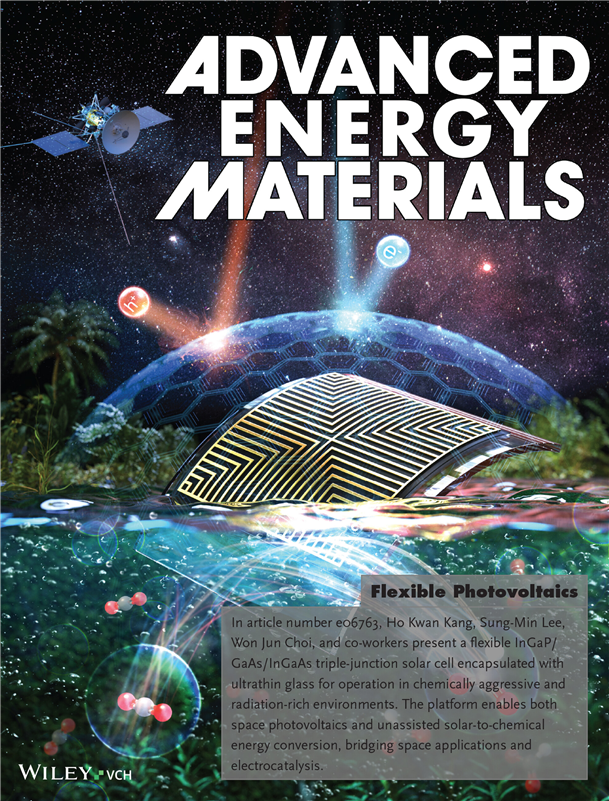
[Financial News] South Korean researchers have developed a “next-generation flexible solar cell” that can withstand both space radiation and harsh chemicals by coating it with glass as thin as a strand of hair. The cell is expected to find broad applications across the space and clean-energy industries: it can boost satellites’ power efficiency and lifespan, and it can also turn carbon dioxide, a greenhouse gas, into useful chemical feedstock using only sunlight, without any additional power. Hanyang University said on the 12th that a research team led by Professor Lee Seong-min of its School of Electrical and Biomedical Engineering had jointly developed a high-efficiency flexible solar cell that operates reliably even in extreme environments, together with a team led by Dr. Choi Won-jun of the Korea Institute of Science and Technology (KIST) and a team led by Dr. Kang Ho-gwan of the Korea Advanced Nano Fab Center (KANC).
The key to the technology is to fabricate a high-performance semiconductor with excellent light absorption (a III–V triple-junction semiconductor) on a thin plastic substrate, then wrap it in a protective layer of “ultra-thin glass” just 100 micrometers (μm, one-millionth of a meter) thick. The semiconductor offers higher power-generation efficiency than conventional silicon solar cells, and the glass protective layer compensates for its vulnerability to external impacts and environmental changes while keeping it thin and lightweight.
The solar cell recorded an energy-conversion efficiency of up to 35.8% under terrestrial solar conditions.
The cell demonstrated exceptional durability in severe radiation tests simulating the space environment. Even when irradiated with 100 trillion high-energy protons—the main component of space radiation—per square meter, it retained its initial power-generation efficiency in full. It also maintained about 93% of its initial efficiency in tests involving high-energy electron irradiation. These results make it well suited for satellites and space probes, which need thin, lightweight cells to reduce launch weight while also requiring protection against radiation damage.
The cell also overcame a limitation of conventional solar cells, which corrode easily when exposed to water or electrolytes. The solar cell coated with ultra-thin glass showed no decline in power-generation performance after being immersed in hot water at 70°C for 17 days, and retained about 96% of its initial efficiency even after exposure to a strong alkaline solution for 24 hours.
The researchers also successfully tested breaking down carbon dioxide by connecting a copper catalyst to the solar cell, taking advantage of its high chemical resistance. Using sunlight alone, with no external power supply, they reduced carbon dioxide and converted it into formate, an industrial chemical.
Professor Lee Seong-min said, “By combining high-efficiency solar-cell technology with technology that ensures stability in extreme environments, we have expanded the potential applications of next-generation flexible solar cells.” Dr. Choi Won-jun expressed hope that “the technology could be applied more widely in space power systems and solar-powered clean-energy conversion.”
Meanwhile, the results of this research, conducted with support from the Ministry of Science and ICT, the National Research Foundation of Korea and others, were selected as a featured contribution (frontispiece) and published in a special issue of the international energy materials journal Advanced Energy Materials.
[email protected] Kim Man-gi Reporter