Despite 2.4% Rebound in Cement Demand Next Year, Industry's Exit From Slump Remains Elusive
- Input
- 2026-11-15 13:06:27
- Updated
- 2026-11-15 13:06:27
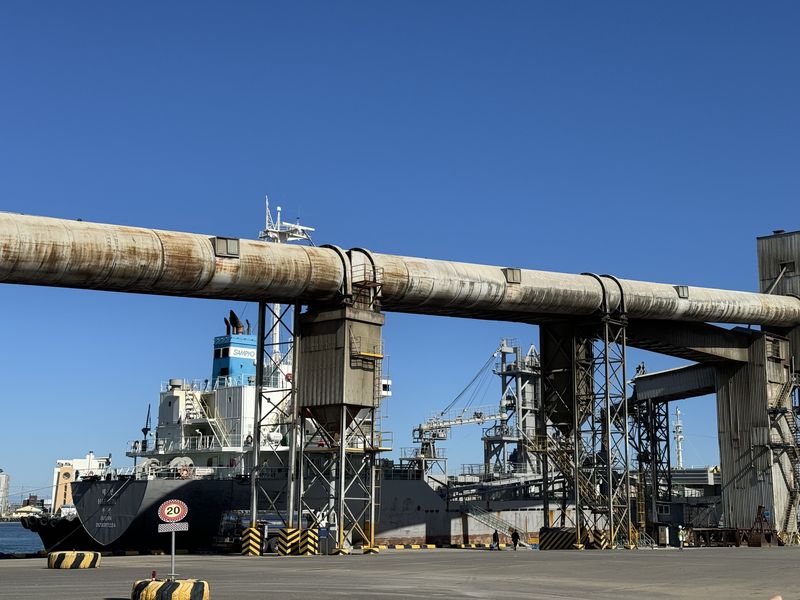
According to the Korea Cement Association on the 15th, domestic cement demand is forecast to rise 2.4% next year from this year to 39.65 million metric tons. Although this would mark a slight recovery from the previous year, demand is still considered low, remaining below 40 million metric tons.
As the construction downturn drags on, the cement industry, a key supplier to the sector, is taking a direct hit. Domestic cement shipments totaled 38.1 million metric tons last year, falling below 40 million metric tons for the first time in 34 years, since 1991.
The industry expects shipments to recover to 40 million metric tons only in 2029. The Korea Cement Association forecast a gradual rise in cement demand, to 39.68 million metric tons in 2028, 40.99 million in 2029 and 41.90 million in 2030.
However, there are concerns that this will not be enough to resolve the industry’s business crisis. Major cement companies have seen their earnings decline amid the construction downturn, rising costs and environmental regulations.
Hanil Cement’s consolidated revenue last year fell 18.2% from the previous year to 1.4238 trillion won. Operating profit plunged 51.4% to 131.8 billion won. Asia Cement Co., Ltd. also reported revenue of 1.0239 trillion won last year, down 7.8% from a year earlier, while operating profit plunged 45.1% to 77.3 billion won. Sampyo Cement’s revenue and operating profit also fell 14.4% and 26.3%, respectively, from the previous year.
A cement industry official said, “A huge amount of money has to be invested in facilities to respond to tighter environmental regulations, including greenhouse gas reduction, and concerns are growing as demand recovers slowly.”
Meanwhile, to improve the accuracy of cement demand forecasts, the Korea Cement Association developed a statistical forecasting model jointly with the Korea Cement New Materials Research Association and the Construction Economy Research Institute of Korea. The model incorporates construction and civil engineering orders, macroeconomic indicators, population- and housing-related indicators, and policy and technology variables, and compares and validates the forecasts from four statistical models. The association plans to continuously adjust its forecasts based on quarterly results, changes in the market and policy, and expert opinions.
[email protected] Lee Ju-mi Reporter