AI Automates Administrative Work Without Coding Skills: Junior College Staff to Learn “Practical AI” Over Winter Break
- Input
- 2026-11-12 15:19:20
- Updated
- 2026-11-12 15:19:20
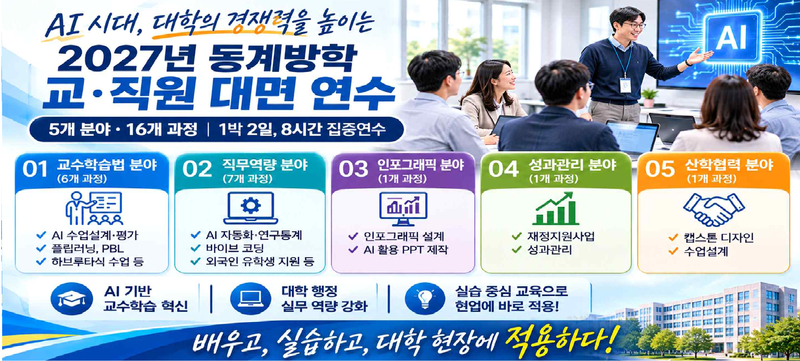
The training is designed to minimize theoretical explanations and focus on hands-on exercises that can be put to immediate use at colleges. Its aim is to boost both administrative efficiency and educational competitiveness at colleges in response to the rapidly changing AI era. Participants will include staff from colleges nationwide, as well as elementary and secondary school staff.
The most eye-catching offering is the “Job Skills” area (seven courses), which aims to change the way college administrative offices work. A key course is hands-on training in administrative automation using “vibe coding”—building work-related programs by interacting with AI, even without specialized computer programming knowledge. The program also covers how to use generative AI to write research papers and project proposals, as well as practical skills in Microsoft Excel-based data analysis and report writing.
Tailored practical courses have also been developed to address key issues facing colleges. They include “Academic Administration and Learning Support for International Students,” an area that has recently grown in importance at colleges; “Performance Management for Junior College Financial Support Projects”; and “Operating Faculty Personnel Systems to Prevent Disputes.”
Courses will also be offered on using AI to create infographics for lectures and presentation materials (PPT).
The “Teaching and Learning Methods” area (six courses), aimed at changing classroom instruction, also focuses on the use of AI. Participants will practice designing lessons and assessments with “AI agents” that assist with tasks like a secretary; “AI-based flipped learning,” in which students study online in advance and then discuss the material in class; and participatory lessons combining short-form videos with game elements. Practical, hands-on courses will also cover improving the quality of nursing simulation exercises and capstone design (creative comprehensive design) using generative AI.
The training comprises 16 courses across five areas: job skills, teaching and learning methods, infographics (one course), performance management (one course), and industry-academia cooperation (one course). All courses will be delivered as intensive, in-person practical sessions over two days and one night (eight hours in total), so that staff can immediately apply what they have learned when they return to their institutions.
Oh Byeong-jin, director of the Competency Development Training Center at the Korean Council for University College Education, said, “The competitiveness of colleges starts with the expertise of faculty and staff who actively respond to a changing educational environment.” He added, “We will expand field-oriented training so that staff can apply what they learn to classes and administrative work and bring about tangible changes.”
[email protected] Kim Man-gi Reporter