Debt-fueled stock investing falls by 1.5 trillion won in a day; margin loan decline is second-largest on record
- Input
- 2026-11-12 15:40:25
- Updated
- 2026-11-12 15:40:25
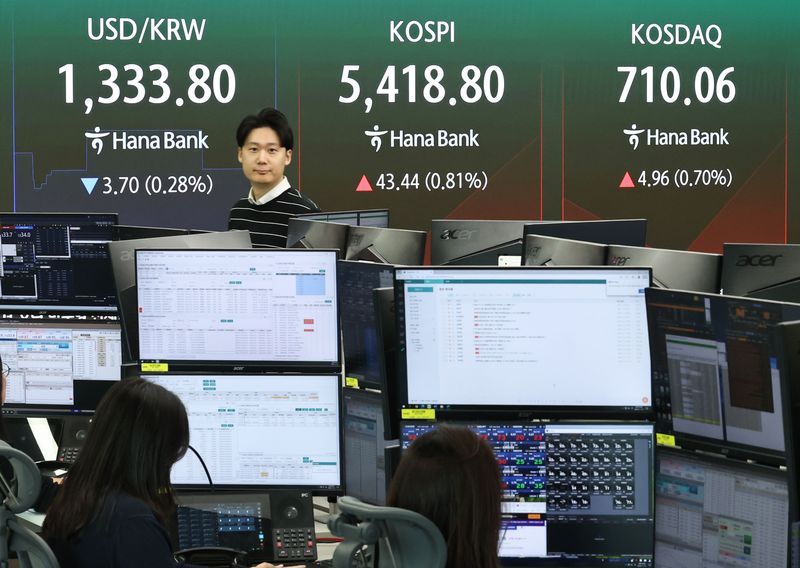

[Financial News] The outstanding balance of margin loans borrowed from brokerages to buy stocks fell by more than 1.5 trillion won in a single day. It was the second-largest decline on record. With stock-related borrowing by individual investors reaching its highest-ever level on a daily-average basis this year, the recent rapid contraction in margin loans has drawn attention to individuals’ financial capacity and whether they can continue making additional purchases.
According to the Korea Financial Investment Association (KOFIA) on the 12th, the outstanding balance of margin loans stood at 26.5494 trillion won as of the 10th, down 1.5211 trillion won (5.42%) from the previous trading day. It was the second-largest one-day decline on record, after the 3.2181 trillion won drop on July 31.
The decline in margin loans was concentrated in the securities market. The KOSPI margin loan balance fell by 1.208 trillion won, from 21.8631 trillion won on the 9th to 20.655 trillion won on the 10th. That accounted for 79.4% of the total decline. Over the same period, the KOSDAQ balance fell by 313.1 billion won, from 6.2074 trillion won to 5.8943 trillion won.
The pace of contraction over the past month has also been steep. The margin loan balance fell by 7.7393 trillion won (22.6%) from 34.2887 trillion won on October 12 through November 10. More than one-fifth of the balance disappeared in less than a month. It was the first time the balance had fallen below 27 trillion won since July 31.
Securities-backed loans, in which investors borrow money using their stock holdings as collateral, also declined. The balance stood at 25.4867 trillion won on the 10th, down 479 billion won from the previous trading day. The combined balance of margin loans and securities-backed loans contracted by about 2 trillion won in a single day, from 54.0361 trillion won to 52.0361 trillion won.
The rapid decline in margin loan balances is expected to affect both the market’s potential selling pressure and individual investors’ buying capacity. Shrinking loans could reduce the risk of further forced liquidations, but the need to use funds for repayment could also limit investors’ capacity to make new investments.
A securities industry official said, “When margin loans decline, the overhang of shares that could be dumped due to insufficient collateral if stock prices fall in the future also diminishes. However, investors’ capacity to make additional purchases could be constrained as they put in cash to repay loans or sell shares they hold.”
The decline in balances alone cannot easily be interpreted as the scale of individual investors’ losses or forced liquidations, since new loans, voluntary repayments and forced sales are all reflected in the figures. Another industry official stressed, “Even if margin loan balances have fallen, the impact of a further decline could vary depending on the collateral coverage of the remaining loans. Investors using leverage need to assess the possibility of a collateral shortfall as share prices fluctuate, as well as their ability to repay.”
[email protected] Choi Doo-seon Reporter