“Never drive in a puffer jacket” ... Why the warning that it could even cause organ rupture? [Health Issue]
- Input
- 2026-11-12 15:30:45
- Updated
- 2026-11-12 15:30:45
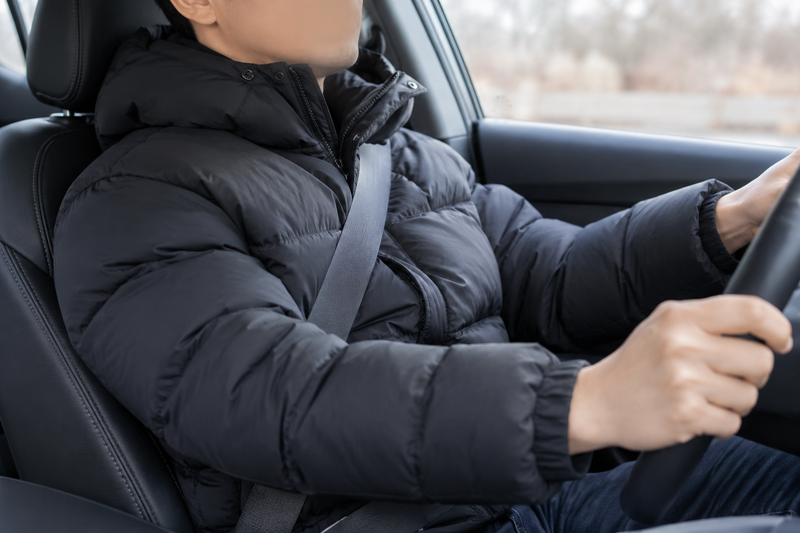
[Financial News] As the weather turns colder, more people are bringing out their thick puffer jackets. But a warning has emerged that wearing a thick winter coat while buckling up could actually increase the risk of injury in a crash.
Heo Jeong-ho, chief director of Seongbok 365 Jayeonane Korean Medicine Clinic, posted on Threads, a social networking service (SNS), on the 8th: “Please don’t wear a puffer jacket while buckling up.” He added, “A patient who came in today after a car accident was more seriously injured because they were wearing a puffer jacket and a seat belt.”
“As everyone is starting to wear puffer jackets, I’m warning you once again: don’t wear a seat belt with a puffer jacket on,” Dr. Heo said, claiming that “if the seat belt doesn’t fit snugly, its protective function is reduced, and the organs in the abdominal cavity could be at risk.”
“When we actually ran crash tests” ... Seat belts dug deep into the abdomen
The core of Dr. Heo’s argument is that people should always wear a seat belt, while making sure a thick coat does not leave a gap between the body and the belt. Concerns that thick winter coats can reduce a seat belt’s protective function have also been raised repeatedly overseas.
The Allgemeiner Deutscher Automobil-Club e.V. (ADAC) conducted crash tests in 2023 with adult and child dummies wearing thick winter coats and seat belts. Each dummy was dressed in thick winter clothing and secured with a seat belt, then brought to an abrupt stop from 16 km/h. The test recreated a rear-end collision in an urban area.
The tests found that the thick coats kept the seat belts from fitting snugly, and during the collision the lap belt dug deep into the abdomen. ADAC explained that this could severely compress and damage internal abdominal organs, including the intestines, liver and spleen, or cause internal bleeding.
This was not the first time ADAC had pointed out this risk. It conducted crash tests in the same way in 2014, and then, too, the seat belts dug deep into the abdomens of adult and child dummies wearing thick winter clothes. ADAC warned of possible soft-tissue injuries to the intestines, liver and spleen, as well as internal bleeding.
American Academy of Pediatrics: “Adults should avoid thick coats, too”
The American Academy of Pediatrics (AAP) offers similar guidance. In its advice on winter car-seat safety, the AAP explains that thick winter coats can compress in a collision, potentially loosening a seat belt or the harness straps in a car seat.
It emphasizes that “this same principle applies to all age groups,” advising that wearing a thick coat such as a puffer jacket while buckling up is not the best option for adults either, because a thick coat can create a gap between the body and the seat belt.
The AAP says the shoulder belt should cross the center of the chest and shoulder, while the lap belt should sit low and snug against the lower pelvis, not the abdomen. If the belt is worn loosely over a puffer jacket or the lap belt rides up over the abdomen, the force of a crash could be concentrated on a particular part of the body.
Therefore, when getting into a car in winter, it is best to take off a thick puffer jacket before buckling up. If you are concerned about the cold, it is recommended that you fasten the seat belt first and then cover yourself with a puffer jacket or blanket.
[email protected] Kim Hee-sun Reporter