Remodeling at a Crossroads... MOLIT and Seoul City Hear Industry Voices
- Input
- 2026-11-12 16:31:53
- Updated
- 2026-11-12 16:41:58
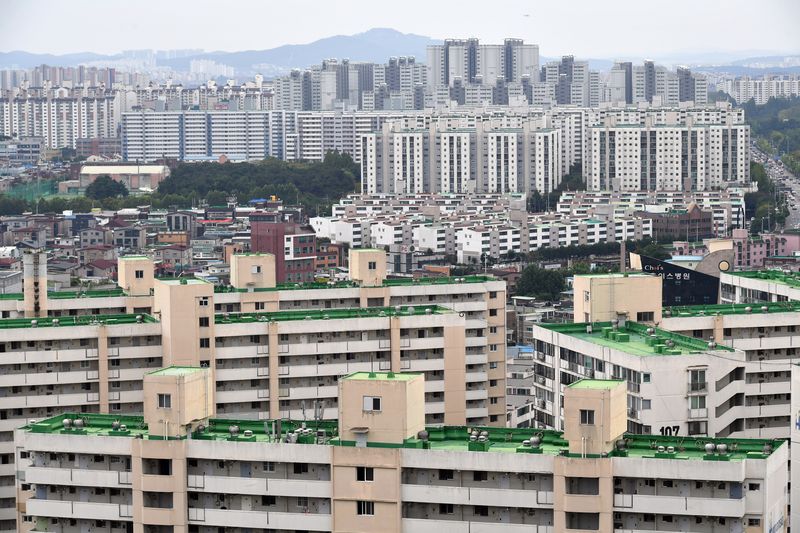
[Financial News] With the government and Seoul City each making “increasing housing supply” a key priority, representatives of the apartment remodeling industry visited the Ministry of Land, Infrastructure and Transport (MOLIT) and Seoul City to share their views on improving the system. As various regulations—including the Ministry of Government Legislation’s recent change to its authoritative interpretation of vertical extensions and Seoul City’s guidelines requiring a second safety inspection for horizontal extensions—cause confusion in the field, attention is focused on whether the relevant authorities will offer more forward-looking support.
According to industry sources on the 12th, officials from MOLIT met that morning with representatives of the Korea Remodeling Association, the Seoul Remodeling Council and the Korean Remodeling Convergence Society, as well as officials from the Korea Authority of Land & Infrastructure Safety. The meeting, originally scheduled for the 4th, had been postponed until that day. Participants spent an hour and a half discussing the issues.
The meeting focused in particular on shortcomings in safety reviews for vertical extensions. Industry representatives pointed out that although vertical extensions were introduced in 2014, the related notices and manuals have made little progress. One expert who attended the meeting said, “The notice states the principle that the law and circumstances should be reviewed and adjusted every three years, but almost nothing has been amended in 12 years. We conveyed that the rules need to be updated to reflect reality.” A remodeling cooperative head said, “MOLIT places particular emphasis on safety, but our ultimate goal is also to carry out construction safely and live safely with our children. We do hope, however, that some redundant safety inspections will be reconsidered.”
Concerns were also raised about fairness compared with reconstruction projects. Another remodeling cooperative head explained, “The government has partially lowered the consent threshold from 75% to 70%, but unlike reconstruction, remodeling requires a new round of collecting consent forms at the project-plan approval stage.” The process needs to be simplified, the association head said, by recognizing and combining existing consent forms as is done for reconstruction, to prevent several billion won in consulting fees and delays to projects.
Consistent administrative guidelines are also seen as urgently needed. One participant said, “We hope you will clearly set out what is and is not permitted in remodeling projects,” and pointed out that “projects allowed in one area are repeatedly being ruled impossible in another.” Confusion has recently arisen at a remodeling project site in Seongnam, Gyeonggi Province, following a sudden change in the Ministry of Government Legislation’s authoritative interpretation regarding pilotis-type vertical extensions.
Participants reportedly agreed that remodeling can also make a clear contribution to the government’s “supply at all costs” drive. MOLIT officials listened to their views and, in response to suggestions including holding regular meetings in the first and second halves of the year, said, “We’ll consider it.”
Seoul City also invited some heads of remodeling cooperatives in Seoul to a meeting that afternoon. The aim was to hear from people in the field after opposition intensified over Seoul City’s requirement for a “second safety inspection” of complexes undertaking horizontal extensions. See our exclusive report, “[Exclusive] Seoul City Hampers Remodeling; One Line in a Document Leaves 80 Complexes Reeling.”
[email protected] Jeon Min-kyung Reporter