Mortgage registrations on Seoul multi-unit properties rise 46.6% in a year... ‘Homeowner loans’ spread across Seoul
- Input
- 2026-11-12 15:26:27
- Updated
- 2026-11-12 15:26:27
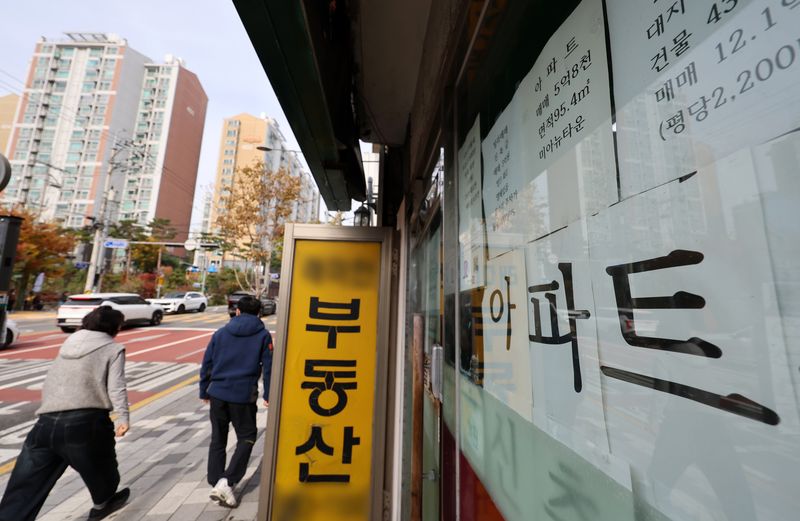
[Financial News] #. A, who has been visiting properties in Gangdong District, Seoul, in search of a home, was hesitant to buy after home prices recently rose sharply. A real estate brokerage made an unexpected suggestion: “These days, homeowners will lend you money, so if you’re determined, you can buy,” it said. “Don’t worry so much about getting a loan—if you’re interested, go ahead and sign.”As lending restrictions continue, so-called “seller financing,” in which sellers lend buyers part of the remaining balance, is being openly used as one way to complete transactions at brokerages in Seoul’s outskirts as well as for high-end homes in Gangnam. Meanwhile, the number of Seoul properties for which applications to register mortgage liens were filed rose by nearly 50% in a year.
According to the Court Registry Information Plaza on the 12th, applications to register mortgage liens on Seoul properties in multi-unit buildings—including apartments, officetels, row houses and multi-family homes—totaled 20,884 last October. That was an increase of 6,641, or 46.6%, from 14,243 in the same month last year.
The increase was seen across Seoul. The number of properties covered by applications rose from October last year in 20 of the city’s 25 districts. Gwangjin District saw the largest increase, from 351 to 3,070. The number rose from 821 to 1,574 in Seocho District and from 656 to 1,209 in Gangdong District. It also increased from 639 to 1,183 in Nowon District and from 726 to 1,174 in Gangseo District.
The increase was also steep in the three Gangnam districts (Gangnam, Seocho and Songpa). In Seocho District alone, the number rose 91.7%, from 821 to 1,574. It also increased from 1,153 to 1,235 in Gangnam District and from 1,162 to 1,220 in Songpa District.
However, applications to register mortgage liens cover various creditor relationships, including home mortgage loans from financial institutions, so the increase cannot be considered a rise in seller-financing transactions.
Seller financing is a method in which the seller does not receive the full purchase price all at once, but instead lends part of it to the buyer and then registers a mortgage lien on the property.
Since last year’s October 15 measures, all of Seoul has been designated a regulated area, and mortgage lending limits have been tiered according to home prices, ranging from 200 million to 600 million won. This has made it even harder to cover a home’s purchase price using loans from financial institutions alone. As sellers began directly lending buyers the funds they lacked, seller financing gained attention as an alternative way to raise money and was soon being discussed at property transactions.
In the past, the approach was mainly known in transactions involving high-end homes in the Gangnam area, where loans from financial institutions are restricted. More recently, it appears to be spreading to a wider range of areas and price brackets.
The method is now being discussed more casually in the field. In the three Gangnam districts, advertisements saying “mortgage lien possible” or “seller loan available” are easy to find. In particular, the more expensive the home, the larger the loan tends to be. A 93-square-meter unit in Acro Samseong in Samseong-dong, Gangnam District, was listed at an asking price of 5 billion won with a condition that the homeowner could lend 2 billion won.
The trend appears to be spreading beyond the three Gangnam districts to the Han River Belt and the outskirts. A 59-square-meter unit at Centras in Seongdong District was listed for 1.98 billion won with the promotional wording “homeowner mortgage lien.”
A real estate agent in Songpa District explained, “As seller financing has become better known, buyers now naturally ask about the terms during consultations,” adding, “It’s usually offered by homeowners listing their properties for a quick sale as transactions decline.”
Market observers say seller financing can not only help buyers cover funding shortfalls but may also
affect sellers’ price negotiations. If a seller lends the buyer 100 million to 200 million won instead of lowering the price by that amount, the seller can close a deal while keeping the original asking price.
Yang Ji-young, an expert committee member at Shinhan Premier Pathfinder, said, “In the past, many people didn’t know about this approach, but recently it has become known almost as an official way to conduct a transaction.” She added, “For sellers who are finding it difficult to sell at their desired price, it can help them complete a deal, and it appears to be taking root as a new way to buy and sell homes.”
She added, “If it becomes more common for sellers to lend buyers money instead of lowering prices, it could partly ease the pressure for prices to adjust in the market and may therefore weaken the effect of policy.”
[email protected] Choi A-young Jeon Min-kyung Reporter