'Seogang Bridge Retreat': Cho Sung-hyun Argues for Dismissal of Indictment at First Hearing ... "Ordered Them to Stay Somewhere Without People"
- Input
- 2026-11-12 15:46:39
- Updated
- 2026-11-12 15:46:39
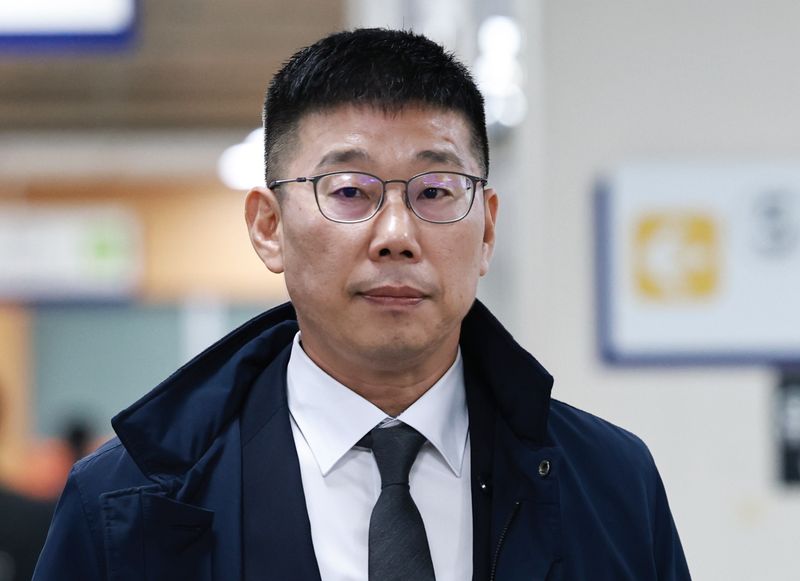
[Financial News] Cho Sung-hyun, the former commander of the Capital Defense Command’s 1st Security Group (Colonel), who was indicted without being detained on suspicion of participating in an insurrection during the 2024 South Korean martial law crisis, argued for dismissal of the indictment at his first formal trial. He had even received a medal in recognition of issuing an order to a unit heading to the National Assembly not to cross Seogang Bridge during martial law, but the special counsel believed that the order from above had been relayed through Cho. The court, however, criticized the special counsel for improperly submitting evidence to which the defense had not consented and ordered that it be returned and destroyed.
On the 12th, Criminal Division 38-1 of the Seoul Central District Court, presided over by Judge Jang Seong-jin, held the first hearing for Cho, who was indicted on charges of performing key duties in an insurrection.
At the morning hearing, the court reprimanded the special counsel team for including in its written opinion excerpts from witness interview records that the defendant’s side had not consented to having admitted as evidence. The court pointed out, “You withdrew the investigative report as evidence, yet stated that you were still invoking the contents of the witness interview records cited in the report as the special counsel’s opinion. You presented even the portions to which the defendant’s side had not consented. You must not do that.”
The court then requested that the document be resubmitted, saying, “Since the examination of evidence has not even begun, we will return and destroy that document. Please submit it again.”
Cho’s side denied the allegations in full and argued that the indictment should be dismissed. His lawyer stressed, “We categorically deny the core allegations, including that he ordered all personnel in the National Assembly to be dragged out, as well as any awareness—even in the form of dolus eventualis—of participation in an insurrectionary group. Only seven of the 22 pages of the indictment directly concern the defendant, violating the principle of indictment-only, which is intended to prevent judges from forming a prejudgment.”
At the afternoon hearing, which continued the proceedings, the issue was when Cho became aware of the alleged “subversion of the constitutional order.” Cho’s side explained that clear communication with Lee Jin-woo, the former commander of the Capital Defense Command, had not taken place, making it difficult for Cho to accurately assess the contents of the order.
The former major, who was the 1st Security Group’s operations chief at the time, appeared as a witness and testified, “When we were deployed, I received no specific mission orders or explanation from the defendant. After we arrived at the scene and the crowd grew, I was instructed to ‘move to a quiet place where you wouldn’t come into contact with people.’”
He also said that after watching on a television in the command bus as news broke that the resolution calling for the lifting of martial law had passed, he reported it to Cho and received an order to return to the unit at around 1:39 a.m. Regarding the issuance of the proclamation, he testified, “I only learned about it after returning once the situation had ended, and I never received any instructions about the proclamation from the commander.”
The special counsel, meanwhile, focused its questioning on the fact that no separate order to withdraw from the National Assembly or suspend the mission was issued during the approximately 38 minutes between around 1:01 a.m., when the resolution calling for the lifting of martial law passed, and 1:39 a.m., when the actual order to return to the unit was given. It also pressed the witness on indications that the commanders’ accounts conflicted.
The special counsel believed Cho’s orders were to send an advance party toward an area without people, direct it to enter the National Assembly grounds, and create a passage for lawmakers to come out. It also believed he ordered the follow-on troops, who arrived at Seogang Bridge, to “drag out everyone inside the National Assembly,” and that the order to wait was not given until after the resolution calling for the lifting of martial law had passed.
The court identified as a key issue whether Cho recognized the unconstitutionality and illegality of the order when he received the deployment order from Lee, the former commander. The court plans to complete witness examinations by the 10th of next month and hold the final hearing on the 31st of that month.
[email protected] Lee Chang-hoon Reporter