Indonesian rupiah hits record low, tops 18,231 per dollar
- Input
- 2026-11-12 14:45:36
- Updated
- 2026-11-12 14:45:36
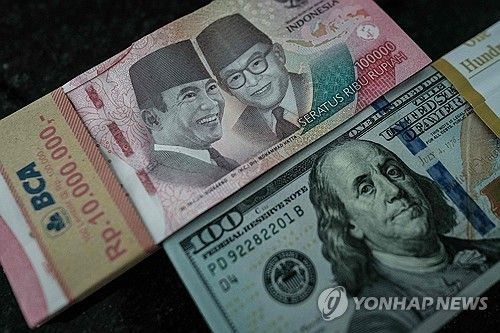
【JAKARTA, Indonesia — Aulia Maulida Hamdani, correspondent】The Indonesian rupiah fell to a record low of 18,231 per U.S. dollar as concerns over U.S. interest rate hikes coincided with uncertainty in domestic financial markets. Bank Indonesia (BI) stepped up efforts to stabilize the exchange rate, including by increasing its intervention in the foreign exchange market.
Local financial market data showed that the rupiah-dollar exchange rate fell to 18,231 rupiah per dollar (about 1,460 won) at 9:40 a.m. on the 12th. The rate was up 0.44% from the previous trading day's close, pushing the rupiah to a record low.
BI cited expectations of an interest rate hike by the U.S. Federal Reserve (Fed) as a key reason for the rupiah's weakness. Erwin Gunawan Hutapea, head of BI's Monetary and Securities Management Department, said in a statement that day, "The movements of regional currencies, including the rupiah, over the past few days have been influenced mainly by growing expectations that the likelihood of a U.S. interest rate hike at the Federal Open Market Committee (FOMC) meeting in December 2026 will increase, and that its effects will continue into 2027."
With U.S. inflation exceeding market expectations, the dollar strengthened and pressure for U.S. Treasury yields to rise also increased. This has reportedly prompted investors to withdraw funds from emerging-market financial markets, including Indonesia. The U.S. Dollar Index (DXY), which measures the dollar's value against six major currencies, rose about 0.66% the previous day to its highest level since April 2025.
Domestic factors cited included concerns that the market's standing could decline following MSCI's review of Indonesia's stock market indices, as well as increased foreign exchange demand ahead of year-end. Domestic political uncertainty, including Vice President Gibran Rakabuming Raka's stated intention to resign, is also drawing market attention.
BI said the rupiah's weakness was broadly in line with the movements of other regional currencies. The rupiah fell 0.11% on a monthly basis, while foreign exchange reserves stood at $146.8 billion (about 214 trillion won) as of the end of October.
BI is intervening in the offshore non-deliverable forward (NDF) market, the domestic non-deliverable forward (DNDF) market and the spot market to stabilize the exchange rate. It also plans to buy government bonds (SBN) in the secondary market to stabilize financial markets and defend the rupiah's value.
[email protected] Aulia Maulida Hamdani, correspondent Reporter