Sewol victims’ families lose appeal to overturn compensation decision for a second time... “A legal judgment after much deliberation”
- Input
- 2026-11-12 14:36:09
- Updated
- 2026-11-12 14:36:09
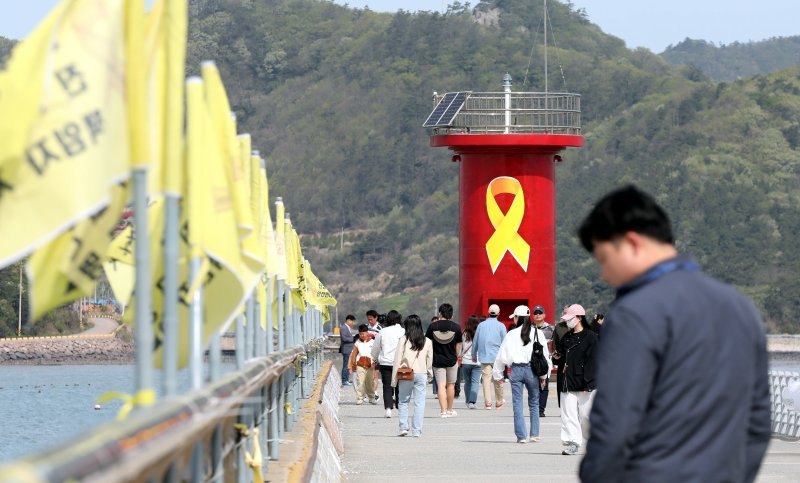
[Financial News] About 300 family members of victims of the Sewol ferry disaster also lost their appeal in a lawsuit seeking to overturn the decision on compensation and indemnity payments they had previously received from the state. As in the first trial, the second-instance court likewise rejected the families’ claims.
On the afternoon of the 12th, the Seoul High Court’s Civil Division 5-3 dismissed all appeals by the families in a lawsuit seeking to overturn the decision to pay compensation, brought against the Republic of Korea by 317 family members of victims of the Sewol ferry disaster, including Kim Yeong-deok. The court also ordered the plaintiffs to bear the costs of the appeal.
Before delivering its ruling that day, the court said, “This was a case that required a great deal of deliberation,” adding, “We carefully reviewed the evidence underlying the first-instance ruling, but concluded that it would be difficult to reach a different judgment.”
The court added, addressing the family members in the gallery, “Please understand that this is purely a judgment based on legal principles.”
The families of victims of the Sewol ferry disaster had previously agreed to the state’s decision to pay damages and received compensation under the Special Act on Relief and Support for Victims of the April 16 Sewol Ferry Disaster (the Sewol Victim Support Act). Under current law, when an applicant agrees to a decision to pay damages, it has the same effect as a “judicial settlement” under the Civil Procedure Act, making it difficult to later seek separate liability for damages from the state.
The families filed a lawsuit seeking to overturn the existing decision to pay compensation itself, citing, among other things, the state’s inadequate efforts to establish the facts of the disaster.
The first-instance court ruled against the plaintiffs, saying, “It is difficult to find that there were serious and obvious defects in the process of deciding to pay compensation and indemnity, and there is insufficient legal basis to overturn an already finalized legal relationship and cancel the payment decision.”
The families appealed the first-instance ruling, but the second-instance court also concluded, after reviewing the existing evidence and relevant legal principles, that the lower court’s judgment was justified. Their request to overturn the decision was therefore rejected on appeal as well.
[email protected] Lee Chang-hoon Reporter