“Half the justices say it’s unconstitutional”... Why does the pension gap for retired civil servants remain?
- Input
- 2026-11-12 14:10:13
- Updated
- 2026-11-12 14:10:13
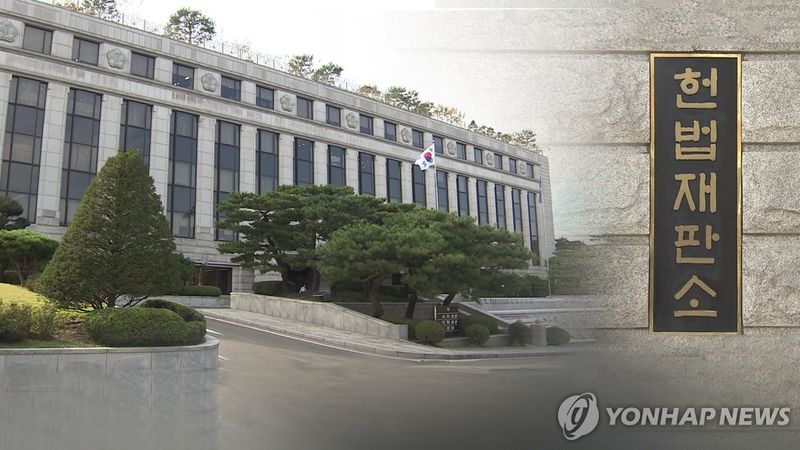
[Financial News] The justices of the Constitutional Court of Korea have recently been sharply divided over the income gap that arises between mandatory retirement and the start of pension payments. Four of the eight justices found unconstitutional a law that gradually delayed the age at which public officials’ pensions begin, but the current system remained in place because the required threshold for an unconstitutionality ruling was not met. The decision leaves unresolved how to balance the sustainability of pension finances with retirees’ livelihood security as the system is improved.
According to legal circles on the 12th, the Constitutional Court of Korea recently rejected the petitions and ruled the provisions constitutional in cases involving constitutional complaints and petitions for constitutional review of Subparagraphs 3 through 6 of Article 11(1) of the supplementary provisions to the Public Officials Pension Act. The justices were split 4-4.
The case stemmed from civil servants’ complaints that they had to wait a considerable time between mandatory retirement and the start of their pension payments.
Person A, who was appointed as a local government official in June 1996, retired at the mandatory retirement age on June 30 last year and applied for a retirement pension with the Government Employees Pension Service that same day. The Service, however, notified A that it could begin paying the pension in March next year, when A turns 62. This means A must wait about 21 months after mandatory retirement to receive a regular retirement pension.
Under the current Public Officials Pension Act, the age at which eligible public officials can begin receiving a retirement pension is being raised in stages according to when they retire. Those who retire from 2024 through this year can begin receiving payments at 62; those who retire from next year through 2029 at 63; those who retire from 2030 through 2032 at 64; and those who retire from 2033 onward at 65.
The justices who found the law constitutional gave weight to the public interest in stabilizing pension finances. Their reasoning was that delaying pension payments is part of a system reform to address worsening finances, and that, as the age at which payments begin is being raised gradually, it is difficult to say that the change excessively infringes on civil servants’ legitimate expectations.
They also took into account the availability of an early retirement pension, which can be received before the normal pension commencement age. Under the law, the early retirement pension is paid at 75% to 95% of the regular pension amount, depending on how much time remains until the normal commencement age.
By contrast, Justices Kim Hyungdu, Jeong Jeong-mi, Jeong Gye-seon and Ma Eunhyeok found the law unconstitutional. In their view, civil servants’ long service in reliance on the pension system was not merely a matter of personal expectation, but was based on trust fostered by the state.
The decision has drawn particular attention because the law remained in force even though half of the justices found it unconstitutional. Under the Constitutional Court Act, at least six justices must vote in favor for a law to be ruled unconstitutional.
Ultimately, the Constitutional Court ruled on the law’s constitutionality, but the income gap between mandatory retirement and the start of regular pension payments remains unresolved.
Legal circles say the central issue raised by the decision is how to balance the stability of pension finances with the legitimate expectations of retired public officials.
A lawyer who formerly served as a Constitutional Court justice emphasized, “Discussions over the income gap faced by retired public officials will continue even after this decision,” adding, “Since the Constitutional Court’s decision has also caused dissatisfaction over retirees’ livelihood security, legislative improvements must come first, and the Court’s judgment should then be redefined on that basis.”
[email protected] Yoo Seon-jun Reporter