U.S. Democrats secure 55 Senate seats with Mississippi win ... When will Alaska’s final result come?
- Input
- 2026-11-12 13:43:33
- Updated
- 2026-11-12 13:43:33
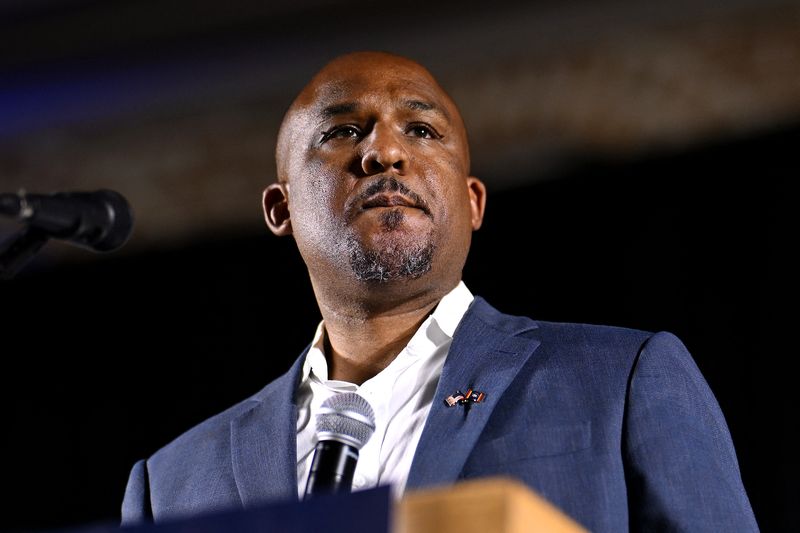
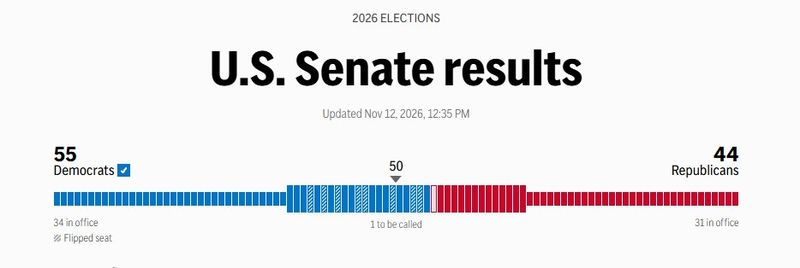
[Financial News] The U.S. Democratic Party won in Mississippi, a state that had been a Republican stronghold, in this month’s midterm elections, securing 55 seats in the Senate. The results of the last remaining race, in Alaska, will not be known until at least the 18th (local time).
Democrat elected for the first time in 44 years; Black senator for the first time in 152 years
On the 11th, local media including The Associated Press confirmed that Democrat Scott Colom had won Mississippi’s Senate race, with 99% of the vote counted. Colom received 49.19% of the vote, leading Republican incumbent Senator Cindy Hyde-Smith (48.71%), who was also running in the election, by 1.02 percentage points.Colom is the first Democrat to win a Senate seat in Mississippi, a traditionally Republican-leaning state, in about 44 years, since 1982 (John Stennis). In addition, the 43-year-old Black man became the first Black senator elected from Mississippi in 152 years, since Blanche Bruce was elected in 1874. Bruce was elected as a Republican through an indirect election. Colom is also the first Black person to be elected in Mississippi since direct elections for the Senate began there in 1916, 110 years ago.
Mississippi is central to the history of slavery and racial discrimination in the United States and joined the Confederacy during the American Civil War. Racial segregation and the suppression of Black people’s voting rights continued there after the war, and assassinations targeting Black civil rights activists persisted. In the 2024 presidential election, U.S. President Donald Trump received 60.9% of the vote in Mississippi, defeating the Democratic candidate by 22.9 percentage points.
A Mississippi native, Colom worked as a district attorney in the northern part of the state. In 2015, he won the district attorney election by defeating the white incumbent, who had held the position for about 30 years. Before becoming district attorney, he also worked as a prosecutor and a judge. Colom gained popularity in this election by criticizing the Trump administration’s tariff policies, inflation caused by war, and cuts to healthcare. After the results came in on the 11th, Democratic Senate leader Chuck Schumer (State of New York) congratulated him, saying, “Blue Mississippi (which supports the Democratic Party) has arrived. Colom was the only person who could make this happen.”
Thanks to its victory in Mississippi, the Democratic Party secured 55 of the Senate’s 100 seats. In the House, as of that day, Democrats had won 255 of the 435 seats, while Republicans had 168. The votes for 42 seats were still being counted.
Mail-in ballots delay the count ... Alaska remains
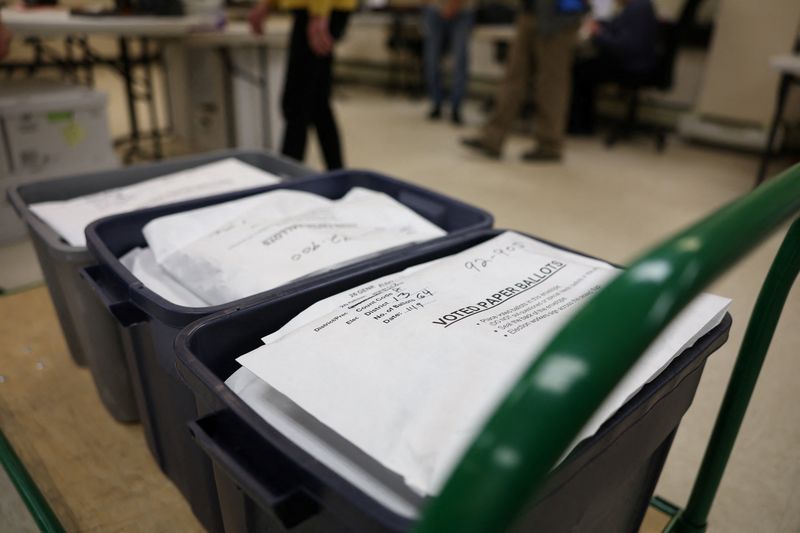
As of the 11th, Alaska was the only state where the Senate count was still unfinished. With 86% of the vote counted that day, Democrat Mary Peltola had received 48.88%, leading Republican incumbent Dan S. Sullivan (47.28%) by 1.6 percentage points. Even if Democrats win Alaska and secure 56 seats, impeaching the president (which requires 67 votes) would remain difficult, but it would make it easier for them to deal with future defections within the party.Local media agreed that mail-in ballots were behind the delayed counts in Mississippi and Alaska. In Mississippi, the count took longer because it included mail-in ballots postmarked on Election Day (the 3rd) and received by election officials within five business days. The count was also delayed by additional verification of “provisional ballots” (about 15,000 votes) cast by voters whose names were missing from the rolls or who did not have their IDs with them.
Alaska, which covers an area about 7.8 times that of the Korean Peninsula and is home to about 600,000 registered voters scattered across the state as of this year, accepts mail-in ballots through the 10th business day after Election Day. Ballots sent from overseas are accepted through the 15th business day.
On the 10th, USA Today noted that many mail-in ballots in Alaska come from remote areas and that the state has many military voters, meaning it has to wait for ballots sent from overseas.
In addition, Alaska operates its own ranked-choice voting system. If no candidate receives a majority in the initial count, the lowest-ranking candidate is eliminated, their votes are redistributed among the other candidates, and the votes are counted again. This process of redistribution and recounting is repeated until a candidate receives a majority. As a result, Alaska must first wait until the 18th, when the period for receiving mail-in ballots ends, and then conduct a further round of counting the collected ballots under the ranked-choice system. The U.S. political news outlet Politico predicted that the final count in Alaska could come in as Thanksgiving (November 26) approaches.
[email protected] Park Jong-won Reporter