One standard for equipment-specific “military batteries”...Standardization to start with small drones
- Input
- 2026-11-12 12:07:09
- Updated
- 2026-11-12 12:08:13
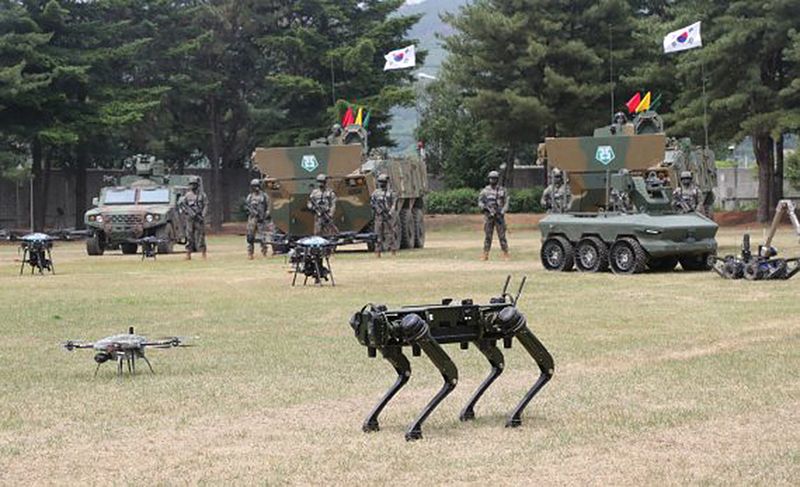
DAPA and DTaQ said they would hold a kickoff briefing for the “Study on Standardization to Ensure Military Battery Interoperability” on the 12th at KW Convention in Daejeon. The project, part of a program to standardize military and civilian specifications, aims to establish common criteria by carefully analyzing battery specifications and operating conditions across different equipment, so batteries can be shared or immediately substituted across multiple weapons systems.
The long-term study, which will run through December 2030, will receive substantial support from government-funded research institutes and industry associations. The Korea Electrotechnology Research Institute (KERI), the Korea Battery Industry Association (KBIA), and the Korea Institute of Procurement Research will jointly carry out the project, with plans to closely integrate the private sector’s advanced battery technologies with the defense procurement system.
Under a phased approach, the study will first standardize batteries for small drones, whose use on the battlefield is growing rapidly, and then gradually expand its scope to military batteries more broadly. The researchers will closely assess how existing military batteries are being used and establish objective common criteria based on advice from experts in industry, academia, research institutes, and the military, as well as actual testing and evaluation results. The criteria will lead to the enactment and revision of defense standards and are expected to be applied directly to the development of new weapons systems and military procurement.
Jeong Beom-seung, director of DAPA’s Defense Acquisition Program Policy Bureau, said, “This study is an important first step toward standardizing batteries that have been developed and operated separately for each weapons system by bringing them under common criteria.” He added, “We will provide all the institutional support needed to ensure the study’s results take root in practice in future weapons-system development and procurement.”
Jang Ji-hyeong, head of DTaQ’s Technical Research Headquarters, also stressed, “Batteries are a key source of power that supports the mobility of modern advanced weapons systems, including drones.” He added, “We will establish standards that ensure compatibility between equipment, laying the groundwork for stable force operations and efficient logistics support. We will also broadly gather input from the military and industry and deliver results that can be put to immediate use in the field.”
The standardization is expected to generate substantial synergies for both the military and private industry once completed. For the military, batteries will be freely interchangeable across equipment in urgent operational situations, dramatically improving the efficiency of logistics supply and force operations. It is also expected to prevent duplicate development across projects from the outset, saving substantial budget as well as procurement and maintenance costs.
Private battery companies will also be able to boost R&D efficiency by designing products to meet a unified set of common standards. With standard specifications whose reliability has been verified through defense testing and evaluation, they will be able to further strengthen their products’ competitiveness in domestic and international markets.
[email protected] Lee Jong-yoon Reporter