Will Syngman Rhee statue torn down 42 years ago be re-erected? Tensions spread across Inha University campus
- Input
- 2026-11-12 11:40:26
- Updated
- 2026-11-12 11:40:26
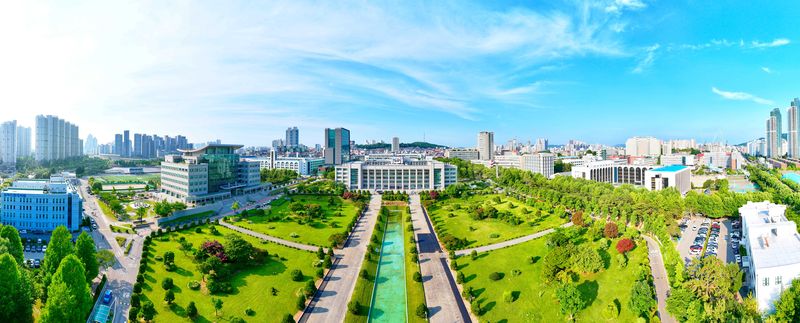
【Financial News, Incheon—Reporter Han Gab-soo】 Efforts to re-erect a statue of former President Syngman Rhee on the Inha University campus are escalating into tensions within the university. After some students pushed for the statue’s restoration, the student council and alumni association issued statements opposing it, and the university denied permission for both related events. With the on-campus events called off, those backing the restoration plan to hold their launch ceremony outside the back gate.
The dispute has drawn attention as a clash of historical interpretations over who founded Inha University and the spirit behind its founding, extending beyond the question of installing a statue.
Inha University said on the 12th that it had denied permission for both the “Launch Ceremony of the Syngman Rhee Statue Restoration Committee” and the “Youth Leadership Workshop,” which had been proposed for the campus on the 14th. Initially, citing concerns about safety accidents, the university rejected the launch ceremony but conditionally approved the workshop. However, after learning of plans to proceed with the launch ceremony regardless, it canceled both events. The workshop was scheduled to feature a lecture on “The Founding of the Nation and the Economic Miracle under Presidents Syngman Rhee and Park Chung-hee.”
The group pushing to restore the statue is “Inha Spirit,” made up of some current students. They argue that the university needs a symbol honoring Rhee’s contributions, since he proposed and pursued the establishment of an engineering college in Incheon in 1952. Despite the university’s refusal to host the events, the group plans to file notice of a rally and hold its launch ceremony outside the back gate. Around 20 current students are expected to take part, and no fundraising schedule for the statue has yet been set.
The Inha University student council and alumni association issued a statement that day, making their opposition to the restoration clear. The alumni association stressed that Inha is not the university of any one politician, but one built through the efforts of Korean immigrants in Hawaii, Incheon residents and the nation.
The alumni association pointed to the history of Korean immigrants to Hawaii in 1902. At the time, Koreans who traveled to Hawaii via Jemulpo Port worked on sugar plantations and contributed their earnings to the independence movement and educational initiatives. In 1952, the 50th anniversary of the immigration, plans were advanced to establish an engineering college, and Incheon City provided a site in Yonghyeon-dong. Korean residents in Hawaii, prominent figures in Korea and members of the public also contributed donations and other resources. Inha Technical College opened in 1954.
The alumni association argued that the fact that former President Syngman Rhee proposed establishing the university should be distinguished from the question of who actually laid its foundations. It said the funding included donations from Korean residents in Hawaii, proceeds from the sale of the Korean Christian School, land provided by Incheon City and government subsidies. The association’s position is that identifying Rhee as the university’s founder could diminish the history of other groups that contributed to its founding.
Those backing the restoration, meanwhile, counter that Rhee proposed the university’s establishment and was involved in advancing it at the government level, so his historical contributions should be commemorated. They plan to cover the statue’s construction costs through voluntary fundraising by alumni and citizens, not from the university’s budget.
Political figures have also joined the debate over the statue. The Youth Committee of the Progressive Party’s Incheon City Chapter criticized the restoration effort, citing Rhee’s dictatorship and political responsibility. The committee argued that it was inappropriate to erect the memorial again while ignoring the historical responsibility for undermining democracy.
The statue now slated for restoration was erected in 1979 near Inkyung Lake, a lake on campus, and stood 6.3 meters tall before being removed by around 400 students on November 2, 1984. At the time, students cited Rhee’s prolonged rule and dictatorship, as well as the March 15 fraudulent election. Attempts to rebuild the statue in 2010 and to install a commemorative sculpture for the university’s 70th anniversary in 2024 also fell through amid public opposition.
Historical assessments of Rhee remain divided. Some view the establishment of the Republic of Korea’s government, the formation of a liberal democratic system, land reform and the signing of the Mutual Defense Treaty between the United States and the Republic of Korea as achievements. Others criticize his prolonged rule and authoritarian governance, as well as his responsibility for the March 15 fraudulent election and the April 19 Revolution.
Ultimately, the dispute raises the question of whose contributions the university should honor and what history it should pass on to future generations. As tensions have taken concrete form, with the university barring the events and organizers planning a rally outside its gates, discussion of campus members’ views and the university’s historical identity has become unavoidable.
[email protected] Han Gab-soo Reporter