“Japan expands opportunities to work until age 70 ... Korea should prepare for longevity risk” [2026 fn Senior Industry Conference]
- Input
- 2026-11-12 10:54:13
- Updated
- 2026-11-12 10:54:13
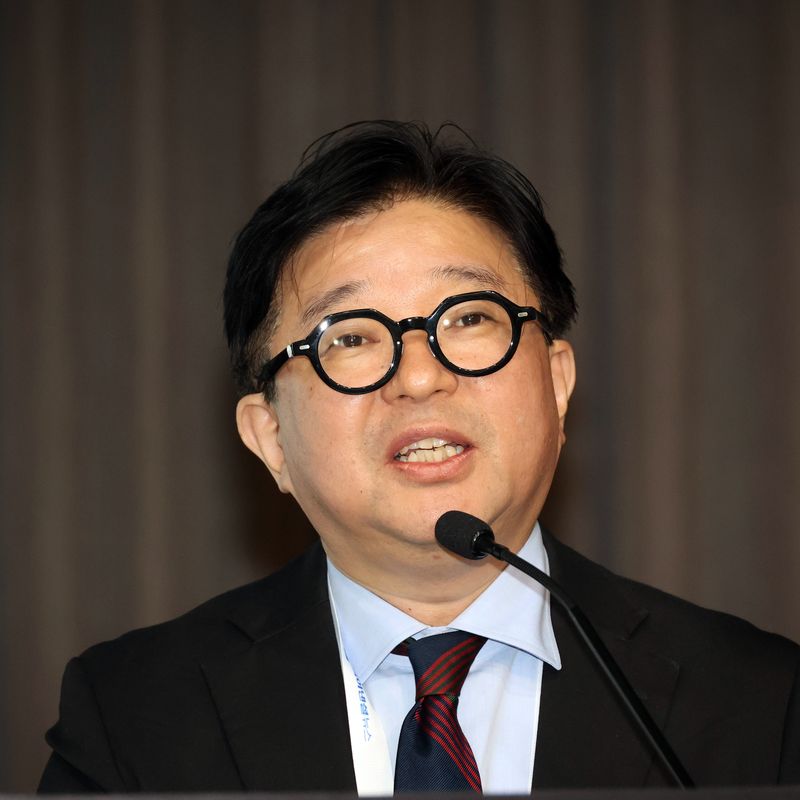
[Financial News] Japan is reducing the income shortfall among older people by requiring companies to secure employment through age 65 and encouraging them to provide employment opportunities through age 70. There were calls for Korea, too, to respond to its super-aged society by building an old-age income system that combines continued employment, pensions, savings and insurance—not just extending the retirement age. The analysis is that the senior industry can also grow steadily if the “longevity risk” caused by insufficient retirement funds is reduced.
■ Japan secures employment through age 65 and expands employment opportunities through age 70
MJ Kim, a senior research fellow at Japan’s NLI Research Institute, made these remarks during a lecture at the 2026 fn Senior Industry Conference, held by Financial News on the 12th at the International Conference Room of Bankers’ Hall in Jung District, Seoul, under the theme “Aging Japan, Aging Korea: Solutions to a Future That Has Already Arrived.”MJ Kim noted that there is little difference between the average life expectancies in Korea and Japan, at 83.7 and 84.1 years, respectively. Healthy life expectancy—the period a person can live in good health—is also similar, at 72.0 years in Korea and 72.2 years in Japan. This means that the period during which medical and care costs may rise after retirement could last for at least 10 years.
Japan is responding by extending the period during which older people participate in economic activity. Companies are required to secure employment through age 65 and to make efforts to secure employment opportunities through age 70. In addition to extending or abolishing the retirement age, companies can offer options suited to their circumstances, such as rehiring employees after retirement.
According to Japan’s Ministry of Health, Labour and Welfare’s “2025 Report on the Employment Status of Older Persons, etc.,” a 2025 survey of Japanese companies with 21 or more employees found that 65.1% had introduced a continued-employment system through age 65, while 31.0% had raised their retirement age. The share of companies that had implemented measures to secure employment opportunities through age 70 was 34.8%.
Examples of using older workers are also increasing in Japan’s manufacturing sector. Nishijima Co., Ltd. abolished its retirement age and arranged for experienced workers to pass on their skills to junior colleagues, while Kato Seisakusho broadened employment opportunities for older people by dividing work into stages and providing training. Rather than simply keeping older employees on for longer, these companies are turning their expertise into a source of corporate competitiveness.
MJ Kim stressed that Korea, too, needs to tailor extensions of the retirement age and continued employment to companies’ circumstances rather than applying them uniformly, while also reforming job and wage systems and providing retraining.
■ A monthly income gap of ¥130,000 ... preparing for assets and care, too
Japan’s experience also shows that working longer alone is not enough to resolve longevity risk. According to the presentation materials, older Japanese couples have average monthly actual income of about ¥246,000, while a comfortable retirement requires ¥379,000 a month, leaving a gap of ¥133,000. The calculation is that if this shortfall continues for 19 years, a total of ¥30.32 million in funds would be needed.Medical and care expenses in old age are another factor. In Japan, 59.6% of people aged 85 or older are certified as needing support or long-term care. The figures presented were an average initial long-term care cost of ¥700,000 and an average monthly out-of-pocket cost of ¥78,000. Estimates also suggest that if the care period exceeds 10 years, the total burden could reach around ¥13 million.
Japan is combining personal savings, insurance and asset management with its social security system of public pensions and medical and long-term care insurance. Accounts under New NISA, the new tax-exempt small-investment program, reached 30.48 million at the end of June this year, while cumulative purchases rose to about ¥85 trillion. Tontine-style insurance, which pays more in annuity benefits the longer a person lives, and family trusts were also introduced as ways to prepare for old age.
The growth potential of the senior industry is also linked to this kind of income security. Japan’s senior-related market is projected to grow from about ¥96 trillion in 2023 to about ¥115 trillion in 2040. However, the analysis is that unstable income could dampen spending not only on medical and care services but also on travel, leisure and everyday services.
MJ Kim proposed several policies to prioritize over the next 3–5 years: a roadmap for extending the retirement age and continued employment; integrated employment and income consultations before retirement; and a system for managing living expenses after retirement. The point is that planning should take public and private pensions, financial assets, housing costs, and medical and care expenses into account together. Ultimately, income security for older people supports demand in the senior market and is the starting point for driving business investment and the expansion of services.
[email protected] Kim Dong-ho Reporter